
Sales are growing, but tasks like labeling, shipment prep, and inventory coordination are starting to take over your time. Instead of focusing on scaling, many sellers get stuck in daily operations. In this article, Megaficus will help you explore how using a 3PL for Amazon FBA can streamline your workflow, reduce errors, and keep your inventory moving efficiently into Amazon warehouses.
Quick Summary
- A 3PL prep center handles all fulfillment preparation tasks between your supplier and Amazon’s warehouse, freeing sellers to focus on growth.
- How 3PL speeds up inbound: Direct integration with Amazon FBA keeps inventory, shipment plans, and labeling synchronized, reducing errors and accelerating check-in.
- How to choose the right 3PL: Evaluate label accuracy, carton validation, pallet documentation, inventory control, and billing transparency before signing with any prep partner.
- True cost of using a 3PL: Hidden expenses from relabeling, carton rebuilds, storage delays, and freight reclassification can add up fast if left untracked.
- When to bring in a 3PL: Storage limits, complex prep needs, multi-channel expansion, high returns, or market expansion are clear signals that it’s time to outsource.
- Top 3PL options for FBA: ShipHero, ShipBob, Flexe, ShipMonk, and Deliverr offer reliable prep, integration, and scalable fulfillment for sellers at different growth stages.
What Amazon 3PL Actually Means For FBA Sellers?
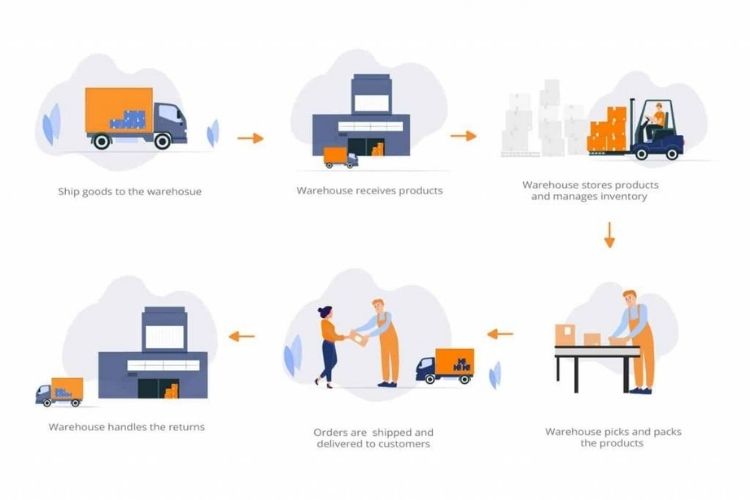
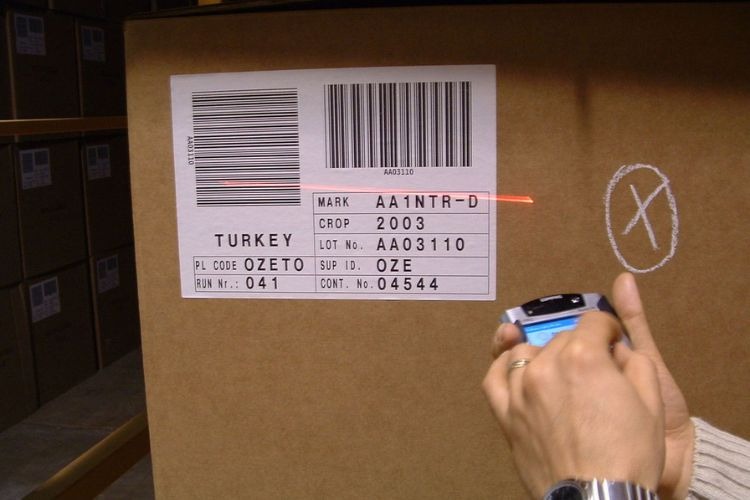
An Amazon 3PL prep center takes over the entire fulfillment preparation process on your behalf, from receiving inventory and inspecting for damage to applying FNSKU labels and packing products to meet Amazon’s exact requirements before shipping to a fulfillment center.
This means FBA sellers no longer need to manage warehouse space, prep labor, or compliance details themselves. Instead, they can redirect that time and capital toward sourcing, marketing, and scaling their catalog.
How A 3PL Gets Your Products Into Amazon Warehouses Faster?
3PL platforms link with Amazon FBA through structured data exchange, allowing inventory, shipment details, and labeling requirements to stay synchronized. This integration minimizes manual handling, improves accuracy, and ensures smoother inbound operations.
| Connection Area | Data Exchange | Seller Role | 3PL Warehouse Role |
|---|---|---|---|
| Inventory Sync | Live updates on SKU stock levels and availability | Maintain accurate listings and initiate shipment plans | Monitor stock allocation and keep system quantities updated |
| Shipment Plans | Shipment IDs, routing details, and carton configurations | Create shipment plans and choose delivery options | Align cartons with plan requirements and handle pallet labeling |
| Label Handling | FNSKU codes and carton label data | Assign correct SKUs to each product | Manage label printing with tracking and error control |
| Freight Coordination | Carrier details and pickup scheduling data | Arrange carriers (if managing logistics) and confirm readiness | Prepare shipments and record verified pickup documentation |
Why Smart FBA Sellers Outsource Their Prep And Inbound Shipments?
As your Amazon FBA business grows, handling prep and inbound shipments internally can quickly become inefficient and time-consuming. That’s why many experienced sellers choose to outsource, leveraging 3PL and prep centers to streamline operations, reduce risk, and scale faster. Below are the key reasons behind this shift:
- Save valuable time: Instead of spending hours on labeling, poly bagging, and shipment prep, sellers can delegate these repetitive tasks to a prep center, freeing up time to focus on sourcing and growth.
- Reduce risk of Amazon violations: Strict FBA requirements mean even minor labeling or packaging errors can lead to delays or penalties. Outsourcing ensures compliance is handled correctly from the start.
- Enable remote business operations: With prep and inbound handled by a 3PL, sellers can manage their business from anywhere while inventory flows directly from suppliers to Amazon fulfillment centers.
- Scale operations efficiently: As order volume and SKU count increase, a prep partner can handle higher complexity, larger shipments, and seasonal spikes without disrupting your workflow.
>>> Read more: Amazon FBA vs 3PL: Find The Best Option For Your Business
How To Pick A 3PL That Actually Works For Amazon FBA?
Choosing the right 3PL for FBA prep goes beyond pricing. Sellers need to evaluate operational control, accuracy, and transparency to avoid costly errors and delays. The checklist below highlights what to verify before partnering with a prep provider:
| Evaluation Area | Key Question to Ask | Potential Risk | What Good Looks Like? |
|---|---|---|---|
| Label Control | Is every label reprint tracked by user activity? | Barcode mismatches leading to inbound issues | Clear reprint logs with user attribution |
| Carton Validation | Are cartons scanned and matched to shipment plans? | Discrepancies during the Amazon check-in | Scan verification completed before palletizing |
| Pallet Weighing | Are pallet weights consistently measured and recorded? | Carrier reclassification and extra fees | Documented and auditable pallet weight records |
| Allocation Control | Is inventory restricted once assigned to a shipment? | Overselling or stock misallocation | System-based inventory lock after allocation |
| Exception Visibility | Are issues reported on the same day they occur? | Delayed corrections and shipment delays | Daily reporting of discrepancies and exceptions |
| Billing Transparency | Are prep services clearly itemized in billing? | Hidden costs and unclear pricing structure | Detailed, line-item breakdown of prep charges |
How Much Does It Really Cost to Use A 3PL For Amazon FBA Prep
Understanding the true cost of using a 3PL for Amazon FBA prep goes beyond standard service fees. Hidden operational inefficiencies can significantly increase expenses and cause inbound delays if not properly managed:
| Cost driver | Why does it add cost? | What to track? |
|---|---|---|
| Relabeling | Incorrect SKU mapping or damaged labels require reprints | Reprint rate per 1,000 units |
| Carton Rebuilds | Changes to shipment plans force carton restructuring | Number of carton modifications per shipment |
| Storage Lag | Delays between receiving and shipment plan approval | Days from inbound receipt to outbound dispatch |
| Freight Reclassification | Inaccurate pallet size or weight triggers carrier adjustments | Frequency of invoice corrections |
| Rework Touches | Mismatch between prep requirements and execution | Units requiring additional handling |
Freight congestion often varies by route and peak season, which can directly impact pickup schedules. As a result, missed pickup windows can cause inbound shipments to be delayed during check-in at Amazon fulfillment centers.
To mitigate these risks, 3PL warehouses should consistently document pickup timing, ensuring that proper records are available to support reimbursement claims and minimize potential losses.
When It Makes Sense To Bring A 3PL Into Your FBA Operation?
As your FBA operation grows, certain challenges signal that it may be time to bring in a 3PL. Below are common scenarios where outsourcing prep and inbound logistics becomes a strategic advantage:
- Inventory overflow and rising storage fees: When Amazon limits storage capacity or applies high monthly and long-term fees, a 3PL can act as a buffer by holding excess inventory and replenishing FBA in a more controlled way.
- Complex prep and compliance requirements: If your products require kitting, specialized packaging, or strict inspections, a 3PL ensures everything meets FBA standards before reaching the warehouse, reducing rejection risks.
- Multi-channel fulfillment needs: As you expand to platforms like Shopify, Walmart, or TikTok Shop, a 3PL can centralize inventory and manage fulfillment across channels, helping prevent stockouts and overselling.
- High return volume: When returns become difficult to manage, a 3PL can inspect items, sort sellable units, and send eligible inventory back to FBA, minimizing losses.
- Geographic expansion goals: If you aim to reach customers faster or enter new markets, a 3PL with multiple warehouse locations can reduce shipping time and avoid costly cross-region FBA transfers.
5 Best 3PL Services That Help Amazon FBA Sellers Scale Faster
The five providers below have demonstrated consistent performance in prep accuracy, system integration, and scalable fulfillment, making them reliable options for sellers looking to grow without operational bottlenecks.
ShipHero
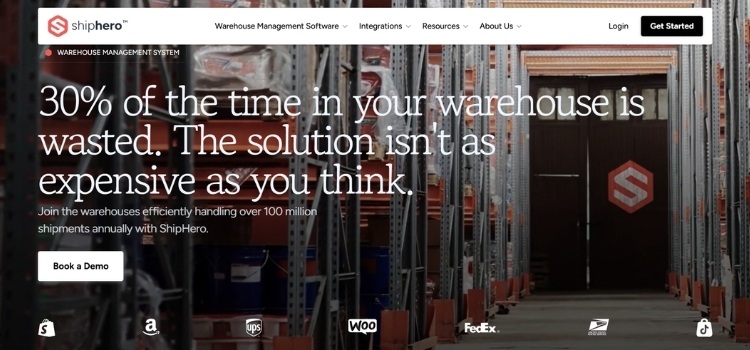
When Amazon sellers begin scaling operations, choosing a 3PL with strong system integration and warehouse control becomes critical. ShipHero combines fulfillment services with advanced WMS technology, helping sellers maintain accuracy while handling higher order volumes.
- End-to-end fulfillment for ecommerce sellers: ShipHero supports the full workflow, from inventory receiving to order fulfillment, ensuring smooth coordination between prep and shipment stages.
- Real-time inventory visibility: The system keeps SKU quantities updated across channels, helping reduce stock discrepancies and prevent overselling.
- FBA prep support: Services include receiving, inspection, labeling, and shipment preparation in line with Amazon requirements.
- Advanced warehouse management system (WMS): Features like barcode scanning, workflow automation, and inventory tracking help minimize manual errors and improve efficiency.
- Centralized multi-channel fulfillment: Sellers can manage inventory across Amazon and other platforms from one system, improving fulfillment speed and stock control.
ShipBob
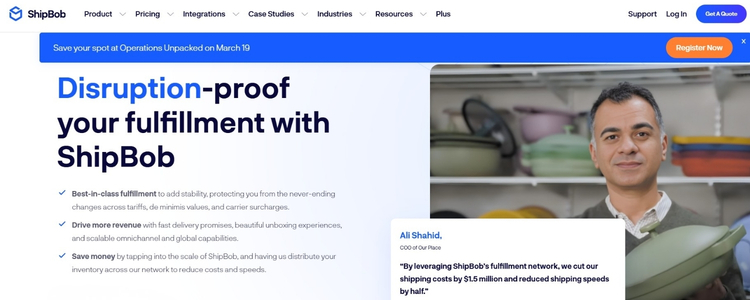
As e-commerce brands expand across multiple channels, having a 3PL that combines fulfillment infrastructure with data visibility becomes essential. ShipBob is a well-known global fulfillment provider that helps Amazon sellers streamline operations while improving delivery speed.
- Distributed fulfillment network: ShipBob operates multiple fulfillment centers, allowing sellers to position inventory closer to customers and reduce shipping time.
- End-to-end order fulfillment: From receiving inventory to picking, packing, and shipping, ShipBob manages the entire fulfillment process with standardized workflows.
- FBA prep and inbound support: The service includes labeling, packaging, and forwarding inventory to Amazon fulfillment centers in compliance with FBA requirements.
- Real-time inventory and order tracking: Sellers can monitor stock levels, order status, and shipment performance through a centralized dashboard.
- Multi-channel integration: ShipBob connects with platforms like Shopify, Amazon, Walmart, and more, enabling unified inventory management and fulfillment.
Flexe
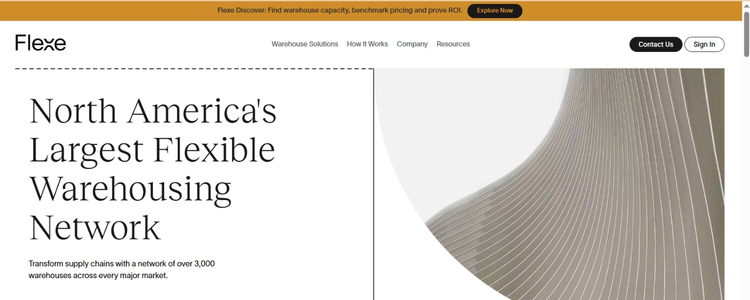
For Amazon sellers dealing with fluctuating demand or seasonal spikes, flexible warehousing becomes a key advantage. Flexe offers an on-demand logistics network that allows businesses to scale storage and fulfillment capacity without long-term commitments.
- On-demand warehouse network: Flexe connects sellers with a nationwide network of warehouses, enabling flexible storage based on real-time needs.
- Scalable capacity for peak seasons: Ideal for handling demand surges, helping sellers avoid FBA storage limits and overflow issues.
- FBA overflow and replenishment support: Inventory can be stored outside Amazon and replenished strategically to maintain optimal stock levels.
- Technology-driven visibility: Flexe provides a centralized platform to track inventory, manage orders, and monitor warehouse performance.
- Customizable logistics solutions: Sellers can tailor storage, distribution, and fulfillment strategies based on their specific business requirements.
ShipMonk
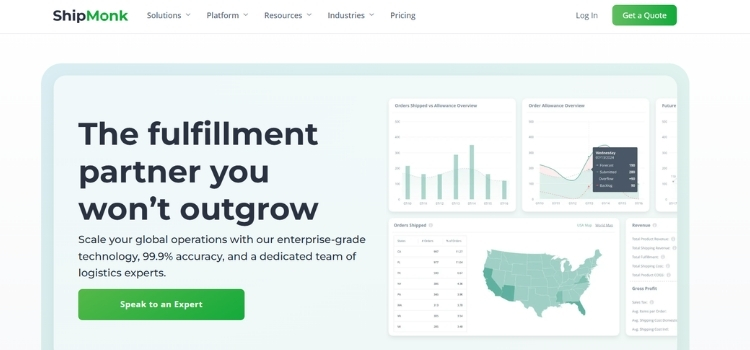
As e-commerce operations become more complex, sellers need a 3PL that combines fulfillment efficiency with strong system integration. ShipMonk is designed to simplify logistics by offering scalable fulfillment solutions backed by advanced technology.
- End-to-end fulfillment services: ShipMonk manages the entire process from receiving inventory to picking, packing, and shipping orders.
- FBA prep and compliance support: Services include labeling, kitting, bundling, and preparing shipments to meet Amazon FBA requirements.
- Powerful inventory management system: Real-time tracking helps sellers monitor stock levels, order flow, and warehouse activity with high accuracy.
- Automation-driven operations: The platform uses automation to reduce manual handling, improve speed, and minimize fulfillment errors.
- Multi-channel fulfillment integration: ShipMonk connects with Amazon, Shopify, Walmart, and other platforms, allowing centralized order and inventory management.
Flexport (Deliverr)
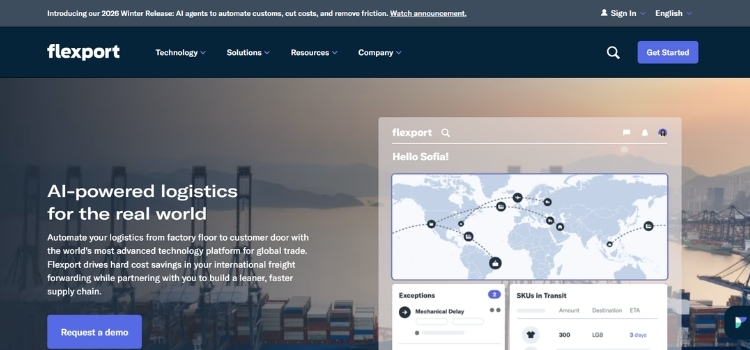
For sellers looking to optimize both fulfillment speed and supply chain visibility, Deliverr, now part of Flexport, offers a data-driven logistics solution. It combines fast shipping capabilities with end-to-end supply chain management, making it a strong option for scaling e-commerce operations.
- Fast fulfillment network: Deliverr enables fast delivery options across marketplaces, helping sellers meet customer expectations for quick shipping.
- Integrated supply chain solution: Backed by Flexport, the system connects freight, warehousing, and fulfillment into one unified workflow.
- FBA prep and inbound support: Services include receiving inventory, labeling, and forwarding shipments to Amazon fulfillment centers.
- Inventory placement optimization: Data-driven tools help position inventory closer to demand zones, reducing both delivery time and cost.
- Multi-channel fulfillment capability: Sellers can fulfill orders across Amazon, Walmart, Shopify, and other platforms from a single inventory pool.
FAQs About 3PL For Amazon FBA
A 3PL usually handles receiving, inspection, FNSKU labeling, poly bagging, kitting, packaging, and preparing shipments to meet Amazon FBA requirements.
Yes. Most 3PLs manage FNSKU labeling, carton labeling, and pallet preparation to ensure shipments comply with Amazon standards before dispatch.
Common issues include incorrect labeling, mismatched SKUs, missing shipment plan details, and inaccurate carton or pallet information.
Typically, onboarding takes about 1 week, depending on SKU setup, labeling readiness, and system integration.
Get Professional Help from Megaficus
Choosing the right 3PL for Amazon FBA is one of the most practical decisions a seller can make to protect margins, maintain compliance, and create room for sustainable growth. When prep, labeling, and inbound logistics are handled correctly from the start, sellers can focus entirely on scaling their catalog and driving revenue.
If you need expert support to streamline your FBA prep process, reduce inbound errors, and optimize your supply chain from supplier to fulfillment center, the team at Megaficus is ready to help.