
Have you ever logged into your Seller Central only to find your sales have completely flatlined due to an unexpected block? Amazon prioritizes customer safety above all else, and the advanced AI models are exploited to help them with it. But these bots can sometimes flag accounts unfairly, so in this post, we help you decode the most common Amazon account-restricted reasons to get you back to selling.
Quick Summary
- Instant Profit Impact: An Amazon account restriction is a silent revenue killer that freezes your cash flow by stopping the “Add to Cart” button, leading to thousands in lost profit over a single weekend.
- Performance Failures: Your income is at risk if you exceed a 1% Order Defect Rate (ODR) or a 4% Late Shipment Rate (LSR), or if your Valid Tracking Rate drops below 95%.
- Integrity & Verification Issues: Restrictions often stem from AI-detected review manipulation, inauthentic product complaints, or failing KYC identity re-verification checks.
- Compliance & Policy Hurdles: Accounts are frequently limited due to intellectual property infringement, selling restricted products without approval, or having linked/related account violations.
- Account Security Triggers: Unexpected sales volume spikes or the submission of manipulated/forged appeal documents can lead to immediate holds or permanent deactivations.
What is a Restricted Account and Why Does It Kill Your Revenue?
An Amazon account restriction is a temporary freeze or limitation on selling privileges triggered by policy slips or performance dips. Unlike a full ban, it often targets specific ASINs or features but still creates a massive gap in your monthly cash flow.
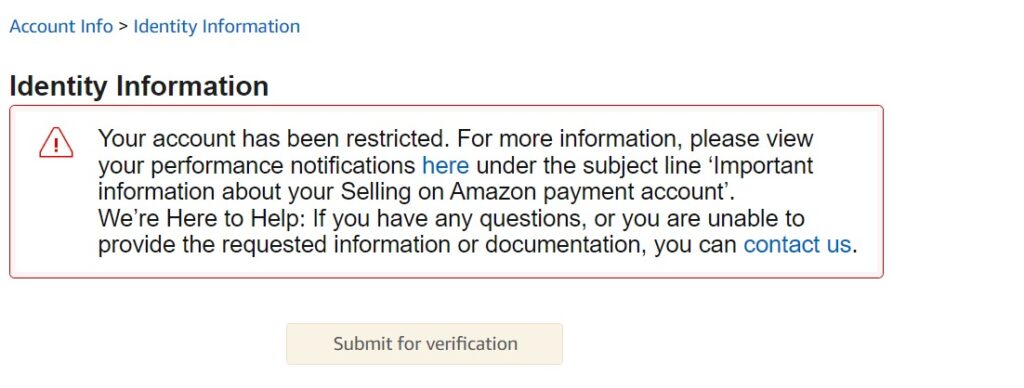
There’s a difference between a minor listing warning and a serious account risk that may halt your payouts. A warning might just ask for a small edit, while a restriction actually stops the “Add to Cart” button from working for customers. This means your inventory sits in a warehouse collecting storage fees instead of generating profit.
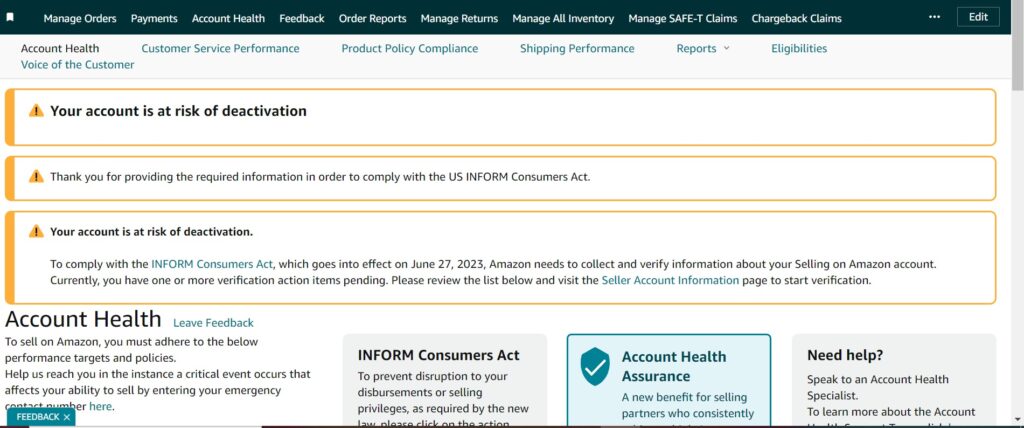
Why Amazon’s AI-first model prioritizes “suspend now, ask questions later” to protect customers is due to the sheer volume of global transactions. The system is designed to act instantly on any red flag to prevent buyer dissatisfaction. We see many sellers lose thousands in a single weekend because a bot flagged an innocent listing change.
10 Common Amazon Account Restricted Reasons, Fixes, and Prevention
Navigating the minefield of Amazon policies requires a proactive approach to your Account Health Dashboard. Between each heading below, we will explore the specific triggers that cause these financial hurdles and how you can resolve them to stay in the green.
1. High Order Defect Rate (ODR) from Negative Feedback
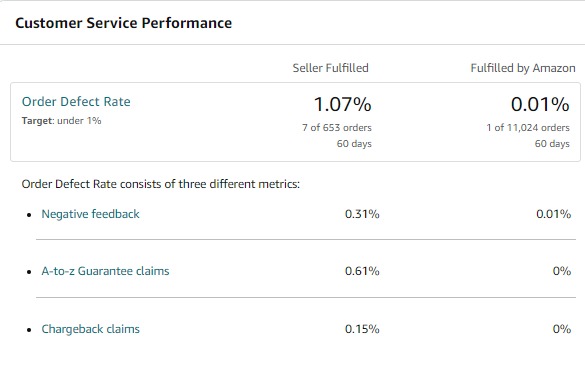
One of the primary Amazon account restrictions is exceeding the 1% ODR limit due to negative feedback. For example, if you sell 100 items and just two customers leave 1-star ratings for “item not as described,” your account is at risk. This metric is critical because it directly reflects how satisfied your customers are with their recent purchases.
To begin resolving this performance dip, we suggest immediately addressing all unresolved customer messages to settle disputes. If a customer complains that a blender arrived cracked, sending a free replacement before they file a claim can save your metric. Taking swift action shows Amazon that you are committed to providing a great experience for every buyer.
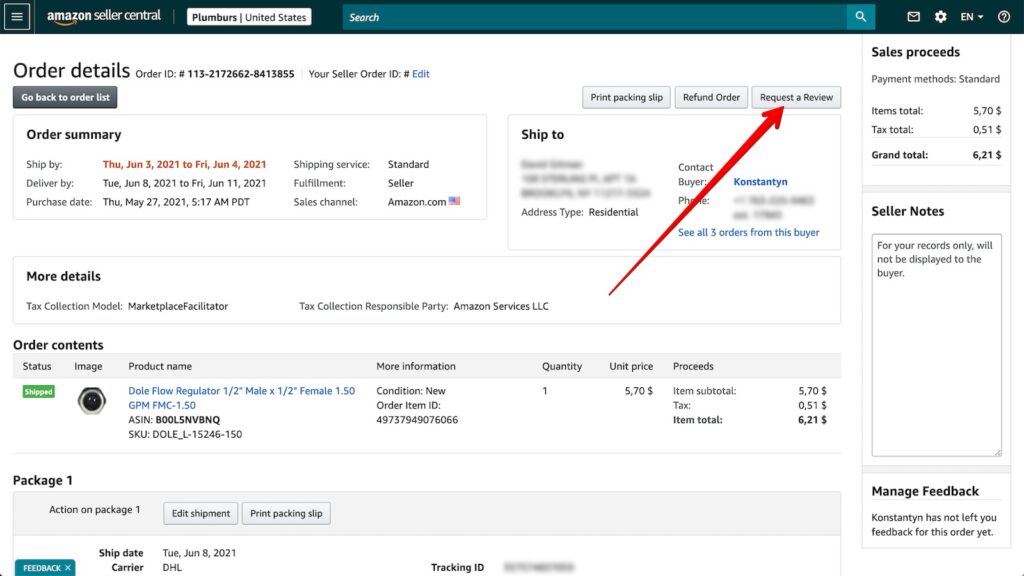
We suggest you use the “Request a Review” button to generate positive and compliant ratings in order to prevent this from happening again. Consistent 5-star feedback acts as a “buffer” that prevents a single bad experience from tipping your ODR over the limit. We recommend checking your performance dashboard every morning to catch any sudden rating dips early.
2. Late Shipment Rate (LSR) and Unreliable Tracking
Another common trigger for a restricted account is allowing your late shipments to exceed 4% or tracking to fall below 95%. This often happens to sellers who use local couriers that do not integrate properly with Amazon’s tracking systems. Maintaining timely deliveries is essential to keeping your “Add to Cart” button active and your sales flowing.
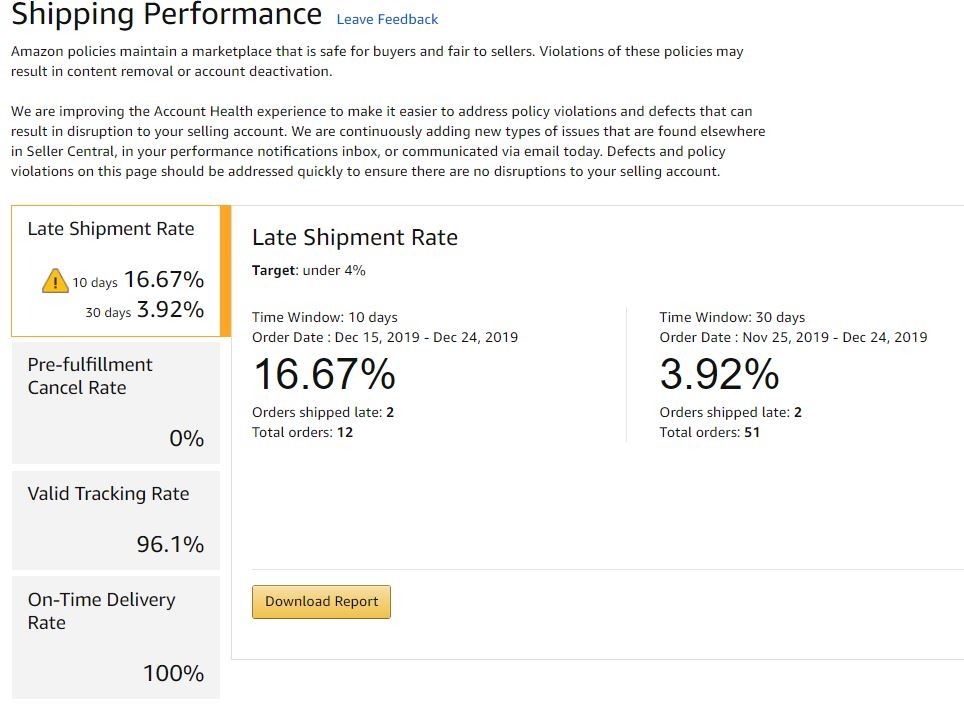
You can fix this by auditing your fulfillment process and switching to reliable carriers to upload all tracking numbers. For instance, if a carrier fails to scan a package, manually contacting the buyer with the correct link shows Amazon you are proactive. Once your tracking numbers begin updating correctly in the system, your shipping privileges are restored.
To avoid this headache entirely, we recommend using Amazon Buy Shipping or switching to FBA for high-volume items. By letting Amazon handle the logistics, you remove the risk of manual data entry errors that often lead to tracking violations. This hands-off approach allows you to focus on scaling your brand while Amazon takes care of the delivery.
3. AI-Detected Review Manipulation
A particularly tough restriction occurs when Amazon’s systems flag your account for an “unnatural review velocity” spike. Imagine a new product getting fifty reviews in just two hours; the system will likely flag this as a “pay-for-review” scheme. This automated trigger is designed to prevent fraudulent feedback from misleading customers on the marketplace.
The best way to address this flag is to submit a “Plan of Action” identifying any third-party services you used to get reviews. Being honest about using a “review growth” agency is often the only way to get a human reviewer to reinstate your account. Providing a clear explanation of how you will follow guidelines in the future helps rebuild trust with the team.
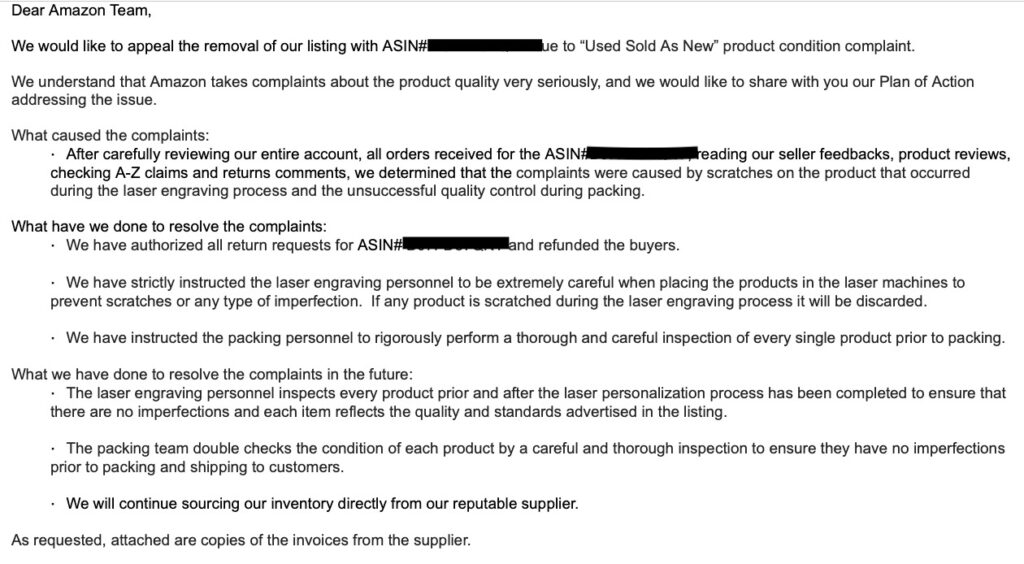
To grow your brand safely, never use review exchange groups and focus on quality products to earn natural reviews. We have seen that the Amazon Vine program is the safest way to get those crucial first reviews without risking a permanent ban. Building a solid reputation organically ensures that your account remains safe from automated manipulation flags.
4. Inauthentic or Counterfeit Product Complaints
Many sellers face sudden restrictions because a single customer complaint claimed their product was “fake” or inauthentic. This frequently happens in the beauty or electronics categories, where buyers are sensitive to packaging or minor changes. Amazon takes these reports seriously to ensure that every item sold on the platform is completely genuine.
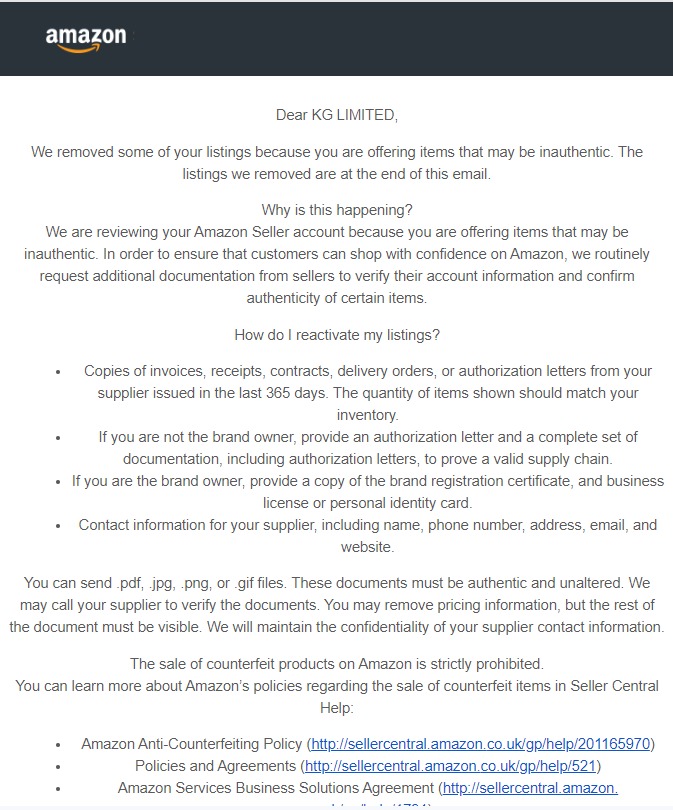
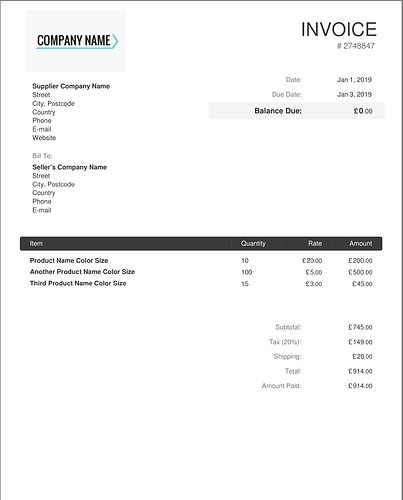
You can resolve this authenticity check by providing clear, unedited invoices from the last year to prove your supply chain. If you sell brand-name sneakers, your invoice must clearly show the authorized distributor’s contact info and your business. Once a human reviewer verifies that your inventory comes from a reputable source, the listing is usually cleared.
A proactive tip to prevent this is to vet your suppliers thoroughly and keep a digital archive of invoices for quick access. We suggest checking that your supplier is listed on the brand’s official “Authorized Wholesalers” webpage before buying in bulk. Keeping these records ready allows you to respond to any authenticity checks within minutes instead of days.
5. Related or Linked Account Violations
One of the most frustrating Amazon account restricted reasons is being linked to another restricted seller through shared data. If you and your roommate both sell from the same home network, their policy slip could, unfortunately, impact your business. The system assumes that linked accounts belong to the same person, which triggers a shared restriction for safety.
To untie your account, we recommend providing legal proof, like a lease or business license, to show you are a separate entity. This helps the “Relation Team” understand that while you might share an IP address, your finances are independent. Once they see that your business operations are not connected, they can unbind your account from the restricted one.
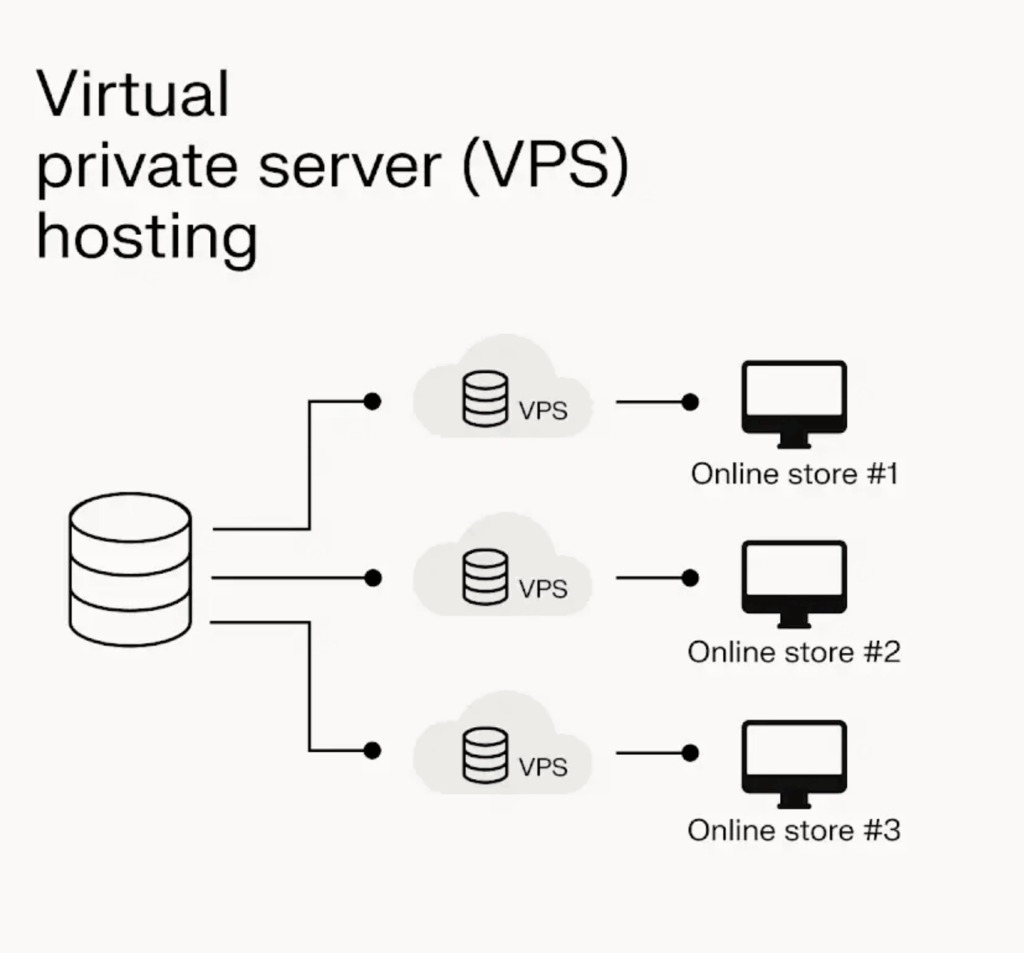
A smart way to protect yourself is to avoid logging into your seller dashboard on public Wi-Fi or shared computers. Many successful sellers find that using a dedicated Virtual Private Server (VPS) is a great way to keep their footprint clean. Isolating your digital connection ensures that other sellers’ mistakes never put your hard-earned income at risk.
6. Intellectual Property (IP) Infringement Claims
A frequent cause of listing blocks is when brand owners feel your listing uses their trademarks without the right permissions. For instance, if you accidentally use a brand name in your title for a generic accessory, it can trigger an IP alert. This causes an automated restriction because Amazon must comply with legal takedown requests to protect brands.
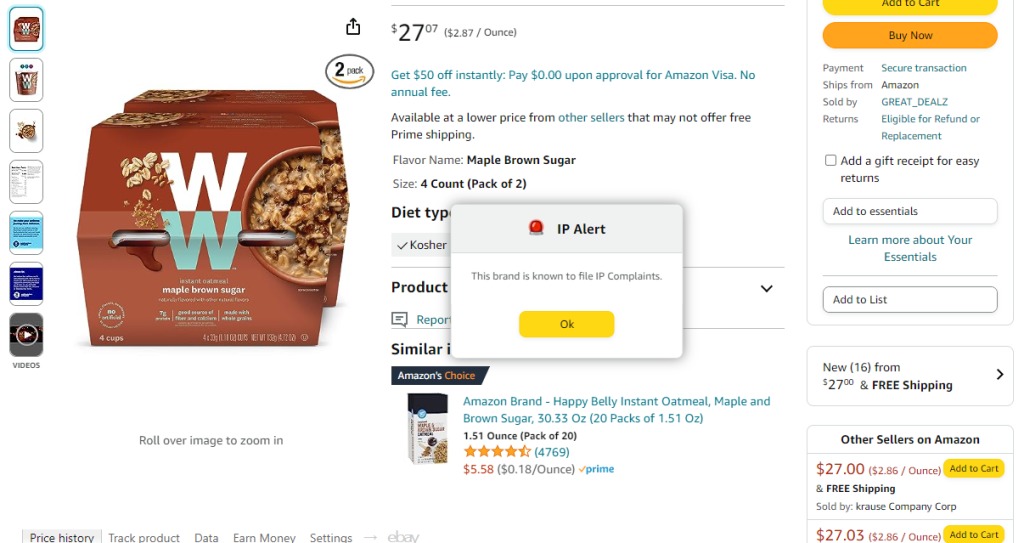
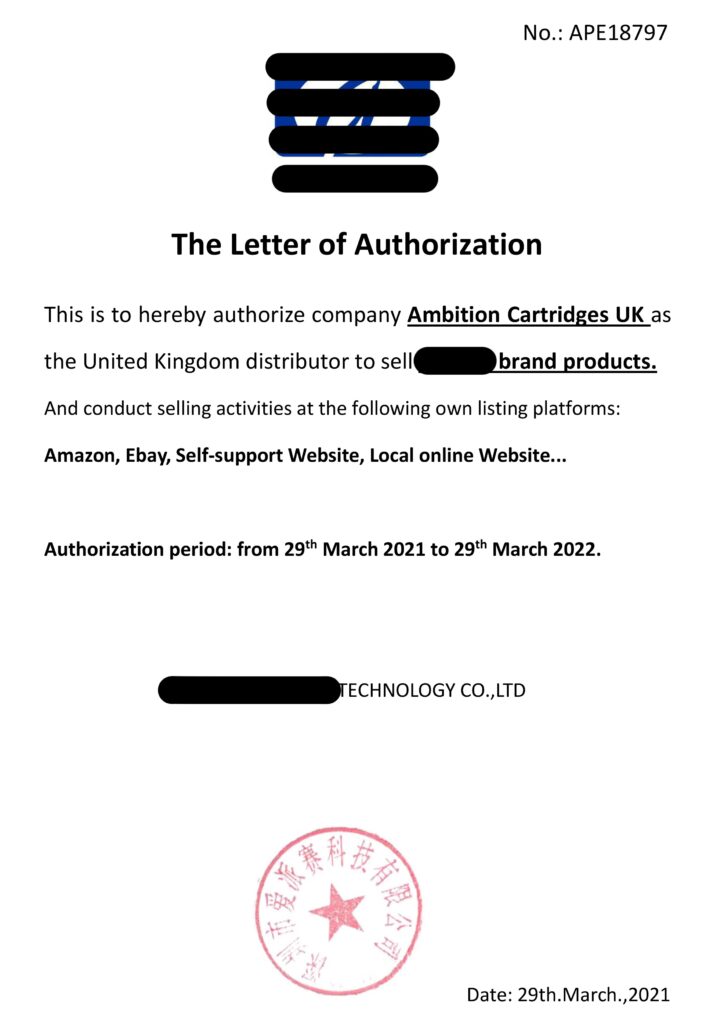
We suggest resolving this by reaching out to the rights owner to see if they can retract their claim after the issue is fixed. Providing a clear Letter of Authorization (LOA) to Amazon is also a great way to show you have the proper rights to sell. Often, a professional email explaining that the infringement was accidental leads to a retraction quickly.
To stay safe, it is helpful to use the Amazon Brand Registry and check your listings once a month for protected terms. Many sellers enjoy using tools like “IP Alert” to stay informed about brands that frequently protect their trademarks online. We recommend auditing your image gallery to ensure every photo is either your own or used with permission.
7. Selling Restricted Products Without Approval
Accounts are often limited when items are listed in “gated” categories without the necessary safety paperwork being on file. You might find a product is flagged if you haven’t yet shared the specific lab tests or certificates Amazon needs for approval. This happens because Amazon needs to verify that your items meet the strict safety standards required.
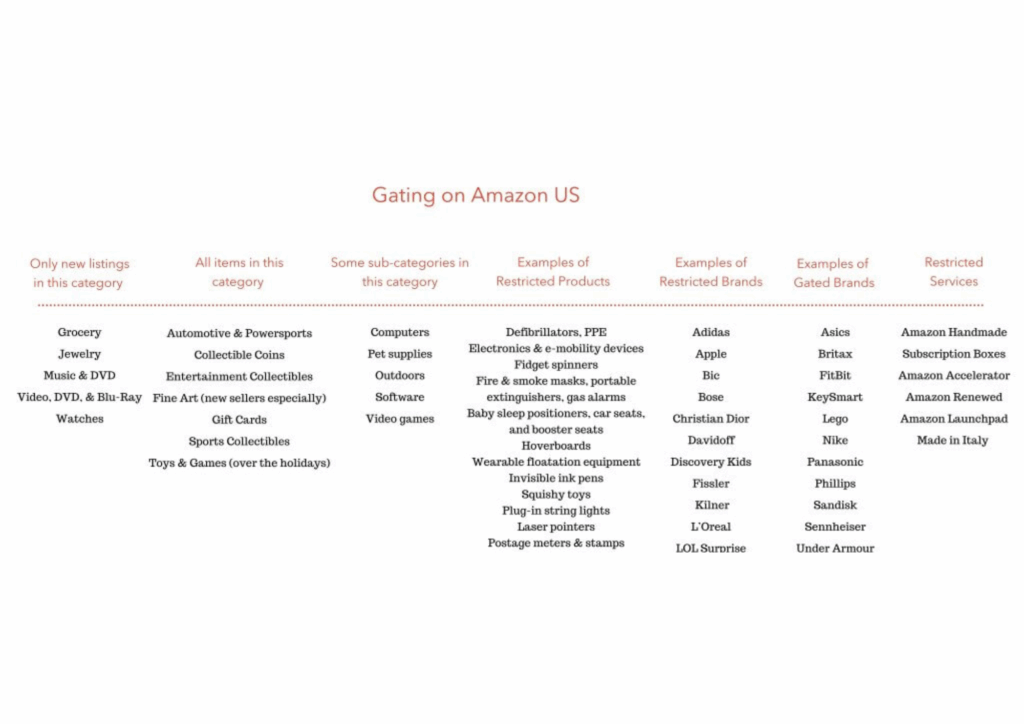
The fix for this is going through the “ungating” process by submitting your official lab results or safety certificates. Taking a clear photo of the product packaging showing all the required safety symbols can also help speed up the approval. Once you upload the correct PDF or image, a human reviewer will typically check the documents.
To prevent future gating issues, check the “Add Products” page in your dashboard to see if a category needs approval. Keeping an eye on the restricted products list every few months ensures you are always following the newest rules. We suggest searching the keyword list quarterly, as the rules for supplements and electronics are updated.
8. Sudden Sales Volume Spikes Without Verification
A sudden surge in orders can sometimes cause Amazon’s security systems to temporarily pause your account to verify activity. For example, if your daily sales jump from five to five hundred overnight, they want to ensure everything is legitimate. This velocity limit is meant to protect the marketplace from accounts that might be selling phantom stock.
You can satisfy this security check by sharing basic business documents, like a utility bill or tax ID, to verify your identity. Providing tracking numbers that show your customers are receiving their items is another wonderful way to satisfy this. Once the system sees that your packages are arriving safely at their destinations, the restriction is usually lifted.
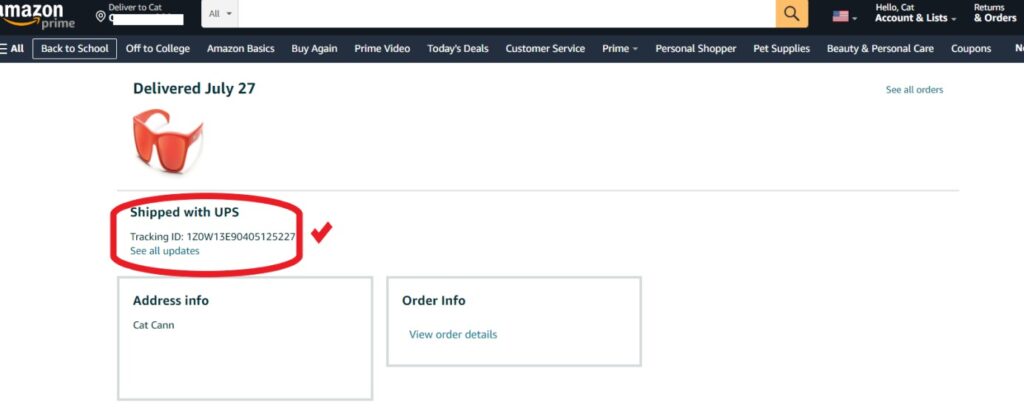
A professional tip for growth is to notify support in advance if you are planning a campaign that might cause a spike. Sharing your projected growth and proof of inventory helps the system understand that your success is well-planned. We at Megaficus suggest keeping a steady flow of inventory to prove you can handle any increased demand.
9. Manipulated or Forged Appeal Documents
Restrictions can also happen if your appeal documents are flagged because they appear to have minor edits or blurs. If you accidentally blur out too much information on an invoice, the system might flag it as a potential concern. They prioritize high-quality, unaltered files to ensure that the supply chain information provided is authentic.
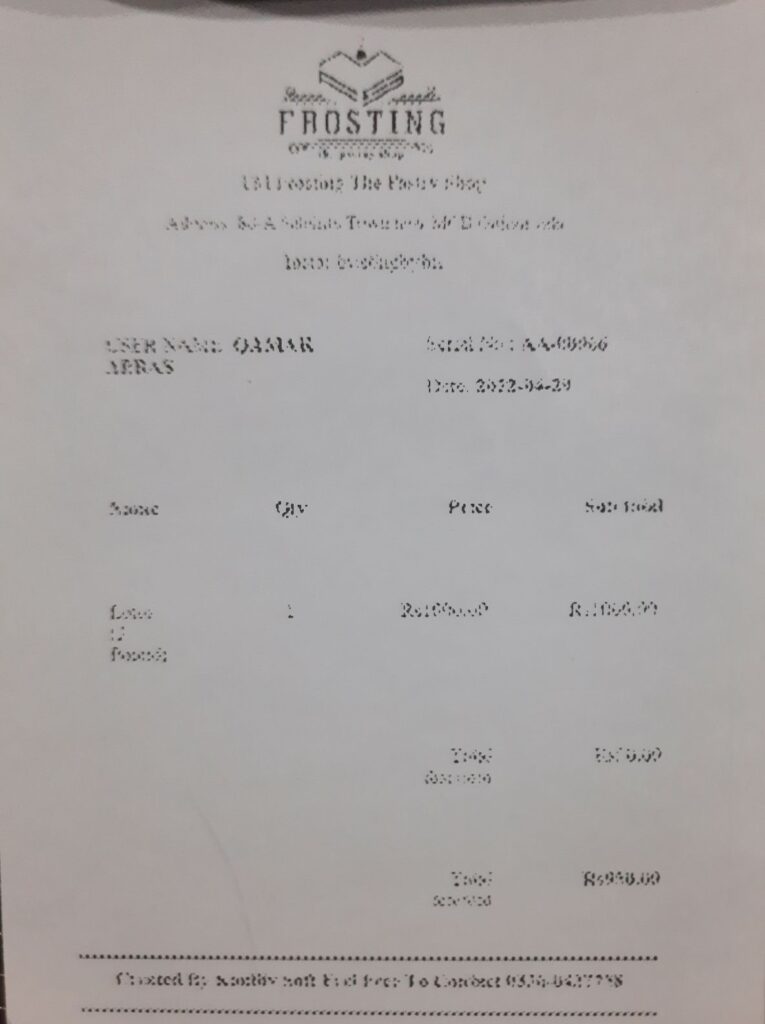
If your documents are rejected, we suggest submitting the original, clear version along with a note explaining the change. Providing a high-resolution photo of a physical paper invoice is often much more effective than sending a digital file. This proves to the team that you have the physical document in your possession and haven’t edited it.
To ensure your appeals pass the first time, always submit high-quality scans of original documents to the verification team. We recommend keeping your original files in a safe folder so you can provide them quickly whenever they are requested. Always ensure that the supplier’s contact information is clearly visible and matches their website.
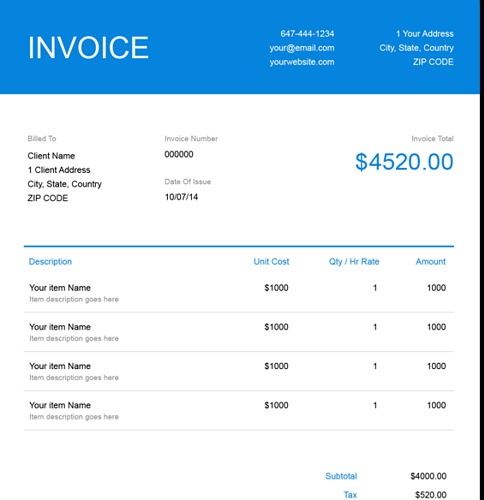
10. Failure to Pass KYC/Identity Re-Verification
Finally, Amazon might restrict your account if you fail to complete a routine identity re-verification check on time. If the name on your bank statement doesn’t quite match your ID, like using a nickname, it can cause a temporary hold. These checks are mandatory for all sellers to ensure that the person running the account is who they claim.
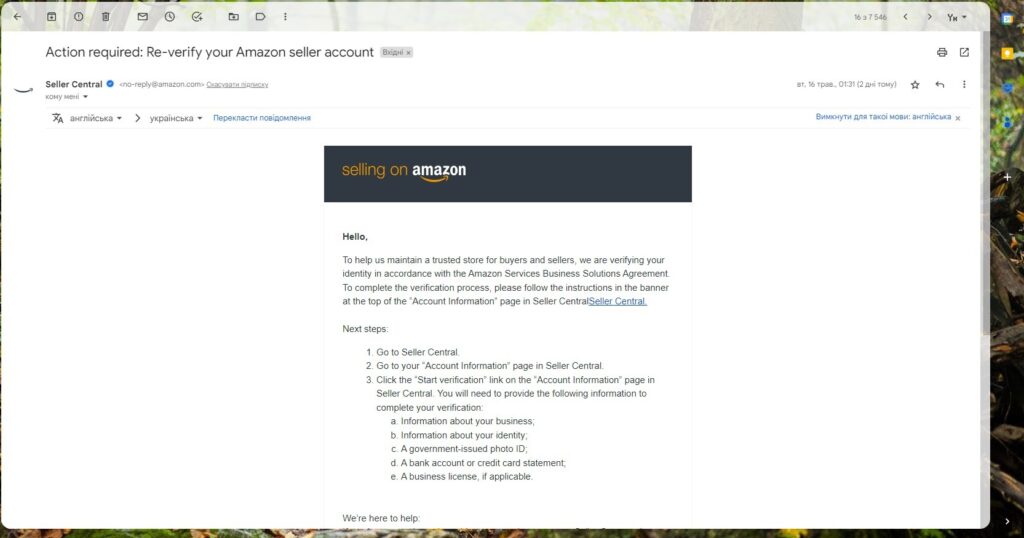
You can easily fix this by checking that your account information matches your government ID and bank documents exactly. If you notice a small discrepancy, reaching out to your bank to align the details is a simple and effective fix. Once your documents show the exact same name and address as your seller profile, the verification passes.
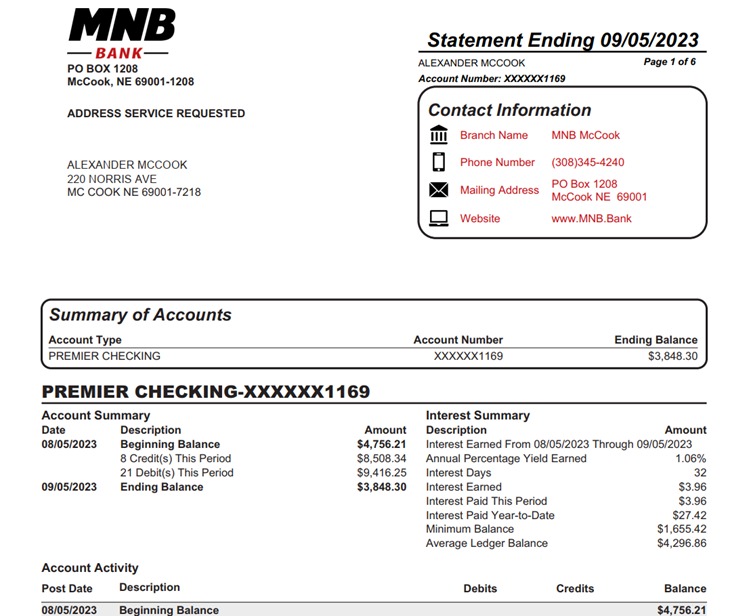
A best practice is to give Amazon a quick heads-up before you make any major changes to your bank or identity info. Keeping a digital copy of your most recent utility bill ensures you are always ready if a quick check-in is required. We recommend updating your professional documents whenever you move to a new office or change your business.
Frequently Asked Questions About Reasons Why Amazon Restricts Your Account
It typically takes 7 to 14 days to process an appeal. The exact timing depends on document accuracy and current support volume.
Yes, FBA orders usually remain active. Amazon typically only limits the specific fulfillment method that triggered the initial performance red flag.
One minor violation usually leads to a warning. However, critical issues like forgery or counterfeit claims can trigger immediate and total deactivation.
Deleting a listing does not remove the violation. We suggest keeping it open until the appeal is resolved to maintain your records.
No, this is a violation of Amazon’s multiple account policy. Attempting this will likely lead to a permanent ban of both seller accounts.
Get Professional Help from Megaficus
A final wrap-up on why staying calm and gathering proof is the fastest way to save your sales. Panicking and sending multiple disorganized emails to Seller Support only delays the process. Instead, use the data we provided to identify your specific Amazon account restricted reasons and respond with facts.
We at Megaficus are here to help you navigate these hurdles and keep your business running smoothly. If you need help drafting a professional Plan of Action or auditing your supply chain, our team has the expertise to get your account back in the green. Don’t let a bot stop your profit and take action today.