
Why do some FBA sellers consistently avoid shipment rejections while others keep running into compliance issues at the fulfillment center? The answer often comes down to something as straightforward as Amazon box sizes. In this guide, Megaficus breaks down official dimension requirements, size tiers, and packing rules so sellers can ship with confidence and avoid costly mistakes.
Quick Summary
- Box dimensions: Every FBA box must stay within 36″(L) x 25″(W) x 25″(H) and 50 lb. Boxes outside these limits risk being refused at the fulfillment center.
- Packaging and labeling: Amazon only accepts rigid corrugated boxes meeting ECT-32 and 200 lb burst strength standards, with approved cushioning materials and a unique FBA Box ID label on every box.
- Cut shipping costs: Box size determines which size tier a product falls into, directly affecting fulfillment fees. Right-sizing packaging and reducing void space are the most practical ways to lower costs per shipment.
- Oversized items: Boxes over 50 lb require Team Lift labels on five surfaces, while single oversize items have specific dimension exceptions that must be followed precisely to avoid shipment refusals.
Amazon Standard Box Dimensions Guide
Before packing any shipment to an FBA fulfillment center, sellers need to understand Amazon’s box size and weight requirements. Non-compliant boxes can result in refused inventory, additional processing fees, or blocked future shipments.
Standard Box Size Requirements
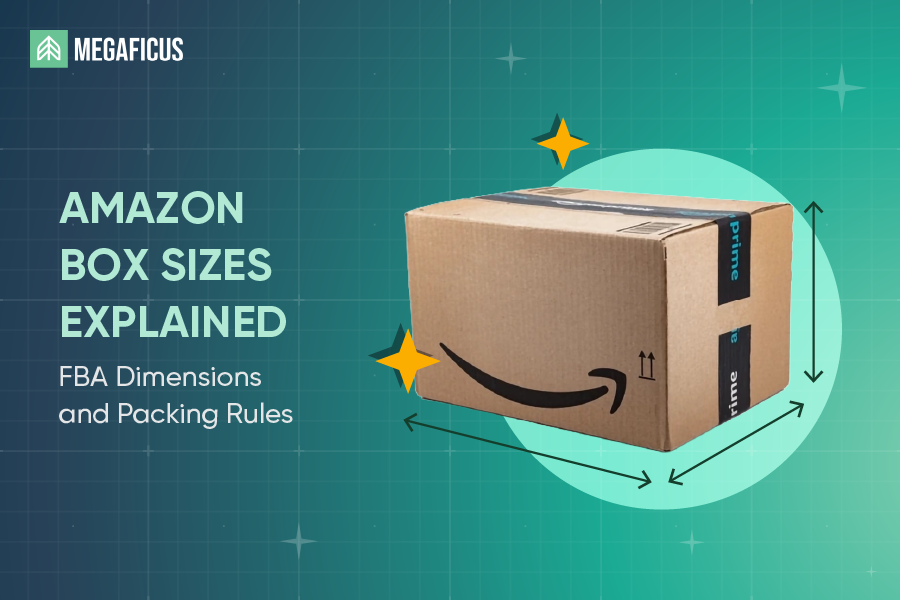
Every box shipped to an Amazon fulfillment center must meet the following limits:
| Specification | Requirement |
|---|---|
| Maximum dimensions | 36.0″ (L) x 25.0″ (W) x 25.0″ (H) |
| Minimum dimensions | 6″ x 4″ x 1″ |
| Maximum weight | 50 lb |
One important detail to keep in mind: while the length can reach up to 36 inches, the width and height must not exceed 25 inches under any circumstances. Boxes smaller than the minimum size or lighter than 1 lb may cause delays during the receiving process at the fulfillment center.
Box Requirements for Oversized Items
For oversized products, Amazon permits certain exceptions to standard dimensions and weight limits.
| Situation | Requirement |
|---|---|
| Item longer than 36 inches | The box may exceed standard limits, but must contain only one unit |
| Box weighing 50 lb to 65 lb | Must still comply with max dimensions of 36″ x 25″ x 25″ |
| Box weighing over 50 lb | Attach a Team Lift label on the top and all four sides (5 labels total) |
| Box weighing over 100 lb | Replace Team Lift with a Mechanical Lift label |
| Box containing jewelry or watches | Must not exceed 40 lb |
Oversized boxes must not be significantly larger than the actual item inside. If the box is excessively large relative to the product, Amazon reserves the right to refuse the shipment or charge additional fees.
Box Quality and Construction Standards
Amazon only accepts rigid, six-sided boxes with all flaps intact. To ensure inventory arrives undamaged, sellers should use new boxes that meet the following specifications:
| Standard | Requirement |
|---|---|
| Box type | Regular Slotted Carton (RSC), B flute |
| Edge compression | ECT-32 (Edge Crush Test) |
| Burst strength | 200 lb/sq. inch |
When reusing old boxes, sellers must remove or completely cover all previous labels, barcodes, and markings using opaque tape or a black marker before applying new labels. Any readable barcode from a previous shipment risks being accidentally scanned during fulfillment center receiving, which can cause inventory processing errors.
Amazon FBA Packaging And Labeling Requirements
Getting packaging and labeling right is not optional for FBA sellers. Amazon enforces these requirements strictly, and non-compliant shipments risk being refused at the fulfillment center or incurring inbound defect fees.
Every box shipped to Amazon must be a rigid, six-sided corrugated box with all flaps intact, meeting these construction standards:
| Standard | Requirement |
|---|---|
| Box type | Regular Slotted Carton (RSC), B flute |
| Edge compression | ECT-32 (Edge Crush Test) |
| Burst strength | 200 lb/sq. inch |
Each item inside must be wrapped separately with at least 2 inches of cushioning between products and box walls on all sides. After packing, shake the box gently to confirm contents do not shift.
For packing materials, Amazon has a clear approved and prohibited list:
| Approved | Prohibited |
|---|---|
| Bubble wrap / small cell bubble sheeting | Packing peanuts (including biodegradable) |
| Full sheets of kraft paper (min. 60 lb basis weight) | Foam strips |
| Inflatable air pillows | Crinkle wrap |
| Polyethylene foam sheeting | Shredded paper |
| Thermocol chips / Styrofoam |
On the labeling side, each box requires two items on the outside:
- Unique FBA Box ID label printed from the Shipping Queue in Seller Central
- Carrier address label with complete delivery and return information
Every product unit inside must also carry a scannable barcode, either a manufacturer barcode or an Amazon FNSKU label.
When reusing old boxes, all previous barcodes and markings must be fully covered with opaque tape or a black marker before applying new labels, as any readable barcode from a prior shipment can trigger receiving errors at the fulfillment center.
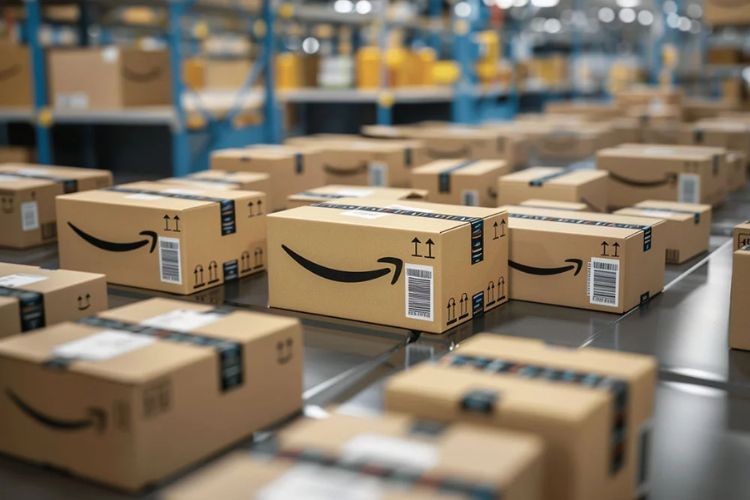
How To Cut Shipping Costs With The Right Box Size
Box size directly affects how much you pay Amazon per unit shipped. Choosing a box that is even slightly too large can push your product into a higher size tier, triggering significantly higher fulfillment fees on every single order.
How Dimensional Weight Pricing Works
Amazon calculates shipping costs based on whichever is greater between a product’s actual weight and its dimensional weight. The dimensional weight formula is:
Dimensional weight = Length x Width x Height (in inches) divided by 139
(139 is the standard divisor Amazon uses for US shipments)
Take a 2 lb item packed in a 20″ x 20″ x 4″ box as an example. Applying the formula gives a dimensional weight of 5.76 lb, which means Amazon will then charge fulfillment fees based on 5.76 lb instead of the actual 2 lb physical weight. As a result, the bigger the gap between actual weight and box size, the more a seller ends up overpaying on every single order.
One important exception: Small Standard-size products are not subject to dimensional weight pricing, so fees for this tier are always based on unit weight only.
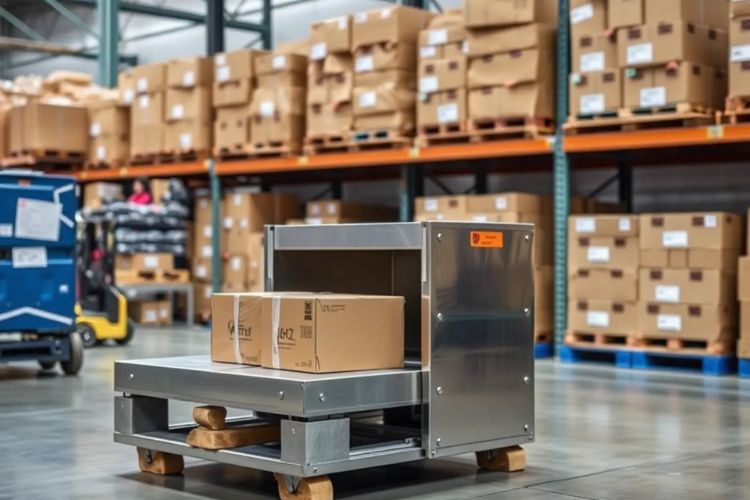
Tips To Choose The Most Cost-Effective Box
The size tier a product falls into has a direct and measurable impact on fees. For instance, a Small Standard item costs $3.22 to fulfill, while a Large Standard item jumps to $5.67, which represents a 76% increase from the size tier alone.
Moving further up the scale, bringing a product from Large Bulky down to Large Standard lowers the base fulfillment cost from $9.61 to $6.92. Similarly, reducing from Extra-Large to Large Bulky cuts base fulfillment costs by over 60%.
To avoid overpaying, sellers should:
- Right-size the box: Even a small decrease in packaging dimensions can result in significant FBA shipping savings across many shipments.
- Reduce internal packaging bulk: An overly thick layer of bubble wrap, excessive padding, or inefficient product placement can increase overall dimensional weight. Reevaluating the internal configuration to reduce empty space or use more compact filler materials can lower costs.
- Work backwards from the size tier limits: You can calculate whether trimming 1 to 2 inches off your box dimensions would bring your dimensional weight below the next pricing threshold, potentially saving on fulfillment fees per unit.
- Maximize the new 36-inch length allowance: By utilizing up to 95% of the allowed dimensions and weight, sellers can reduce AWD inbound and outbound processing costs significantly, since these are charged per box.
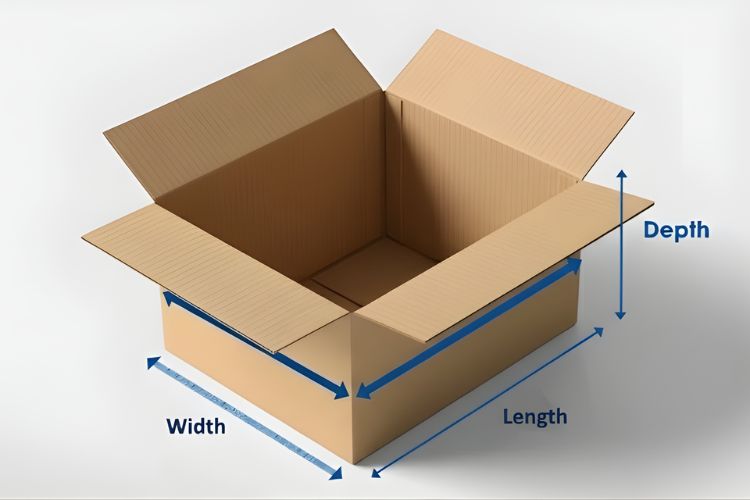
How To Pack And Ship Oversized Items On Amazon
Oversized shipments follow different rules compared to standard boxes, and missing any one requirement can result in refused inventory or blocked future shipments. Understanding exactly when each rule applies saves sellers time and avoids unnecessary fees.
When To Use A Team Lift Label
Box weight determines which safety label is required. Amazon enforces two distinct thresholds that sellers need to apply correctly:
- Over 50 lb: Attach a Team Lift label on the top and all four sides of the box, totaling five labels. Placing a single label on top alone is not sufficient and will be considered non-compliant.
- Over 100 lb: The Team Lift label must be replaced entirely with a Mechanical Lift label, following the same five-placement rule.
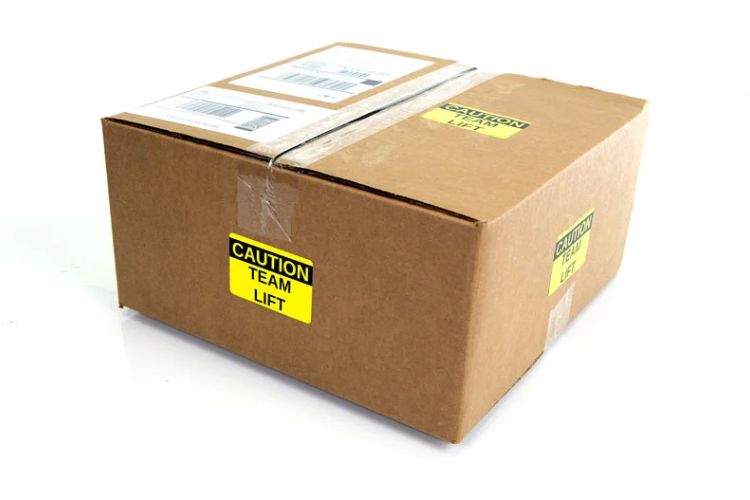
Special Handling Instructions For Large Shipments
When a single item exceeds 36 inches in length, the box is permitted to go beyond standard dimension limits, but only under two strict conditions:
- The box must contain exactly one unit.
- The box must not be significantly larger than the item itself.
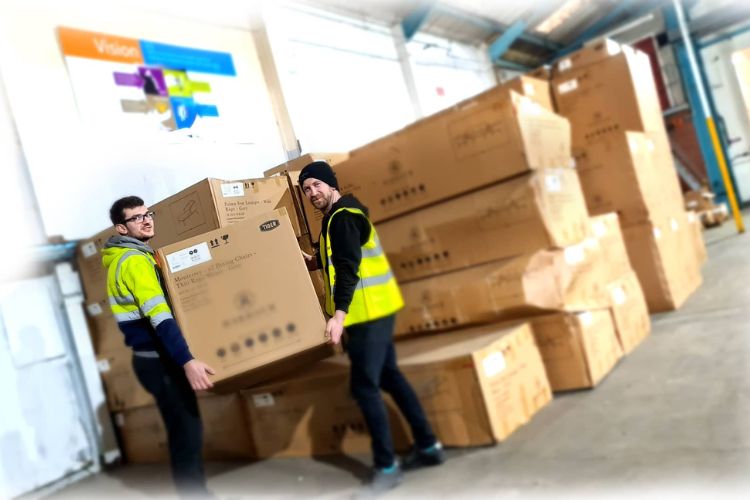
Sending an oversized item in an excessively large box gives Amazon grounds to refuse the shipment, charge additional fees, or restrict shipping privileges altogether. For boxes weighing between 50 lb and 65 lb, standard max dimensions of 36″(L) x 25″(W) x 25″(H) still apply without exception. Weight above 65 lb is not permitted under any circumstance, regardless of what is inside.
Packaging Tips For Heavy Items
Heavy items need packaging that holds up under stacking pressure during transit. For boxes approaching the 50 lb limit, sellers should meet the following construction standards:
| Standard | Requirement |
|---|---|
| Box type | Regular Slotted Carton (RSC), B flute |
| Edge compression | ECT-32 (Edge Crush Test) |
| Burst strength | 200 lb/sq. inch minimum |
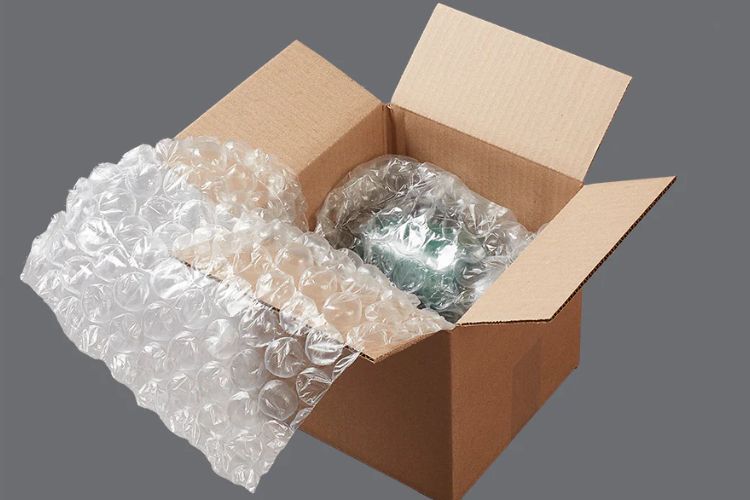
Beyond box quality, proper internal packing also plays an important role. Each item must be wrapped separately with a minimum of 2 inches of cushioning on all sides, including between the product and the box walls.
After sealing, sellers should shake the box gently to confirm nothing shifts inside. If the contents move, more cushioning material must be added before applying labels.
One rule that many sellers overlook is the separate weight cap for certain product categories. Boxes containing jewelry or watches must not exceed 40 lb, which is lower than the standard 50 lb limit and applies regardless of box size.
Amazon FBA Box Packing Best Practices
Following Amazon’s packing requirements is only the baseline. Applying these best practices on top of that helps sellers avoid rejected shipments, reduce fees, and keep inventory moving smoothly through fulfillment centers.
- Measure before packing: Sellers should measure the fully packaged unit rather than the bare product when determining box size. From there, adding 1 to 2 inches on each side accounts for cushioning without creating excessive void space that inflates dimensional weight.
- Pack contents in the right order: Heavier items should always sit at the bottom of the box, with lighter items placed on top to prevent crushing during transit. Each item also needs to be wrapped separately with at least 2 inches of cushioning maintained between every item and the box walls.
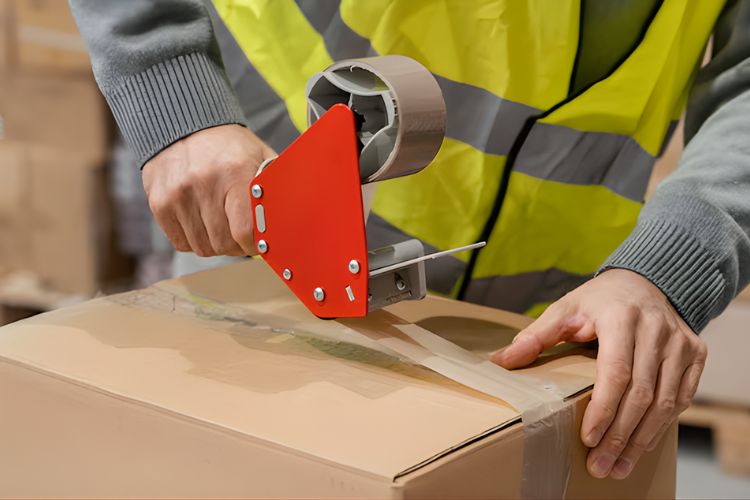
- Seal and verify before labeling: Strong packing tape must be applied across all seams and corners, as boxes pass through multiple handling points inside Amazon’s fulfillment network. After sealing, sellers should shake the box gently to check whether the contents shift, and if they do, more cushioning must be added before resealing.
FAQs About Amazon Box Sizes
The maximum is 36.0″(L) x 25.0″(W) x 25.0″(H) and 50 lb. The only exception is for single oversize items that exceed these limits, in which case the box must contain exactly one unit.
No. Amazon requires rigid, six-sided corrugated boxes meeting ECT-32 edge crush rating and 200 lb/sq. inch burst strength. Open-display boxes, point-of-sale containers, and gaylord boxes are not accepted.
Amazon introduces a new Small Bulky tier on January 15, 2026. Sellers whose products currently fall into Large Bulky should review their box dimensions against the new tier thresholds, as qualifying for Small Bulky can lower fulfillment fees per unit.
Non-compliant boxes can be refused at the fulfillment center, returned at the seller’s expense, or trigger inbound defect fees. Repeated violations may result in future shipments being blocked.
Get Professional Help from Megaficus
Getting Amazon box sizes right is not a one-time task. As fee structures evolve and size tier definitions change, sellers who stay on top of dimension requirements, weight limits, and packaging standards will consistently spend less per shipment and avoid costly compliance issues down the line.
If you want to optimize your FBA packaging strategy, reduce fulfillment fees, and ship with confidence, Megaficus is ready to support you with practical expertise and data-driven guidance at every stage of your Amazon journey.