
Want to reach thousands of shoppers without paying for every click? Amazon CPM ad types let you pay per 1,000 impressions, making brand awareness campaigns more cost-effective and scalable. Learn how to leverage CPM advertising through Amazon DSP and Sponsored Display in this guide by Megaficus.
Quick Summary
- Cost per mille (CPM) is a pricing model where advertisers pay a fixed amount for every 1,000 ad impressions, commonly used in Amazon DSP and Sponsored Display (vCPM) campaigns focused on brand awareness rather than immediate sales.
- When to use CPM: Best for brand awareness, product launches, video/display campaigns, and retargeting. Requires $10,000+ monthly budget for self-service or $35,000-$50,000 for managed-service Amazon DSP.
- CPM calculation: Total Campaign Cost ÷ Total Impressions × 1,000. Example: $300 spent with 75,000 impressions = $4 CPM.
- Amazon DSP setup: Six-step process including account access, order creation, line item configuration, CPM bid setting ($5-$15 typical), creative upload, and launch with 24-48 hour review.
- Best practices: Prioritize Amazon-owned inventory, set 70%+ viewability thresholds, test multiple ad formats (video, display, audio), and monitor effective CPM, frequency, domain performance, and audience overlap weekly.
What Is Cost Per Mille (CPM)?
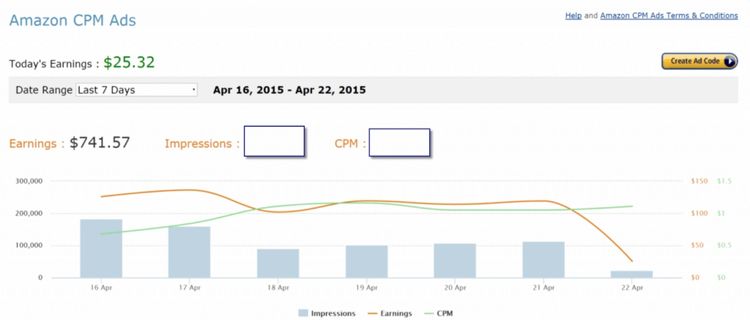
Cost per mille (CPM) is a pricing model where advertisers pay a fixed amount for every 1,000 ad impressions. Under this model, you’re charged based on how many times your ad appears, not on clicks or conversions.
CPM is commonly used in programmatic advertising, where demand-side platforms (DSPs) automate ad buying and supply-side platforms (SSPs) manage ad inventory for publishers.
Why Is CPM Important?
CPM is one of several pricing models in digital advertising, alongside cost-per-click (CPC) and cost-per-action (CPA). Each model serves different campaign goals: CPM focuses on reach and visibility, CPC optimizes for engagement, and CPA targets conversions.
On Amazon, CPM is primarily used in Amazon DSP and Sponsored Display (vCPM) campaigns when the goal is brand awareness rather than immediate sales. CPM offers three key advantages that help optimize advertising strategy and budget allocation:
- Budget control: CPM provides clear cost visibility by showing exactly how much you’ll spend to reach 1,000 impressions. When CPM rates are high, you can quickly identify expensive campaigns and adjust targeting or creative to reduce costs while maintaining reach.
- Channel comparison: CPM creates a standard metric to evaluate advertising efficiency across different platforms. You can compare costs between Amazon DSP, social media, and display networks to identify which channels deliver the most cost-effective reach for your audience.
- Performance predictability: CPM enables accurate forecasting by calculating exact impression delivery from your budget and CPM rate. This helps set realistic reach goals and ensures your awareness targets are achievable within budget.
When To Use CPM?
You should use CPM when your primary goal is brand visibility, audience reach, and long-term recognition, rather than immediate conversions. CPM is especially effective in the following situations:
- When building brand awareness: CPM lets you pay per impression, helping you reach large audiences at predictable costs while maintaining consistent exposure.
- When launching new products: CPM quickly drives visibility and helps establish market presence before you shift to conversion-focused campaigns.
- When you want to reach audiences beyond Amazon: Amazon DSP allows you to run display, video, and audio ads across Prime Video, Twitch, Fire TV, and third-party websites, giving your brand multi-channel exposure.
- When using video or display creatives: These formats perform best under CPM because they emphasize engagement and storytelling. Sponsored Display uses viewable CPM (vCPM), where you’re charged only when 50% of your ad is on-screen for at least one second.
- When retargeting shoppers: With DSP’s CPM model, you can retarget people who viewed your product, visited your listing, or purchased from competitors, bringing them back to convert.
- When you have the budget for DSP: Amazon DSP requires higher minimums: around $10,000/month for self-service and $35,000–$50,000 for managed service. Average CPM rates typically run from $5–$15 depending on targeting and format.
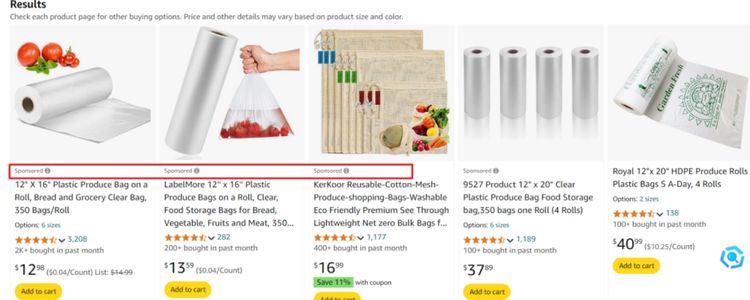
Skip CPM if you need immediate sales or conversions, as cost-per-click (CPC) models like Sponsored Products work better for direct response. With CPC, you only pay when customers show purchase intent by clicking your ads.
Additionally, CPM isn’t suitable for budgets under $10,000 monthly because impression-based pricing requires high volume to generate meaningful results.
How Is CPM Calculated?
Calculating CPM is straightforward using this formula:
CPM = (Total Campaign Cost ÷ Total Impressions) × 1,000
For example, if you spend $300 on a campaign that generates 75,000 impressions, your CPM would be: CPM = ($300 ÷ 75,000) × 1,000 = $4
This means you’re paying $4 for every 1,000 impressions your ad receives. The lower your CPM, the more cost-efficient your campaign is at reaching your target audience.
Try calculating your CPM cost here:
CPM, CPC, And CPA: What’s the Difference?
Choosing the right pricing model depends on your campaign objectives and desired outcomes. Here’s how CPM compares to other common advertising models:
| Pricing Model | What You Pay For | When You’re Charged | Primary Goal | Best Suited For |
|---|---|---|---|---|
| CPM (Cost Per Mille) | Every 1,000 impressions | When your ad displays | Maximize brand visibility and reach | Awareness campaigns, product launches, video ads |
| CPC (Cost Per Click) | Each click on your ad | When users click | Drive website traffic and engagement | E-commerce stores, lead generation, direct response |
| CPA (Cost Per Action) | Completed conversions | When users take action (purchase, sign up) | Generate sales and measurable results | Performance marketers, conversion-focused campaigns |
How To Set Up A CPM Campaign On Amazon DSP?
Follow these six steps to launch your CPM campaign and reach audiences across Amazon properties and third-party sites.
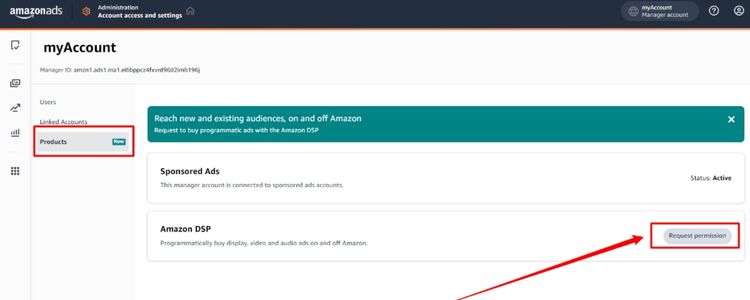
Step 1: Access Amazon DSP
Visit the Amazon DSP registration page, submit your business details, and wait for account approval.
Amazon DSP offers two account options depending on your budget and expertise:
- Self-service: Full campaign control with $10,000+ monthly minimum spend, ideal if you have programmatic advertising experience.
- Managed service: Requires $50,000 monthly minimum with Amazon’s team handling setup and optimization.
Step 2: Create Your Order
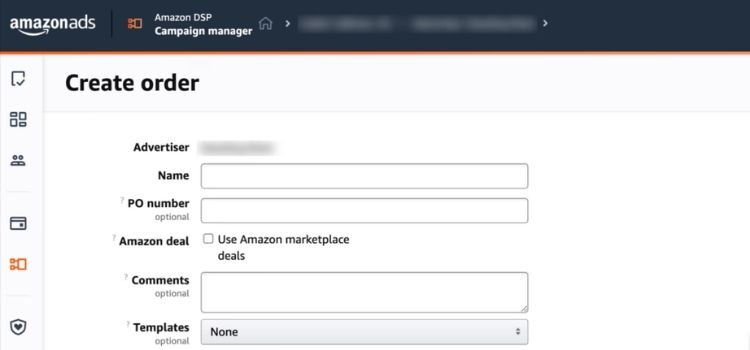
Navigate to Campaign Manager and complete these setup steps:
- Click “Create Order” and name your campaign clearly (e.g., “Q1-Video-Awareness”).
- Select your objective: Awareness (maximize reach), Consideration (drive engagement), or Conversions (generate sales).
- Set your total budget and flight dates.
- Configure frequency cap to prevent ad fatigue.
Step 3: Set Up Line Items
Configure your line items by selecting the following settings:
- Click “Add Line Item” and choose your ad format: display, video, or audio.
- Select targeting: in-market (active shoppers), lifestyle (interest-based), contextual (content-related), or remarketing (past visitors).
- Set location targeting and domain allowlists/blocklists if needed.
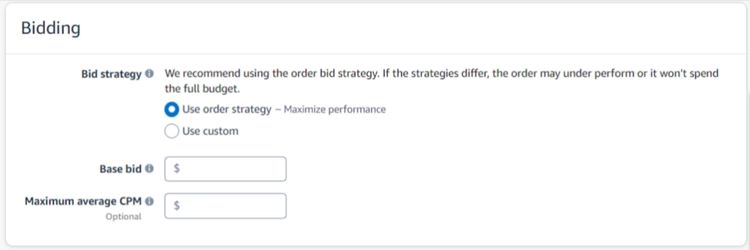
Step 4: Set Your CPM Bid
Enter your maximum CPM bid, typically $5-$15, depending on targeting complexity. Amazon optimizes bidding to meet your target while staying within your budget. Start conservative and adjust based on performance data.
Step 5: Upload Creatives
Prepare and upload your ad assets through these steps:
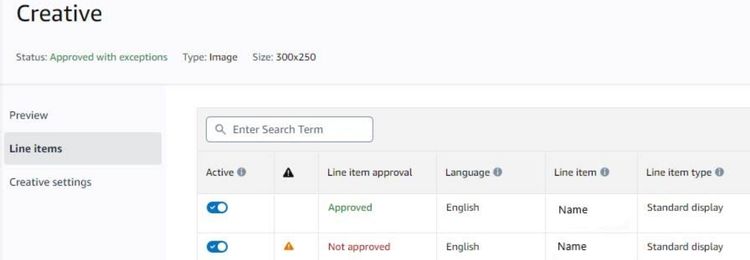
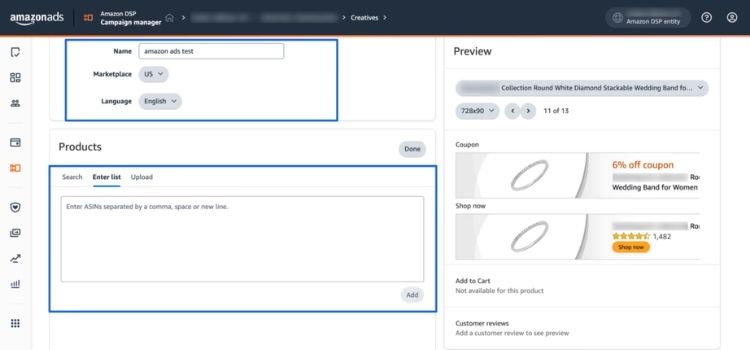
- Go to Creative Manager and click “Create Creative”.
- Upload display images, video files (MP4, 6-30 seconds), or audio files meeting Amazon’s specifications.
- Ensure all creatives comply with Amazon’s ad policies.
- Assign creatives to your line items.
Step 6: Launch and Monitor
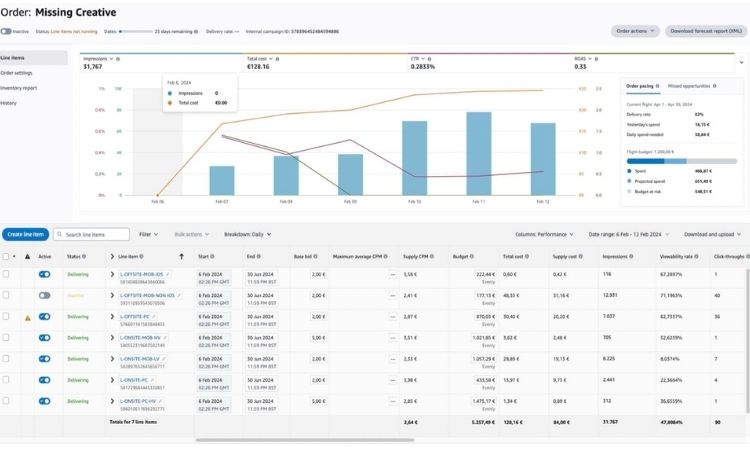
Review all settings for accuracy, then click “Save and Launch.” Your campaign enters Amazon’s review process (typically 24-48 hours). Once live, monitor performance through the DSP dashboard and optimize weekly by adjusting bids, pausing underperformers, and testing new creatives.
Best Practices For CPM Ads On Amazon
Apply these 4 proven strategies to maximize your CPM campaign performance, reduce wasted spend, and achieve better ROI on Amazon DSP.
Optimize Ad Placement Strategy
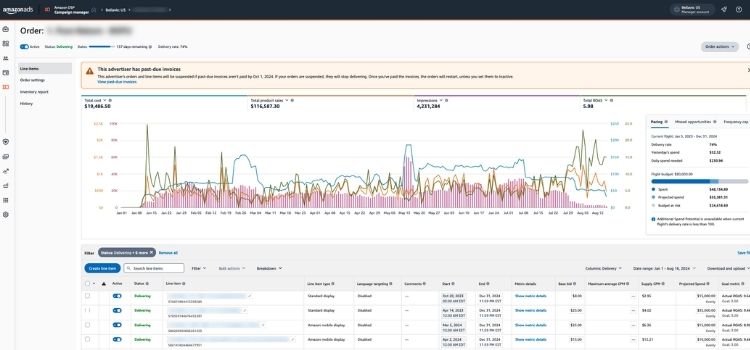
Amazon-owned properties like Prime Video and Fire TV deliver 30-40% higher viewability than third-party sites. Start by allocating 60% of the budget to Amazon inventory, then test third-party sites at lower rates ($3-$7 CPM).
Review your Placement Reports weekly and increase bids by 20-30% for top performers while pausing placements with viewability below 50%.
Improve Ad Viewability Rates
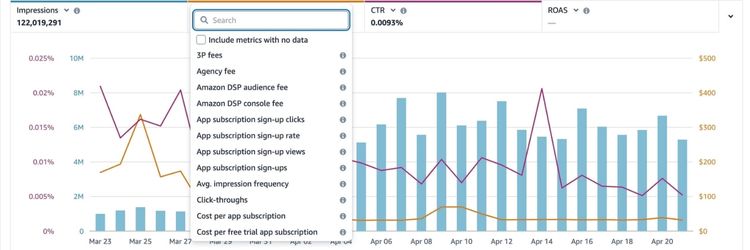
Amazon’s viewable CPM (vCPM) only charges when 50% of your ad appears on screen for one second, making viewability critical for cost control. To maximize this advantage, set your campaign viewability threshold to 70% or higher to ensure quality impressions.
Beyond threshold settings, optimize your creative assets by using lightweight files under 150KB for display ads and ensuring videos load within 2 seconds. Then, monitor your Viewability Report weekly to track performance and pause line items consistently below 60% to prevent wasted spend.
Test Multiple Ad Formats
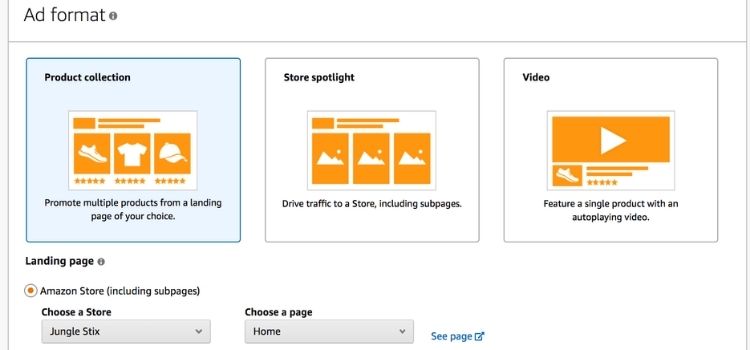
Different formats perform best at different funnel stages, so you should test all available options to find what works for your products:
- Video ads (15-30 seconds): Generate 45% higher brand recall, ideal for product launches at $10-$15 CPM
- Display ads: Work efficiently for the consideration stage at $5-$8 CPM, especially dynamic product ads
- Audio ads: Deliver the lowest CPM ($3-$6) with engaged audiences on Amazon Music
Run A/B tests with identical targeting but different formats for 2 weeks, then allocate 70% of the budget to top performers.
Monitor Performance Metrics Weekly
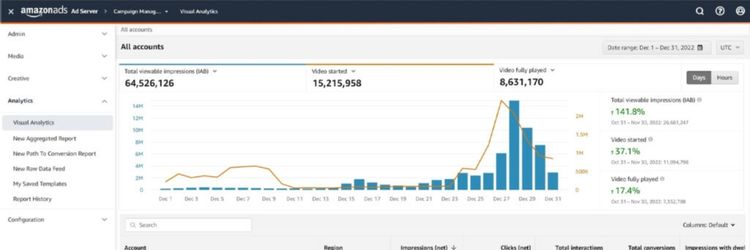
Track these four critical metrics beyond impressions to optimize your CPM campaigns effectively:
- Effective CPM: Calculate total spend ÷ viewable impressions × 1,000. If your $10 max bid delivers at $12 eCPM, your targeting is too competitive
- Frequency: Cap at 3-5 impressions per user weekly to prevent ad fatigue, which increases CPM by 40-60%
- Domain performance: Blocklist sites with CTR below 0.1% or suspicious impression volumes
- Audience overlap: Keep overlap below 20% between campaigns using Amazon Marketing Cloud to avoid paying twice for the same users
FAQs About Amazon CPM Ad Type
CPM ads charge per 1,000 impressions, not clicks. They’re used in Amazon DSP and Sponsored Display (vCPM) for brand awareness campaigns across Amazon and third-party sites.
CPM charges per 1,000 impressions, CPC charges per click, and CPA charges per completed action. CPM focuses on visibility, CPC targets traffic, and CPA optimizes for conversions.
CPM works better for brand awareness than direct sales. For immediate conversions, use CPC models like Sponsored Products. CPM supports sales indirectly through brand building and retargeting.
Amazon DSP uses CPM for display, video, and audio ads. Sponsored Display uses viewable CPM (vCPM). Sponsored Products and Sponsored Brands use CPC only.
CPM is better for brand awareness because it maximizes reach at predictable costs. For direct sales, use CPC models that charge only when shoppers click with purchase intent.
Get Professional Help from Megaficus
Amazon CPM ad types offer a powerful way to build brand awareness and reach large audiences when used strategically. By understanding the differences between pricing models, targeting the right audiences, and continuously optimizing your campaigns, you can achieve strong visibility and sustainable growth on Amazon.
Success with CPM ads requires choosing the right platform, setting appropriate budgets, and monitoring performance metrics closely. Mastering these campaigns positions your brand to capture attention at scale and outperform competitors in your category.
If you need expert guidance to optimize your Amazon advertising strategy and maximize ROI across all campaign types, the team at Megaficus is ready to help.