
Is your Amazon listing not selling despite getting traffic? Poor conversion typically results from pricing errors, weak optimization, insufficient reviews, or Buy Box loss that blocks purchases. Discover 12 critical reasons why Amazon listings fail to sell and proven solutions to fix visibility, pricing, and content issues in this guide by Megaficus.
Quick Summary
| Issues | Main Cause |
|---|---|
| Uncompetitive Price Points | Prices are too high vs competitors, no dynamic pricing |
| Inadequate Product Selection And Market Validation | No market demand, personal preference over data |
| Suboptimal Product Page Elements | Weak titles, poor images, missing keywords |
| Insufficient Customer Testimonials And Trust Signals | Few/no reviews, no social proof |
| Low Search Rankings And Limited Exposure | Poor keyword placement, wrong category |
| Ineffective Or Absent PPC Campaigns | High ACoS, wrong keywords, no negatives |
| Failure To Win The Featured Offer Position | High price, slow shipping, poor metrics |
| Extended Fulfillment And Transit Times | 5-7 day handling, no Prime badge |
| Weak Brand Identity And Recognition | No storytelling, generic content |
| Limited Off-Platform Promotional Activities | Amazon-only traffic, no external marketing |
| Policy Violations And Seller Performance Issues | Late shipments >4%, compliance issues |
| Lack Of Performance Tracking And Profit Analysis | Ignoring landed costs, retaining shelf-warmers |
What Does An Amazon Listing Not Selling Mean?
When an Amazon listing generates no sales, it reveals your product page’s inability to turn visitors into paying customers. This failure typically stems from limited search visibility, prices that fail to compete, insufficient reviews that undermine credibility, or weak content optimization.
In many situations, this means your product doesn’t show up in relevant searches due to algorithmic suppression, your listing content fails to capture shopper interest, or you’re competing in an overcrowded marketplace.
12 Reasons Why Your Amazon Listing Isn’t Selling
Below are the 12 most common reasons Amazon listings generate views without sales, along with actionable solutions to restore profitability.
Uncompetitive Price Points
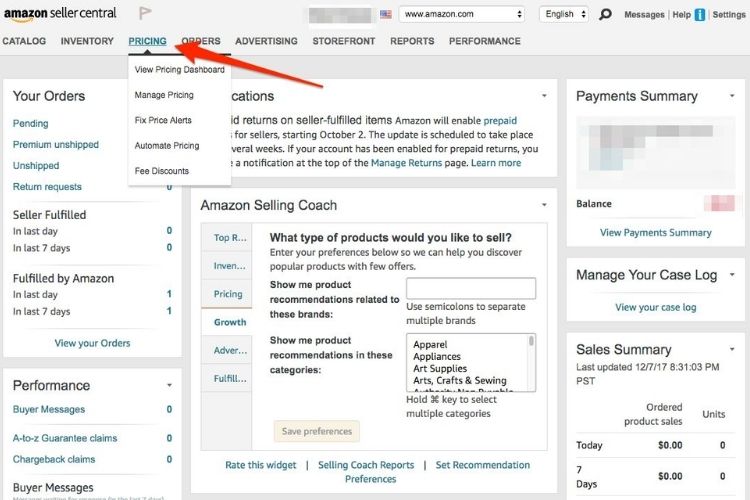
Pricing directly determines purchase decisions, as Amazon customers consistently choose cheaper alternatives when comparing similar products. This pricing disadvantage reduces your Buy Box eligibility since Amazon’s algorithm prioritizes competitive rates. Many sellers fail to adjust prices continuously based on market changes, while incorrect positioning (too high or too low) either blocks sales or triggers quality concerns.
Sellers must implement these pricing strategies to maintain competitiveness and maximize conversions:
- Automated repricing software: Use AI-powered tools to monitor competitors and adjust your prices instantly, as manual updates cannot keep pace with Amazon’s dynamic marketplace
- Minimum price floors: Set price limits to prevent excessive discounting that erodes profit margins while maintaining competitive positioning
- Dynamic pricing strategy: Adjust rates 24/7 based on competitor activity, Buy Box changes, and real-time market conditions
- Mid-range positioning: Research competitor pricing and position your products in the middle tier to avoid extremes that either price you out or damage brand perception
- Buy Box optimization: Combine competitive pricing with fast shipping and strong seller ratings to maximize conversion
- Real-time analytics: Identify slow-moving inventory caused by pricing errors and adjust strategies promptly to reduce storage costs
Inadequate Product Selection And Market Validation
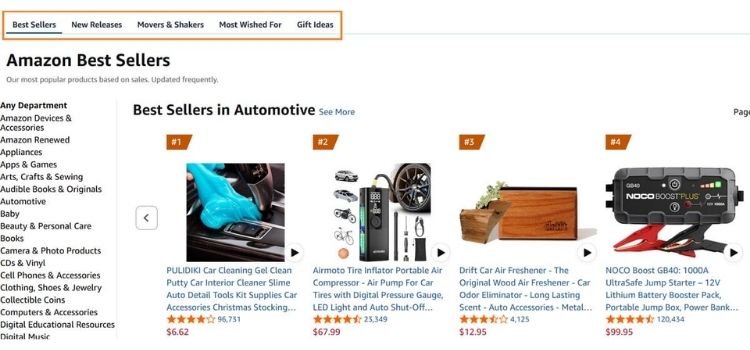
Product selection failures occur when sellers launch items without genuine market demand or choose products based on personal preferences instead of data research. Additionally, selling identical products without differentiation makes competing against established sellers nearly impossible. These mistakes guarantee poor sales regardless of optimization efforts.
Successful selection requires market research using tools like JungleScout or Amazon’s Growth Opportunities to validate demand through competitor sales velocity and review analysis. Furthermore, reading competitor reviews helps identify unmet customer needs you can address through product improvements or bundling.
Suboptimal Product Page Elements
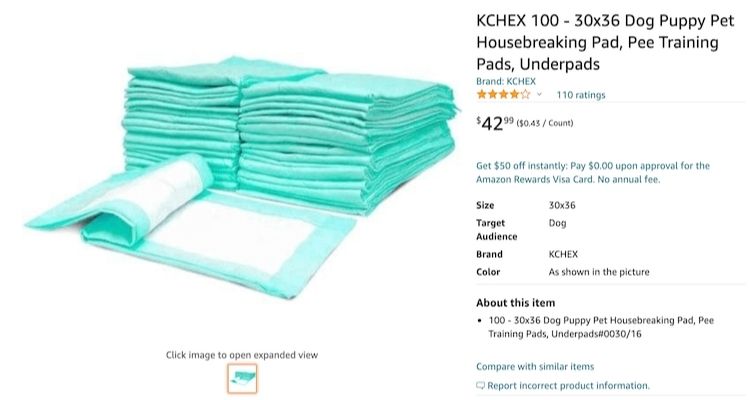
Product page failures stem from ineffective titles that lack critical keywords or contain excessive symbols, low-quality images that appear unprofessional or fail to show proper scale, and poor keyword research preventing listings from appearing in searches. These technical issues create weak first impressions that immediately reduce click-through rates.
Content deficiencies compound conversion problems when bullet points exceed character limits, brand storytelling is absent, and listings lack social proof. Since 91% of buyers check reviews before purchasing, products without adequate reviews and compelling content lose sales to better-optimized competitors.
You must optimize these critical page elements to improve visibility and conversion rates:
- Title and keywords: Maximize 250-character limit with high-value keywords, capitalize first letters, use numerals not words, research long-tail terms to reduce ad costs and improve conversion
- Images: Upload 9 images at 1000x500px minimum, including white-background shots, 360-degree views, lifestyle photos, and scale comparisons with familiar objects
- Content structure: Create 3-5 bullet points under 1,000 total characters; use A+ Content with video and graphics; implement Brand Story to communicate mission and values
Insufficient Customer Testimonials And Trust Signals
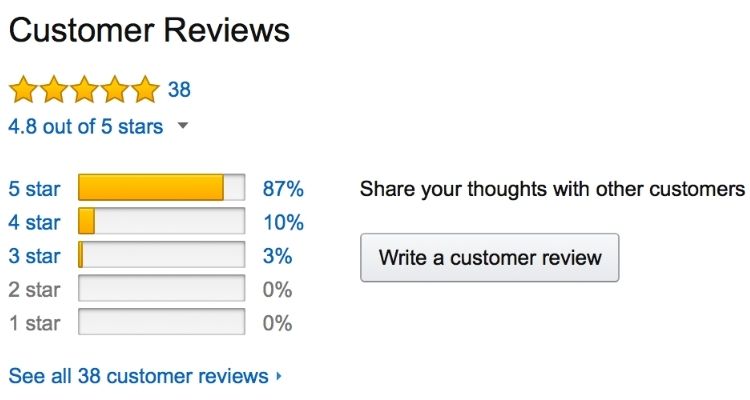
Customer reviews serve as critical social proof since 91% of buyers check them before purchasing. Consequently, listings with insufficient reviews rank lower in Amazon’s algorithm, reducing visibility to potential buyers and preventing conversion.
Sellers should use the “Request a Review” button in Seller Central 4-30 days post-delivery to prompt feedback. Additionally, enrolling products with under 30 reviews in Amazon Vine generates quality evaluations from verified reviewers. Furthermore, responding to all reviews professionally demonstrates accountability and increases buyer confidence in your brand.
Low Search Rankings And Limited Exposure
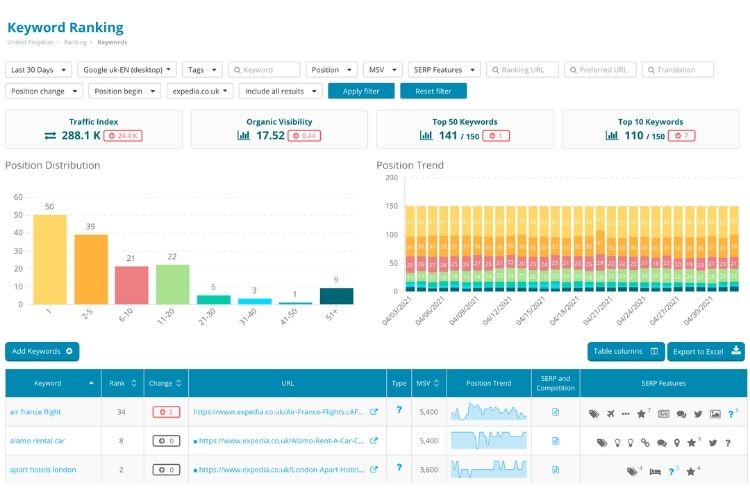
Poor search visibility stems from ineffective keyword placement in strategic positions like titles and bullet points, causing products to miss high-volume search traffic. Amazon’s A10 algorithm now prioritizes customer behavior, seller authority, and external traffic beyond simple keyword matching, meaning outdated optimization strategies fail to generate rankings.
Use long-tail keywords to reduce costs and improve precision, then maximize 250-character titles with top keywords upfront. Furthermore, launch auto-targeted Sponsored Products to gather search data, then optimize manual campaigns with proven converting keywords.
Underperforming Paid Advertising Efforts
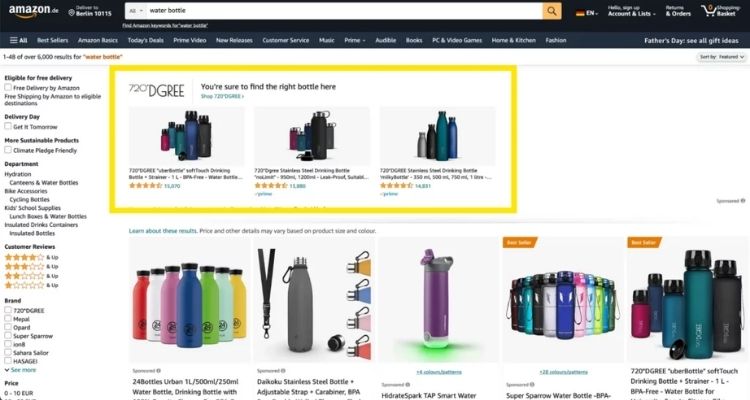
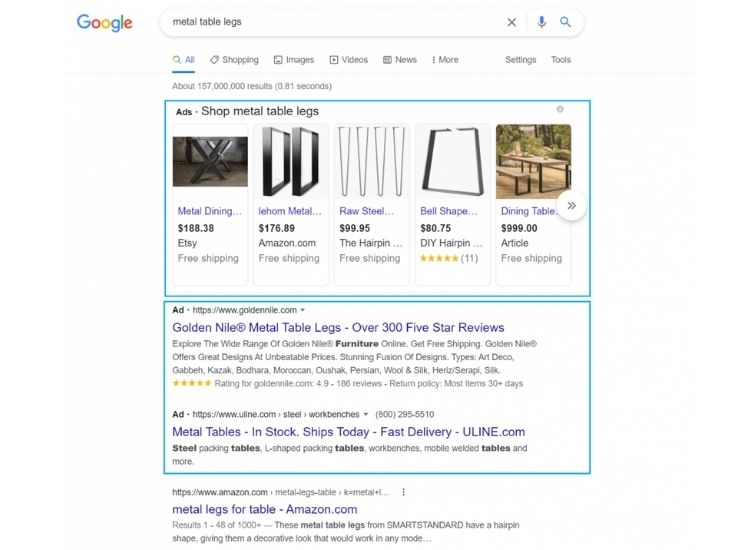
Poor PPC performance stems from weak keyword strategies based on guesswork rather than data, causing ads to reach the wrong audiences and waste budget. Many sellers fail to monitor ACoS (advertising cost of sales), leading to campaigns that spend more than they generate in revenue.
Additionally, sellers often run ads for poorly optimized listings where customers click but don’t buy due to low-quality images or high prices, resulting in wasted ad spend without conversions.
Implement these advertising optimizations to reduce costs and improve campaign profitability:
- Negative targeting: Identify keywords with high spend but zero conversions in your campaign reports and add them to negative keyword lists to prevent further budget waste on irrelevant traffic
- Brand bidding strategy: Bid on competitor brand names to appear in their search results and capture comparison shoppers; simultaneously bid on your own brand terms to prevent competitors from stealing your existing customers
- Budget and timing optimization: Allocate higher daily budgets during 7 PM-midnight when online shopping activity peaks and reduce spending during 9 AM to 3 PM when traffic drops significantly
- ACoS management: Calculate your break-even ACoS (profit margin minus Amazon fees) and maintain campaigns at 20-25% to ensure each sale generates profit after advertising costs
- Campaign pause for listing fixes: Stop underperforming ads and audit listing elements (image quality, title keywords, competitive pricing, review count) before resuming spend to avoid paying for clicks that won’t convert
- Bid automation tools: Implement software that adjusts bids every 15-30 minutes based on performance data, targeting specific ACoS thresholds while automatically increasing bids on high-converting keywords
Failure To Win The Featured Offer Position
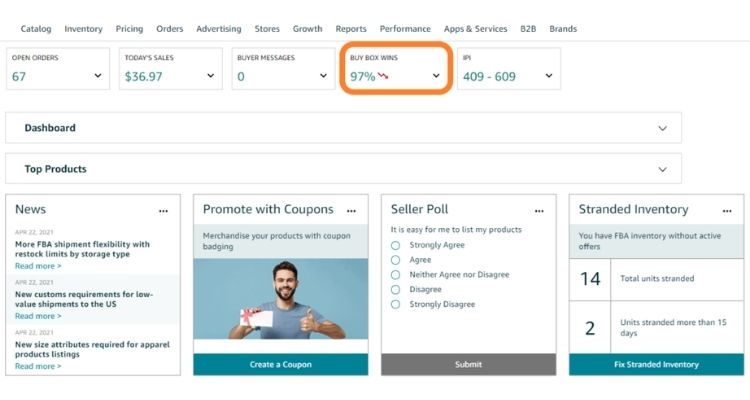
Losing the Buy Box eliminates visibility since 82% of Amazon sales occur through this position. Amazon’s algorithm awards it based on competitive pricing, fulfillment speed, seller performance metrics (Order Defect Rate below 1%, cancellation under 2.5%), and stock availability. Consequently, FBM sellers with slow shipping or higher prices consistently lose to FBA sellers with superior metrics.
Deploy these strategies to win the Featured Offer position and capture maximum sales:
- Automated repricing: Deploy software adjusting prices every 10-15 minutes to stay within 2-5% of the lowest offers while maintaining profit floors
- FBA enrollment: Switch to Fulfillment by Amazon for Prime eligibility and 2-day shipping, increasing Buy Box win rate by 30-40%
- Performance optimization: Maintain Order Defect Rate below 1%, cancel rate under 2.5%, and late shipment under 4% through automated order processing
- Inventory management: Keep a minimum of 30 days’ stock to avoid out-of-stock penalties that immediately forfeit Buy Box eligibility
- Price monitoring: Use tools tracking Buy Box price thresholds hourly to position at the algorithm’s sweet spot rather than matching the lowest price
- Fast shipping integration: For FBM sellers, partner with 2-3 day delivery carriers and upload tracking within 24 hours to improve performance scores
Extended Fulfillment And Transit Times
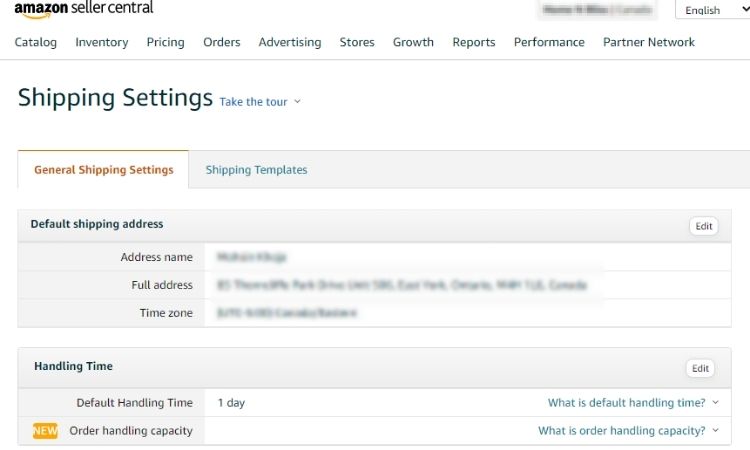
Extended shipping times reduce conversion rates since 66% of customers expect 2-3 day delivery, while slow fulfillment damages Buy Box eligibility as Amazon’s algorithm favors fast shipping. Consequently, FBM sellers with 5-7 day handling cannot compete against FBA’s same-day processing and 2-day Prime standard.
Apply these fulfillment improvements to meet customer expectations and boost conversion:
- Same-day processing commitment: For FBM sellers, implement systems to process orders within 24 hours and ship same-day for orders received before 2 PM cutoff times
- Regional fulfillment centers: Use multiple warehouse locations positioned closer to major customer markets to reduce transit times from 5-7 days to 2-3 days
- Expedited shipping options: Offer multiple carrier choices, including USPS Priority, UPS 2-Day, and FedEx Express, to give customers faster delivery alternatives
- Inventory positioning: Maintain stock levels at fulfillment centers nearest to high-volume ZIP codes identified through sales data analysis
- Real-time tracking updates: Upload tracking numbers within 1 hour of shipment and provide proactive delivery notifications to reduce customer anxiety about delayed orders
Weak Brand Identity And Recognition
Weak brand identity prevents emotional connections as customers distrust sellers listing only technical features without communicating values or mission. Consequently, brands with poor imagery, vague messaging, and cluttered layouts appear unprofessional and lose to competitors with established brand stories.
Use Amazon Brand Story to explain your origin with specific narratives like “Founded by a dermatologist frustrated with harsh chemicals, we source from Oregon family farms” instead of generic claims.
Deploy content modules such as Q&A sections, cross-sell tables, and Brand Store links, keeping the layout limited to 3–4 focused sections with clear CTAs like “Explore Our Collection”, while reinforcing the message with high-quality, style-consistent imagery and emotionally resonant copy such as “Protect your family’s skin” instead of dry feature lists.

Limited Off-Platform Promotional Activities
Sellers relying solely on Amazon’s internal traffic miss significant growth opportunities since Amazon’s A10 algorithm rewards external traffic with higher organic rankings. Consequently, brands without social media presence, email lists, or content marketing cannot build customer relationships or drive repeat purchases.
To overcome limited off-platform promotional activities, focus on leveraging external traffic channels to increase visibility, drive qualified traffic, and improve conversions:
- Multi-platform social media: Establish Facebook, Instagram, YouTube, and LinkedIn posting 3-5 times weekly with product demos and exclusive Amazon deals
- Email marketing: Build a website with a newsletter signup offering 10-15% discounts, then send bi-weekly emails announcing launches and promotions
- Niche community monitoring: Join Facebook groups, Reddit, and forums to identify trends; validate demand with Google Trends before launching products
- Marketing budget allocation: Invest 20-30% of revenue into off-platform marketing during slow periods to create buzz and drive traffic spikes
- Content marketing: Create YouTube tutorials and how-to guides linking to Amazon with clear “Shop Now” CTAs
Policy Violations And Seller Performance Issues
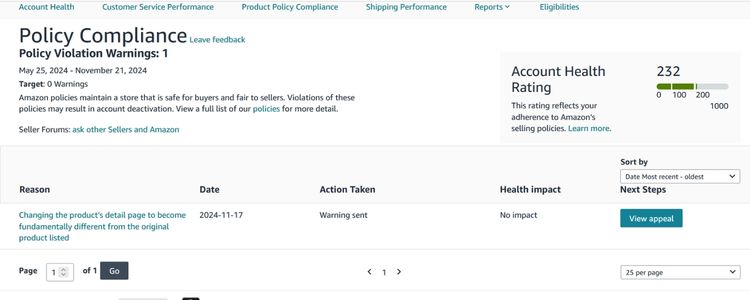
Policy violations and poor performance metrics can trigger listing removal or account suspension, eliminating sales opportunities. Amazon tracks late shipment rate (must stay under 4%), inventory levels, and customer service quality, while serious violations like review manipulation cause immediate suspension.
Policy violations and performance issues can be mitigated by implementing the following compliance-focused actions:
- Late shipment management: Maintain a rate below 4% through automated processing and reliable carriers to avoid restrictions
- Policy monitoring: Check Seller Central daily for compliance updates and regulatory changes affecting your categories
- Account health optimization: Audit performance metrics regularly, maintain 30+ days of inventory, and respond to inquiries within 24 hours
- Gated product research: Verify restrictions and obtain certifications before sourcing to avoid compliance issues
Lack Of Performance Tracking And Profit Analysis
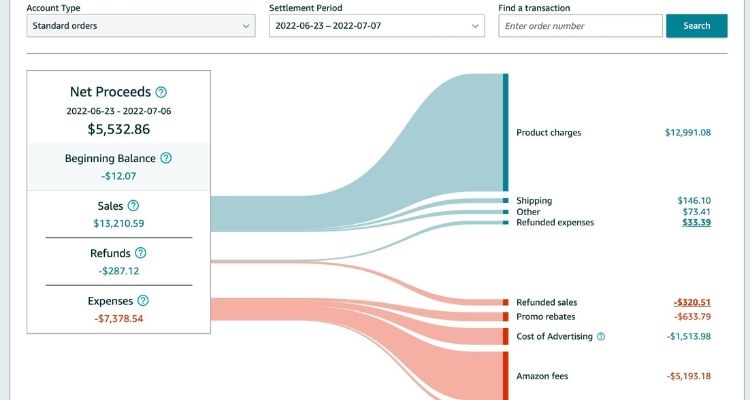
Many sellers confuse revenue with profit by ignoring true landed costs, including production, Amazon fees, and storage charges, causing margin erosion despite high sales. Without tracking systems, sellers retain shelf-warmers accumulating storage fees while unable to identify bestsellers versus profit killers, leading to ineffective strategies based on guesswork.
Deploy analytics dashboards like SELLERLOGIC to track SKU-level profitability in real-time while monitoring all costs to maintain ACoS at 20-25%. Additionally, flag products with under 1 sale per 30 days for immediate evaluation and conduct monthly profitability reviews to make data-driven decisions on inventory reorders, price adjustments, or product discontinuation.
FAQs About Amazon Listing Is Not Selling
Low sales result from poor product visibility, uncompetitive pricing, insufficient reviews, or weak listing optimization. Additionally, choosing products without market demand, losing the Buy Box, or violating Amazon policies directly eliminates sales opportunities.
Yes, overpricing causes customers to choose cheaper alternatives, while underpricing triggers quality concerns and erodes profit margins. Your pricing must stay within 2-5% of competitors while maintaining the Buy Box to maximize conversions.
Absolutely, 66% of customers expect 2-3 day delivery and prioritize Prime-eligible products. Consequently, slow shipping (5-7 days) reduces conversion rates and damages Buy Box eligibility since Amazon’s algorithm favors fast fulfillment.
High traffic without sales indicates conversion problems like uncompetitive pricing, poor product images, insufficient reviews, or weak content that fails to persuade buyers. Additionally, incorrect positioning or missing key information in bullet points prevents customers from trusting your product enough to purchase.
Get Professional Help from Megaficus
Fixing an Amazon listing not selling requires identifying root causes across pricing, optimization, and fulfillment, then implementing targeted solutions to restore conversions. Addressing these 12 critical issues systematically transforms underperforming listings into profitable revenue streams.
Success demands continuous monitoring, strategic adjustments, and maintaining metrics that align with Amazon’s algorithm. Mastering these solutions maximizes Buy Box wins, improves rankings, and converts traffic into consistent sales.
If you need expert guidance to diagnose sales issues or scale your Amazon business, the team at Megaficus is ready to help.