
Have you recently received a notification regarding an Amazon policy violation that threatens your ability to sell? This guide from Megaficus will provide a practical roadmap to resolve these hurdles calmly and professionally. We will help you protect your brand’s reputation and ensure long-term e-commerce success.
Quick Summary
- System Triggers: Amazon uses automated algorithms to monitor millions of listings, where even a single keyword like “expired” can trigger a safety flag.
- Health Metrics: Sellers must monitor their Account Health Rating (AHR) daily; keeping this score above 200 is essential to stay in the “healthy” green zone.
- Resolution Window: Most violations stay visible on the dashboard for 180 days, making proactive management vital for long-term stability.
- The 3-Part Appeal: Resolving complex issues requires a Plan of Action (POA) covering the root cause, immediate fixes, and long-term preventative measures.
- Prevention Habits: We recommend a 5-minute daily check of your dashboard and a monthly audit of older listings to adapt to new marketplace rule changes.
What Exactly is an Amazon Policy Violation?
An Amazon policy violation occurs when you fail to meet the marketplace’s strict standards for customer safety, reliability, or intellectual property rights. It is essentially a formal notice that your account or a specific listing has breached the Amazon Services Business Solutions Agreement.
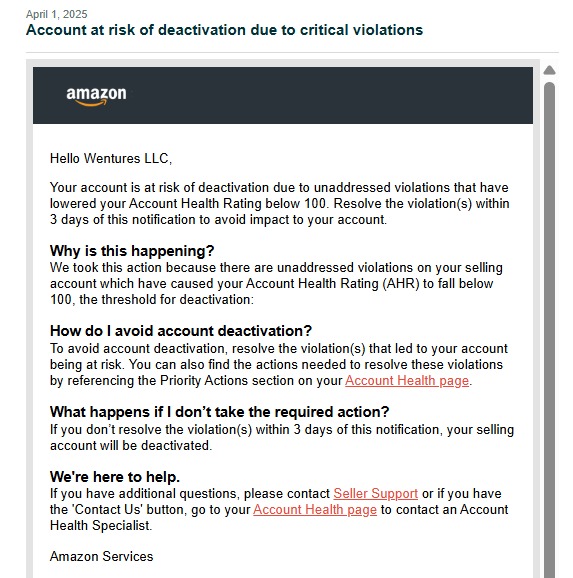
Building on this definition, Amazon relies heavily on automated systems to flag these issues at scale across millions of listings. These algorithms monitor everything from product descriptions to buyer-seller messages. A minor warning might simply suppress a listing, while a serious violation could lead to full account deactivation.
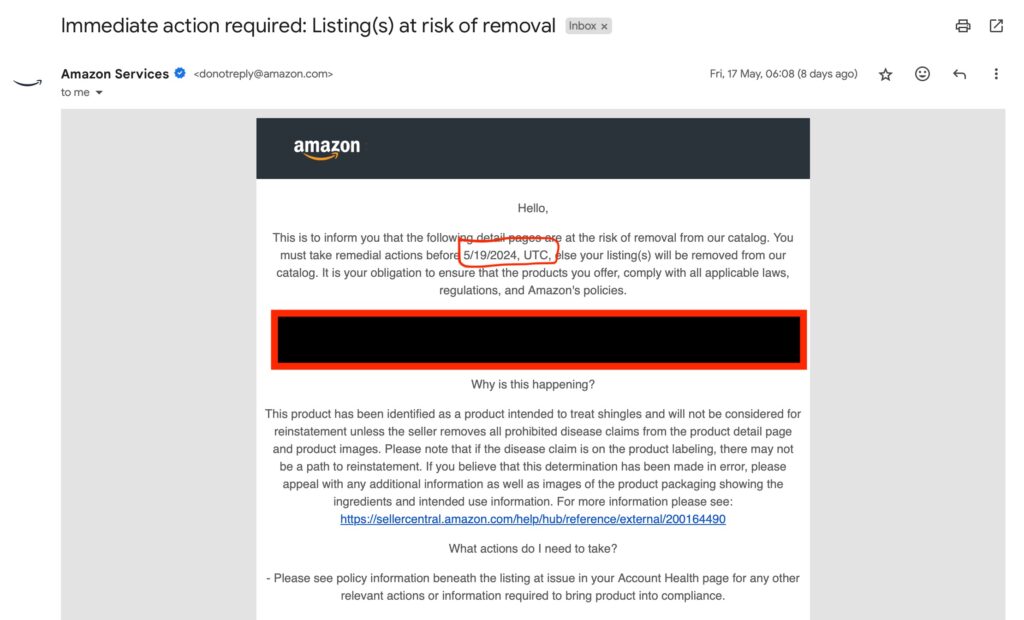
For example, you would receive a notice because you mentioned the word “expired” in a review. Even if the product is fresh, the system flags it as a safety risk. By understanding this automated nature, we can help you handle notifications logically rather than emotionally.
Why Did Your Account Violate Amazon’s Policy?
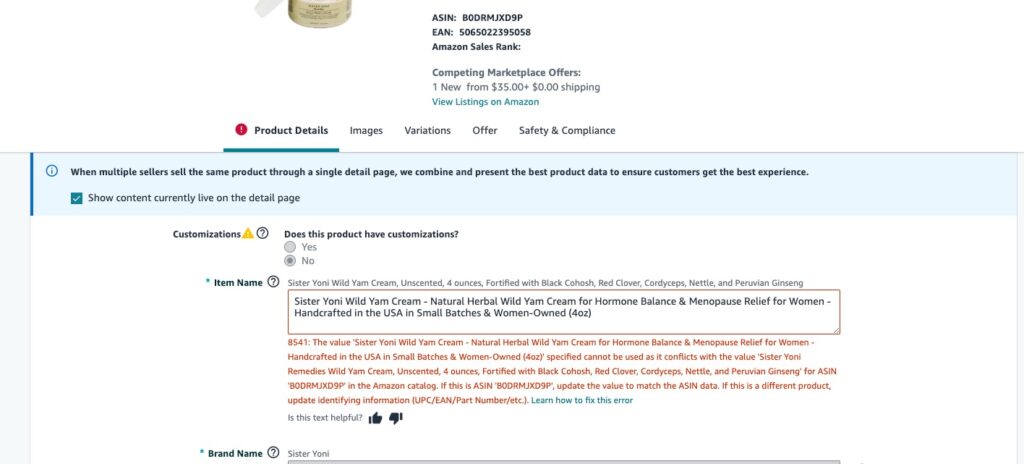
Once the basic concept is understood, identifying the root cause becomes the first step toward a successful resolution and reinstatement. Common triggers often involve accidental mistakes in a product title or using copyrighted images without authorization. These errors signal to Amazon that your operations may not be fully professional.
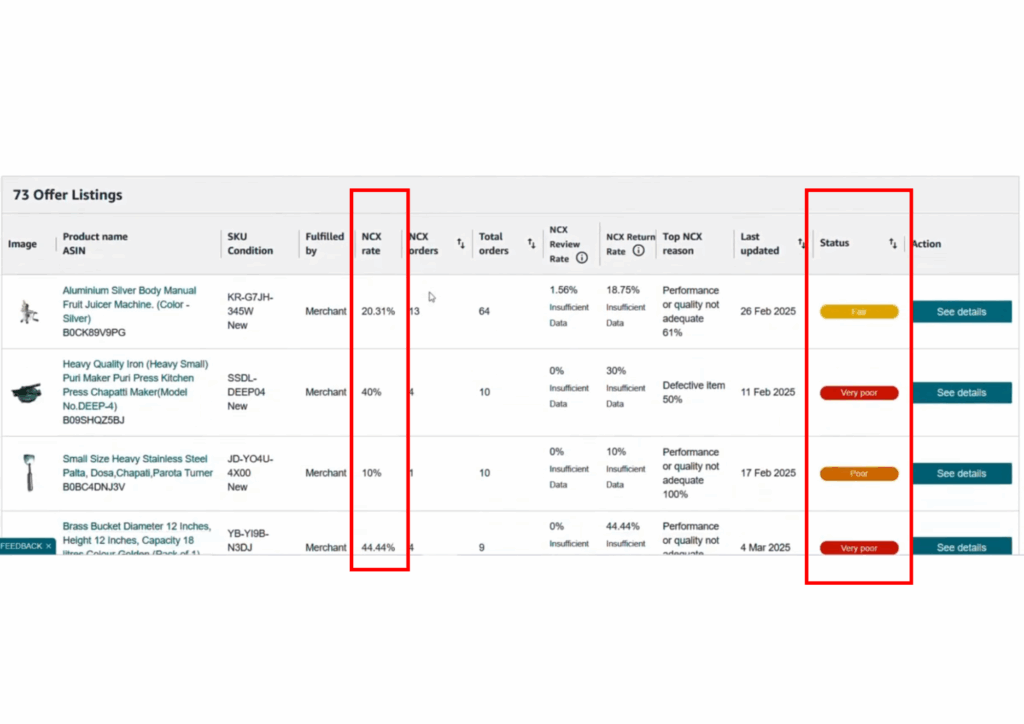
In addition to technical errors, customer complaints are another major driver for a sudden Amazon policy violation. If shoppers frequently report “item not as described” or mention safety concerns in return comments, internal reviews are triggered. High NCX (Negative Customer Experience) return rates or negative feedback spikes are red flags for the performance team.
Sometimes, however, the system generates “false positives” due to aggressive machine learning filters. A real-Megaficus example involved our seller listing a supplement with a recently restricted ingredient. Although the seller was unaware of the regulation change, Amazon enforced the policy to remain compliant.
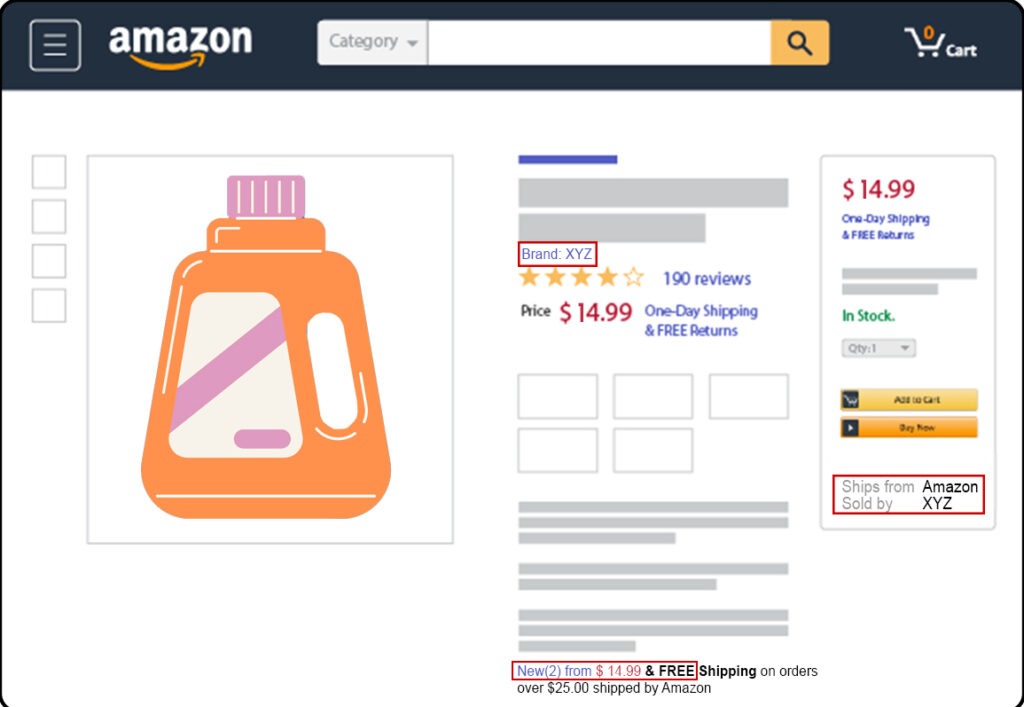
Beyond internal errors, an Amazon policy violation can also stem from “listing hijacking.” This occurs when other sellers join your listing to offer the same product, which is often visible under the description section on the product page. If a third party gains control and adds forbidden keywords, the original seller is still held responsible for the breach.
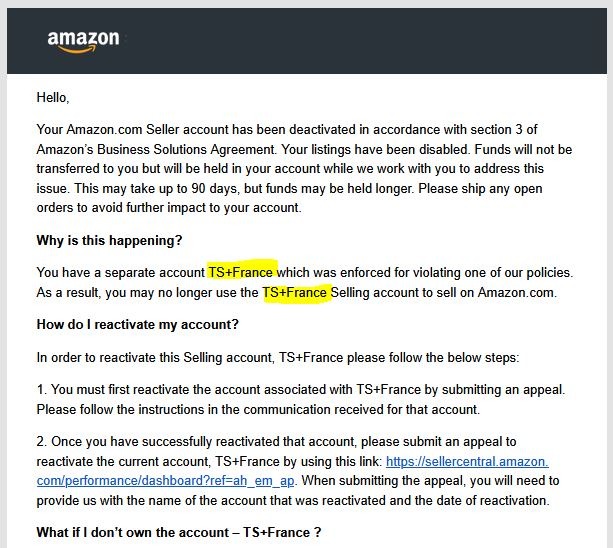
Moreover, many sellers face issues due to “Related Account” violations, where Amazon links two different stores. This often happens if you log in from a shared Wi-Fi network or use the same credit card. Keeping your business infrastructure completely separate is therefore vital for avoiding this trap.
Where to Find Your Amazon Policy Violation Details?
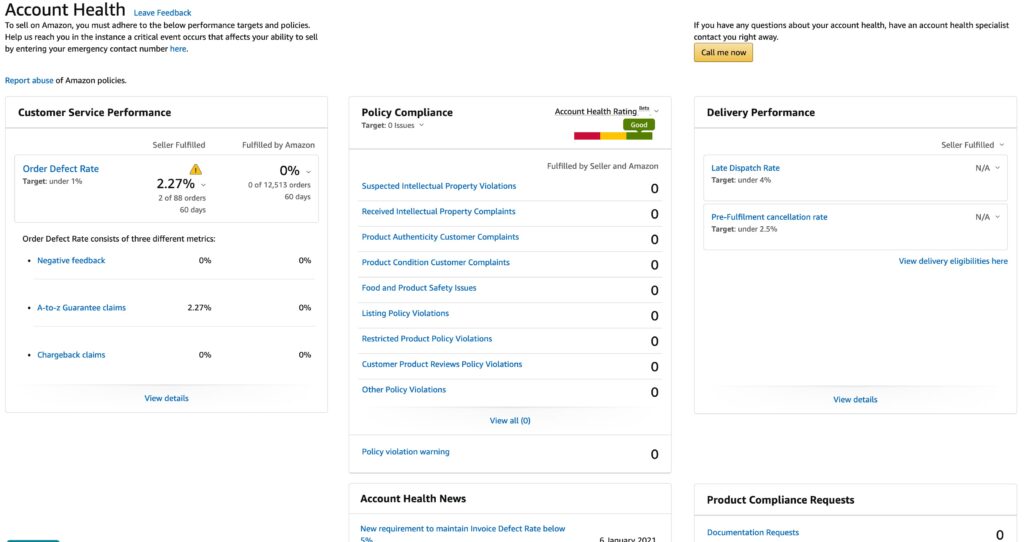
After recognizing the potential causes, the next step is knowing where to look for official data. The Account Health page in Seller Central is your primary tool for monitoring compliance. This dashboard provides a transparent view of your overall status and lists every active violation.
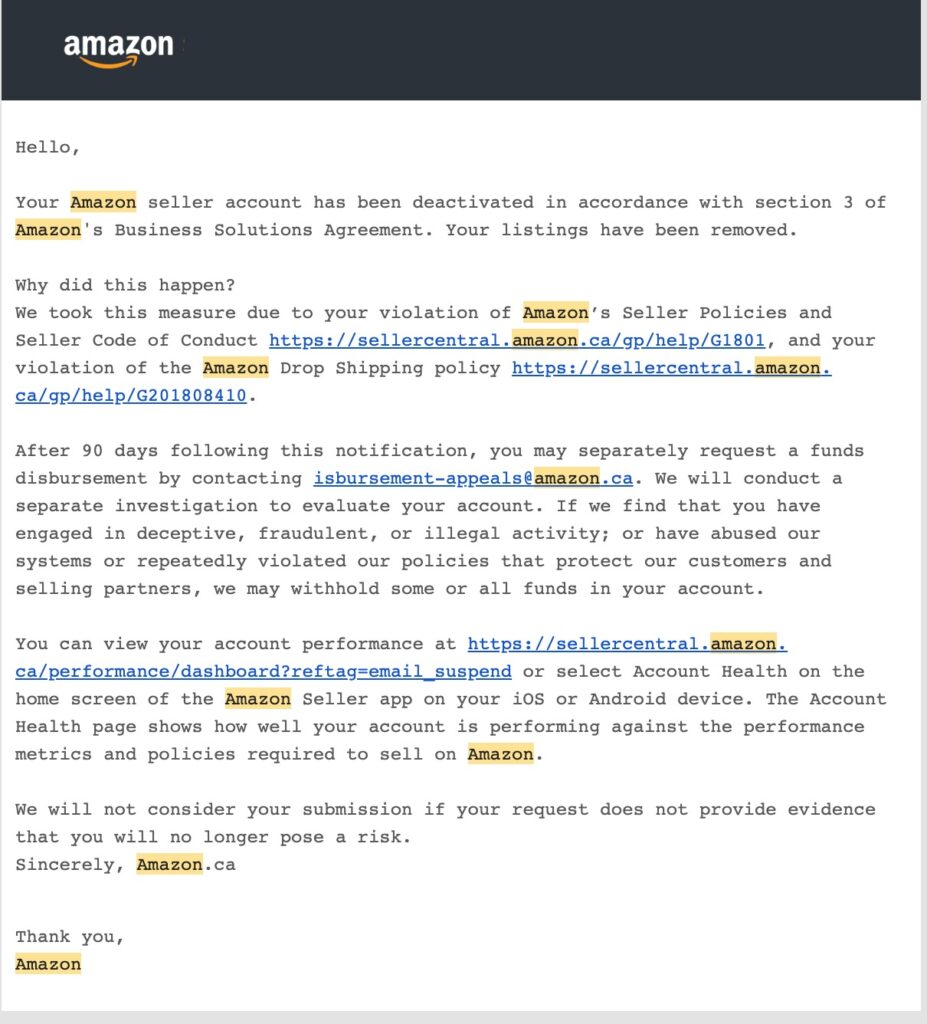
To gain deeper insights, remember that every violation is accompanied by a performance notification. You should read this “Action Required” email several times to find the “hidden” details Amazon wants. It will specify if you need to submit invoices, photos, or a full appeal.
Following this review, deciding on the right path depends on whether the issue is a quick fix or a deep systemic problem. For instance, a “Section 3” notice usually implies a more serious breach requiring a detailed Plan of Action. We recommend always verifying the exact policy cited before drafting.
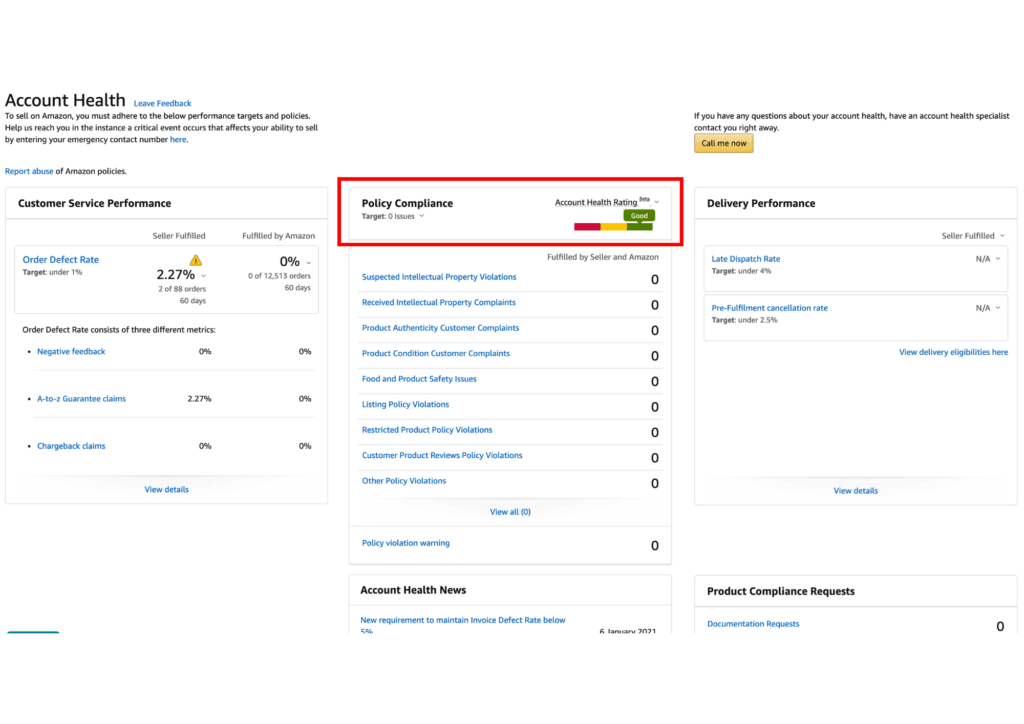
Another key metric to track is the “Account Health Rating” or AHR. This score tells you exactly how close you are to deactivation. While a score in the green is safe, a shift toward yellow or red requires immediate and decisive action.
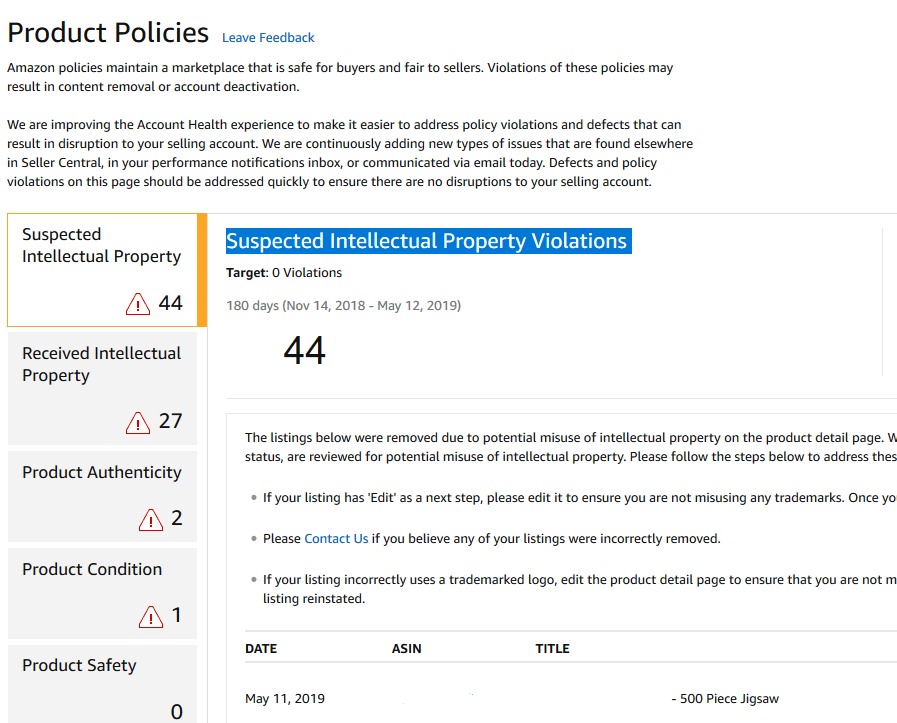
By clicking on the specific violation name within your dashboard, you can see how its severity affects your overall health. This transparency helps you prioritize which issues to fix first based on how much they threaten your account rating. You should focus on “Critical” or “High” severity flags to prevent an immediate suspension of your selling privileges.
Dealing with an Amazon Policy Violation for Intellectual Property
Among the various types of flags, intellectual property (IP) claims often arise when a brand owner believes you are infringing on their rights. This could involve using trademarked brand names in your keywords or unauthorized professional photos. Amazon takes these claims seriously to prevent counterfeit goods.
To address these claims effectively, having your invoices ready is the best way to fight this type of Amazon policy violation. You must prove a verifiable chain of custody from an authorized distributor. If your supplier is not recognized by the brand, Amazon will likely uphold the violation.
When finally responding to an IP claim, ensure your invoices include the manufacturer’s contact information and your business name. Amazon reviewers will often call the supplier to verify the documents. If they cannot reach the contact provided, your appeal will likely be rejected.
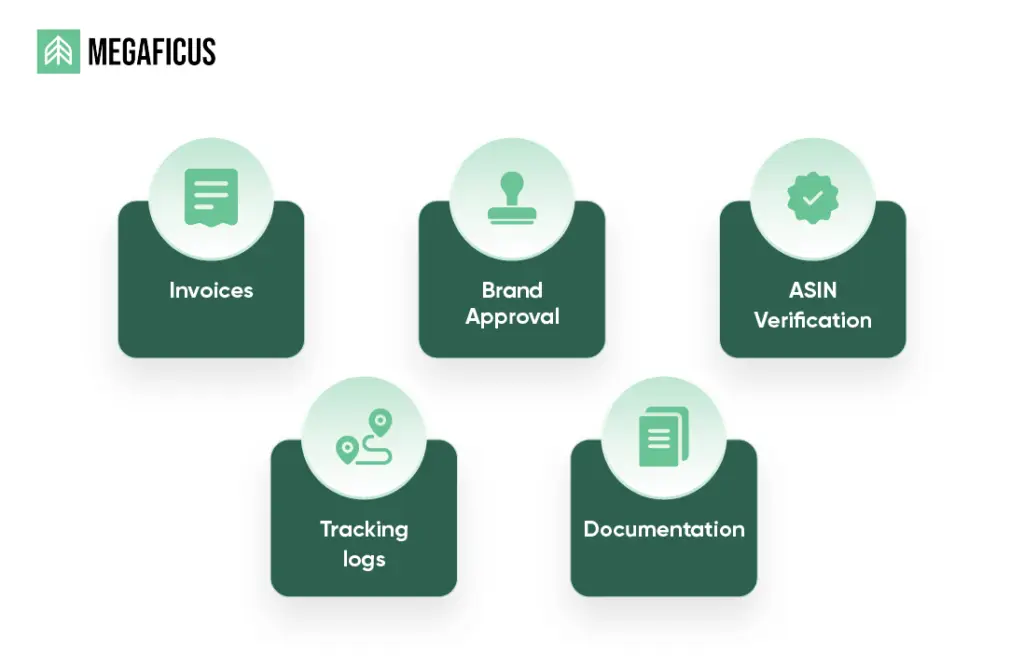
As a strategic follow-up, a practical tip is to distinguish between legitimate claims and “bad actor” attempts. For example, a competitor might file a fake IP claim to remove you from the Buy Box. In such cases, providing a Letter of Authorization is vital for reinstatement.
Indeed, we have seen cases where a brand owner files a claim simply to control the price. While this tactic is against Amazon’s rules, the seller must still prove authenticity to win. Resolving this conflict requires direct communication with the brand owner to request a formal retraction.
Fixing an Amazon Policy Violation for Restricted Products
In contrast to IP issues, restricted product flags can occur even if a listing has been active for months. Amazon frequently updates its list of forbidden items based on new safety or legal regulations. This includes categories like medical devices, hazardous materials, or supplements.
To clear this specific flag, you must often submit safety documentation, such as a Material Safety Data Sheet. Ensure all certificates are legible and match the product details exactly. If the data is mismatched, the system will automatically reject your submission without a human review.
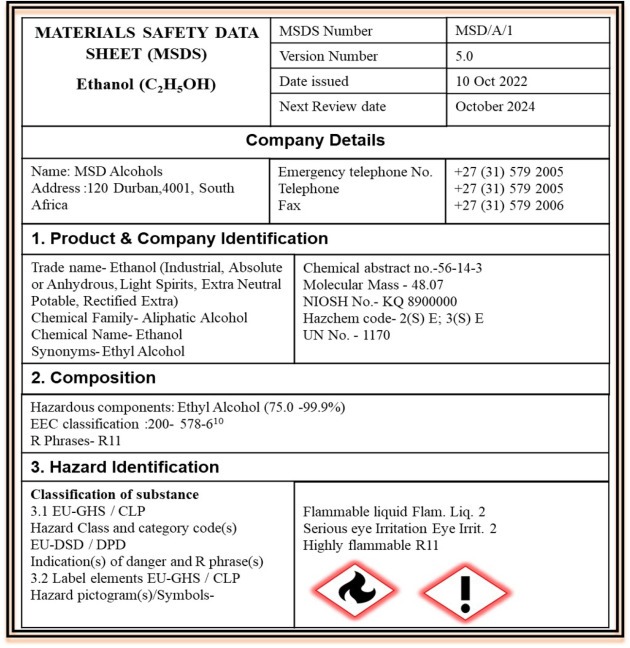
If a product is truly restricted and you cannot provide the required papers, the safest move is to delete it. You should also delete the SKU from your inventory to prevent repeat flags. We suggest this strategic move to protect your overall account health from permanent bans.
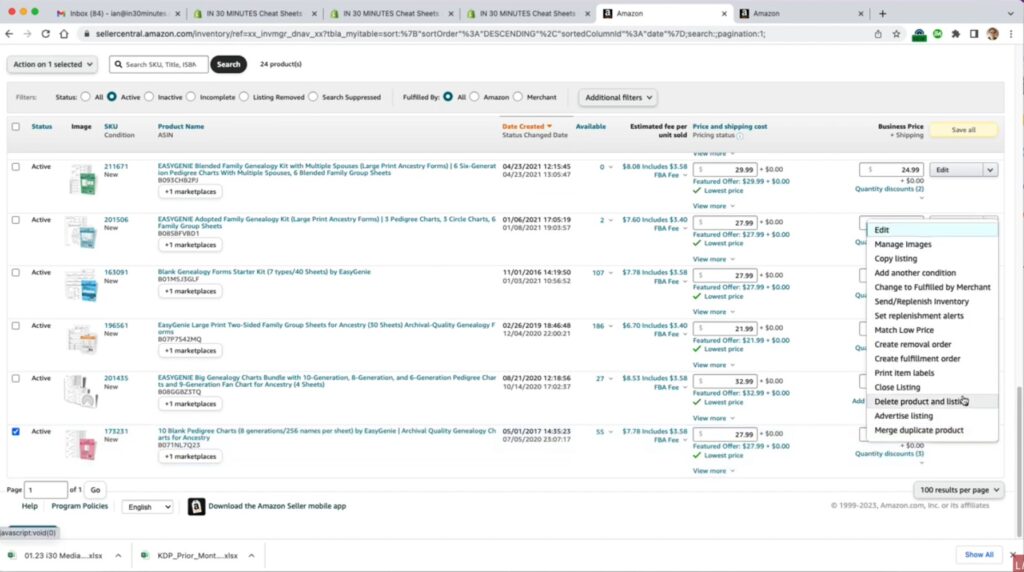
A practical example of this involves selling a toy that contains small magnets without the proper warnings. Even if you didn’t manufacture the toy, you are responsible for the safety labeling. Removing the stock from the warehouse is often the only way to satisfy Amazon.
Furthermore, sellers often fail to realize that “Restricted” can also apply to specific claims in the description. Using words like “anti-bacterial” on a non-pesticide product can trigger an immediate violation. Therefore, always audit your keywords to ensure they meet the latest regulatory guidelines.
How to Write a Plan of Action When Violating Policy on Amazon?
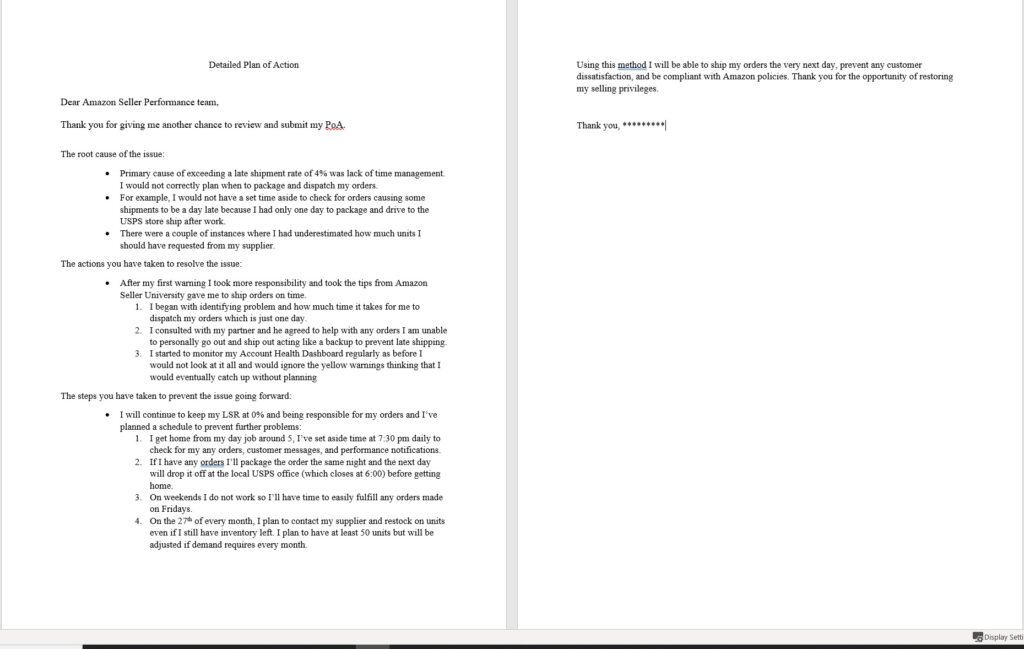
When documentation alone isn’t enough, a professional Plan of Action (POA) becomes necessary. This is a formal letter that must consist of three parts: the root cause, immediate fixes, and long-term prevention. Being honest and taking full responsibility gets better results than being defensive.
| POA Component | Purpose | How to Implement |
|---|---|---|
| Root Cause | Identify the failure | Analyze the specific policy cited in the notification and conduct an internal audit of listing data to find where the breakdown occurred. |
| Corrective Action | Immediate fix | Take direct steps to resolve the current issue, such as deleting the flagged listing and requesting a removal order for all related FBA inventory. |
| Preventative Plan | Future safety | Establish a weekly schedule for auditing all active titles and keywords while setting up automated alerts for any unauthorized changes to your catalog. |
Specifically, the root cause should identify why your internal processes failed, such as a lack of staff training. The corrective actions then show what you did right away, like refunding customers. Finally, the prevention section details new SOPs or software you have implemented to ensure it never happens again.
In terms of formatting, we recommend using bullet points so the Amazon staff can read your plan quickly. A clear, factual format is more persuasive than long, emotional paragraphs. For instance, stating “We implemented a two-step verification process for inventory” is more effective than writing “We feel terrible and promise to try our best.”
Ultimately, your preventative plan should be the longest and most detailed part of the entire letter. Amazon needs to be 100% sure that the violation will never happen again under your watch. Mentioning specific tools like inventory management software can help prove your commitment to compliance.
Can You Resolve an Amazon Policy Violation Without an Appeal?
While a POA is standard, some minor warnings allow you to simply “Acknowledge” the issue to make it go away. This usually applies to listing-level errors where Amazon just wants you to confirm you understand the rule. However, doing this without fixing the listing could lead to a repeat violation.
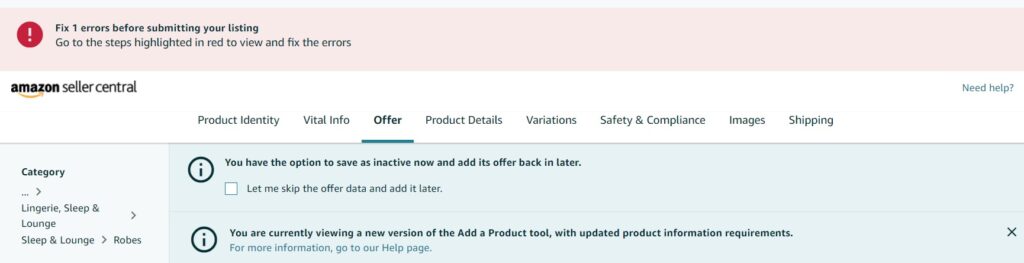
For more complex issues, the “Call Me Now” button is a valuable feature for professional sellers to get clarity. It connects you to an Account Health specialist who can explain what the reviewer is looking for. This conversation can save you days of guesswork before you submit your appeal.
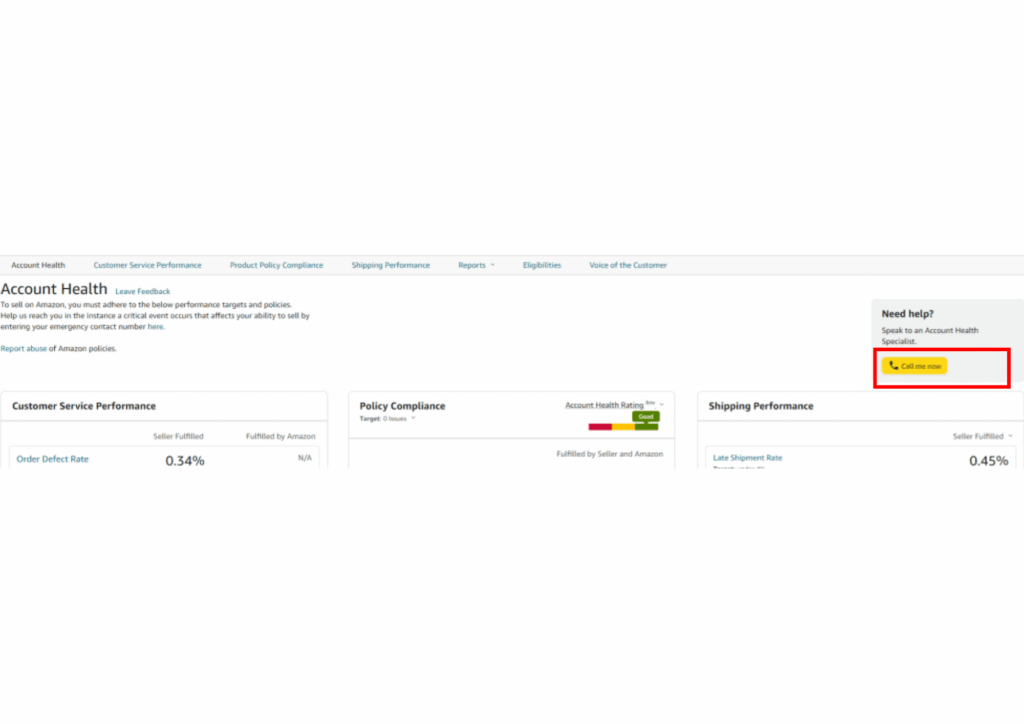
If your first attempt to fix the Amazon policy violation is rejected, do not panic. Instead, read the rejection reason carefully, as it often points to what specific information is missing. Avoid sending multiple identical appeals, as this can reset your place in the review queue.
In some instances, simply deleting the listing is considered a resolution by the automated system. This is a good option if the product is not a major part of your revenue. It allows you to prioritize the safety of your entire account over one SKU.
If the violation was caused by an error on Amazon’s side, you may still need to file a dispute. In these cases, provide clear screenshots and links to Amazon’s own policy pages to prove your point. Being respectful but firm with your evidence is the best way to win.
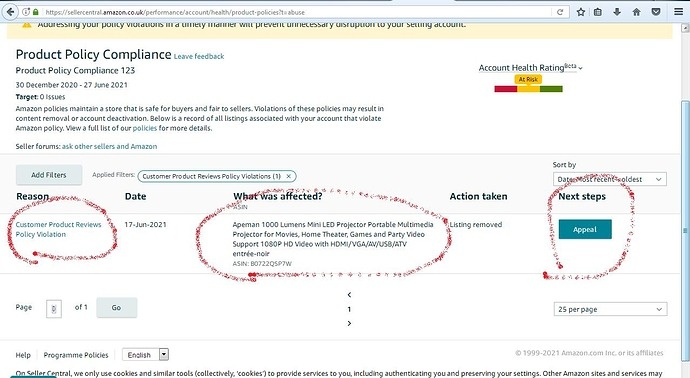
Steps to Avoid a Future Amazon Policy Violation
To prevent these issues from returning, establishing a culture of compliance is the only way to ensure long-term survival. A simple 5-minute daily habit of checking your Account Health Rating helps you catch trends. Keeping your score above 200 ensures your account stays in the healthy zone.
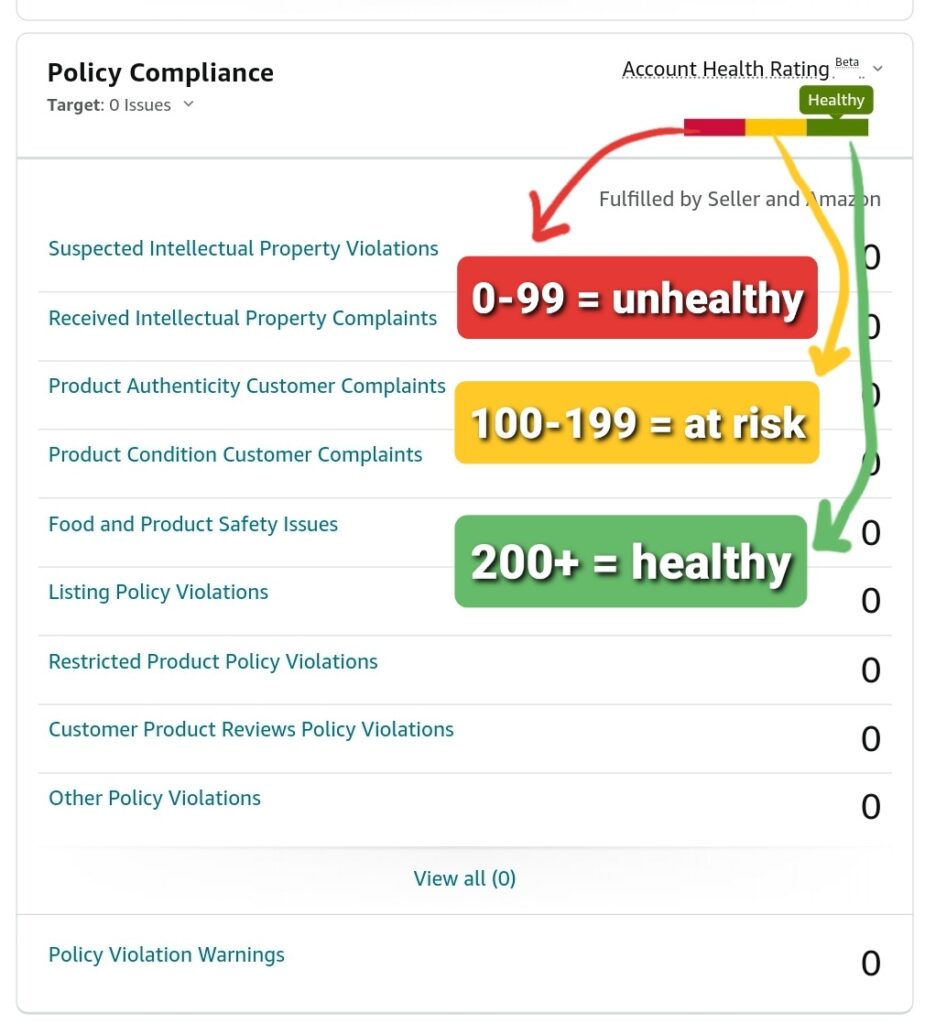
Along with daily checks, we suggest checking your older listings once a month for any new rule changes. What was allowed last year might be a suspension trigger today. Being the first to adapt to a new policy gives you a significant competitive advantage.
Additionally, using tools like Amazon Brand Registry provides an extra layer of protection. It allows you to control your listing content and report unauthorized changes by other sellers. This proactive approach is your best defense against accidental policy breaches and brand damage.
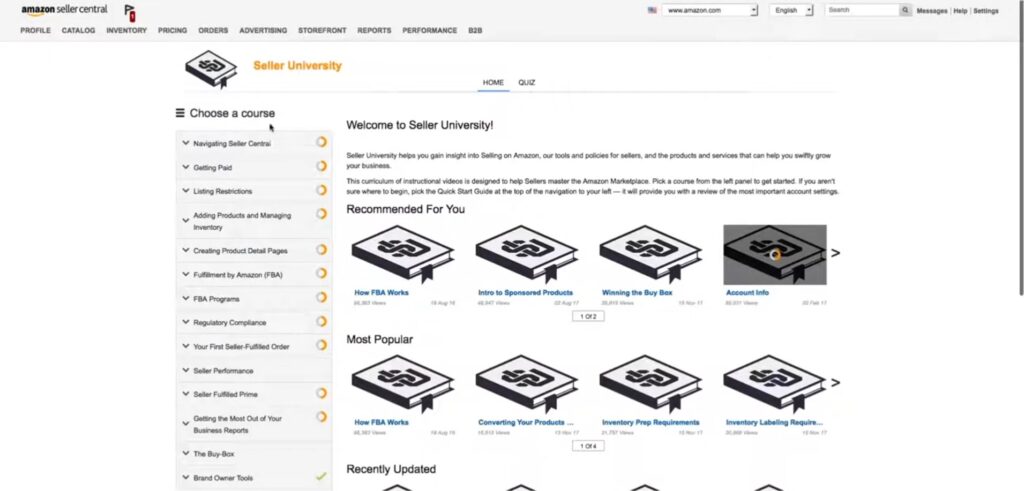
Education is also a powerful tool for your team to stay ahead of the curve. Regularly reviewing the Amazon Seller University videos ensures everyone knows the latest compliance standards. Small investments in training can prevent thousands of dollars in lost sales from a suspension.
We also recommend maintaining a “White List” of pre-approved suppliers with known good documentation. By only sourcing from trusted partners, you drastically reduce the risk of authenticity or safety violations. Compliance should be baked into your sourcing process from day one.
>>> Read more: The Secret to Passing Amazon Identity Verification Quickly
Frequently Asked Questions about Amazon Policy Violation
Most violations remain visible for 180 days after they are identified by the system.
Usually no, but it depends on the severity and your historical account health rating.
Yes, as long as the violation is listing-specific and hasn’t led to full deactivation.
For complex cases like IP or fraud, an expert can ensure your POA is perfect.
Deleting it stops the breach, but you must still address the dashboard warning.
It is very difficult, as Amazon requires proof of authenticity to reinstate most flagged items.
Get Professional Help from Megaficus
In summary, staying calm and systematic is the first step to fixing any Amazon policy violation that hits your inbox. By understanding the automated triggers and following a clear appeal process, you can protect your sales. We at Megaficus recommend treating compliance as a core pillar.
Ultimately, a proactive approach is always better than a reactive one in the fast-paced world of e-commerce. A quick reminder that we at Megaficus are here to help you navigate these hurdles and grow your brand safely.