
Are your Amazon PPC ads getting clicks but zero sales? This frustrating problem typically stems from 12 fixable issues, including wrong keyword targeting, poor listing optimization, inadequate budgets, or a missing full-funnel strategy. Discover exactly which factors are sabotaging your campaigns and how to fix them fast in this comprehensive guide by Megaficus.
Quick Summary:
| Reason | Core Problem |
|---|---|
| Wrong Keywords & Audience | Broad keywords attract the wrong shoppers |
| Unoptimized Listings | Poor images and weak bullets kill conversions |
| Uninspiring Ad Content | Generic copy doesn’t stand out |
| Poor Campaign Organization | Mixed products and keywords create chaos |
| Inadequate Bids/Budgets | Bids too low or too high, budget depletes early |
| Infrequent Reviews | Ignoring campaigns for weeks misses critical issues |
| No Full-Funnel Strategy | Only the bottom-funnel misses 70-80% of customers |
| Non-Competitive Conditions | Higher price or slow shipping vs competitors |
| Inferior Product/Saturated Niche | No differentiation or excessive competition |
| Incomplete Data Tracking | Missing key metrics causes blind optimization |
| Underutilizing Ad Tools | Only using Sponsored Products |
| Weak Negative Keywords | Wasting budget on irrelevant clicks |
What Does Amazon PPC Not Converting Really Mean?
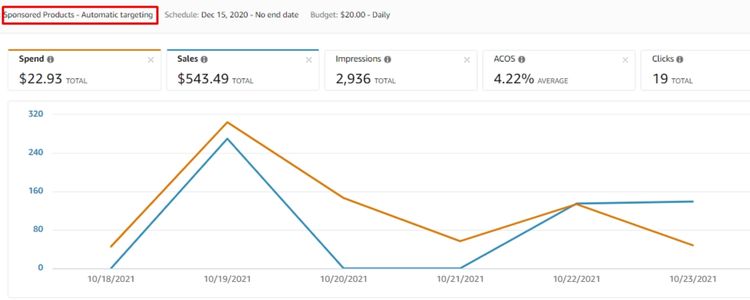
On Amazon, a “conversion” happens when a shopper clicks your ad and completes a purchase. If your ad receives 1,000 clicks but only 10 people buy your product, your conversion rate is just 1%. This means you’re paying for 990 wasted clicks that generate zero revenue.
When your PPC ads aren’t converting, you’re losing money in multiple ways. First, your advertising costs keep rising while sales stay flat, which tanks your Return on Ad Spend (ROAS). Second, your Total Advertising Cost of Sales (TACoS) climbs higher, eating into your profit margins. Most importantly, poor conversion signals that something critical is broken in your product listing, pricing strategy, or audience targeting.
12 Reasons Why Your Amazon PPC Not Converting
High click costs without corresponding sales indicate something fundamental is broken in your advertising strategy. Let’s break down the 12 primary reasons your PPC campaigns aren’t converting so you can diagnose and fix the problem quickly.
Wrong Keyword And Audience Selection
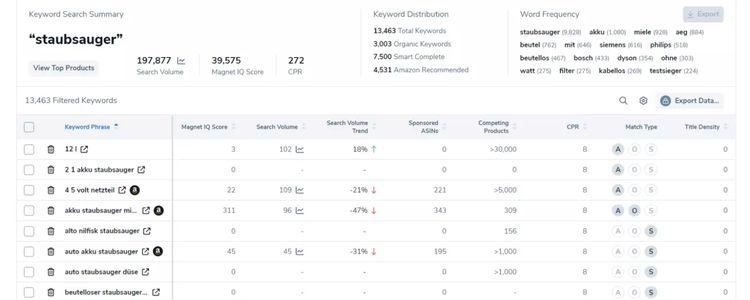
Targeting the wrong keywords wastes your budget on clicks that never convert into sales. For example, broad keywords like “water bottle” attract shoppers looking for everything from plastic bottles to glass carafes, while your product is a stainless steel insulated bottle.
Similarly, poor audience targeting damages your conversion rate when you show ads on competitor products with completely different price points or features. These targeting mistakes result in high click costs but minimal returns.
To fix this issue, start by analyzing your Search Term Report to identify which keywords actually drive sales and which ones drain your budget. Use tools like Helium 10 or Jungle Scout to find high-intent keywords that match your product specifications.
Additionally, refine your product targeting by selecting ASINs and categories where shoppers have similar purchase intent and budget ranges. Implement negative keywords to block irrelevant searches, and test different match types (exact, phrase, broad) to find the sweet spot between reach and relevance.
Unoptimized Landing Pages And Listings
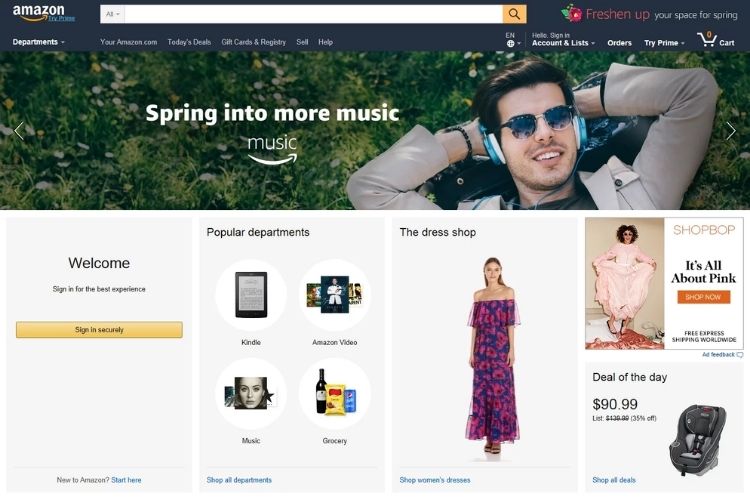
Your PPC ad might drive clicks, but if your product listing fails to convert browsers into buyers, you’re wasting ad spend. Specifically, poor listings kill conversions through unclear product information, low-quality visuals, or missing trust signals that make shoppers hesitate and click away.
Turn your product page into a conversion machine by focusing on these fundamentals:
- High-quality images: Minimum 7 photos with white background, lifestyle shots, and size references
- Compelling bullets: Focus on benefits, not just features (answer “What’s in it for me?”)
- Strong reviews: Maintain 4+ stars with at least 15-20 customer reviews
- A+ Content: Use enhanced brand content to differentiate from competitors
- Complete inventory: Keep all variations in stock to avoid lost sales
To improve your listing, start by analyzing top competitors to see what works in your category. Next, invest in professional product photography and write benefit-driven copy that addresses customer pain points.
Additionally, actively request reviews from satisfied buyers through Amazon’s Request a Review button. Finally, remember that even small listing improvements can significantly boost your conversion rate and reduce wasted ad spend.
Uninspiring Ad Content And Visuals
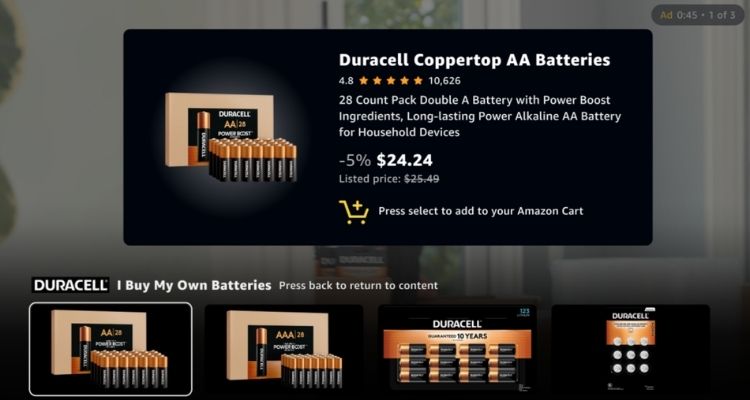
Generic ad copy like “Best quality product” or “Great value” fails to stand out in Amazon’s crowded marketplace. When your ad lacks compelling visuals or persuasive messaging, shoppers either scroll past without clicking or click but leave disappointed because the ad overpromised and underdelivered.
Transform your ad content and visuals into conversion drivers with these tactics:
- Strong unique value proposition: Replace generic claims with specific promises. For example, use “Keeps drinks cold for 24 hours with leak-proof guarantee” instead of “High-quality water bottle.”
- Benefit-focused messaging: Highlight tangible outcomes like “Saves you $200/year on disposable bottles” rather than vague features like “durable material.”
- Create urgency: Add time-limited offers (“30% off ends tonight”) or scarcity signals (“Only 5 left in stock”) to drive immediate action
- High-quality visuals: Use lifestyle images showing your product in real-world scenarios, not just plain white background shots. Consider Sponsored Brand Video ads, which typically achieve 3x higher conversion rates than static images
Poor Campaign Organization
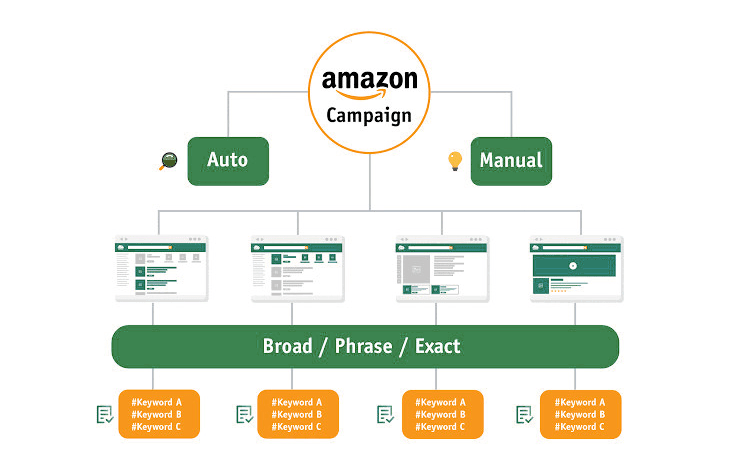
Throwing multiple products into one campaign with mixed keyword types creates chaos you can’t optimize. When your bestselling item shares budget with slow movers, or when branded and non-branded keywords compete in one ad group, you waste spend on losers while starving winners.
You can clean up your campaign structure by implementing these organizational best practices:
- One product per campaign: Create separate campaigns for each SKU to track performance clearly
- Split match types: Run distinct campaigns for broad (discovery), phrase (testing), and exact (scaling) keywords
- Separate branded vs non-branded: Don’t let high-intent branded searches compete with exploratory non-branded terms
- Use naming conventions: Format like “ProductName_MatchType_Date” for quick identification
- Single ASIN focus: Avoid mixing multiple ASINs in one campaign to maintain budget control
Inadequate Bid Management Or Budget Limits
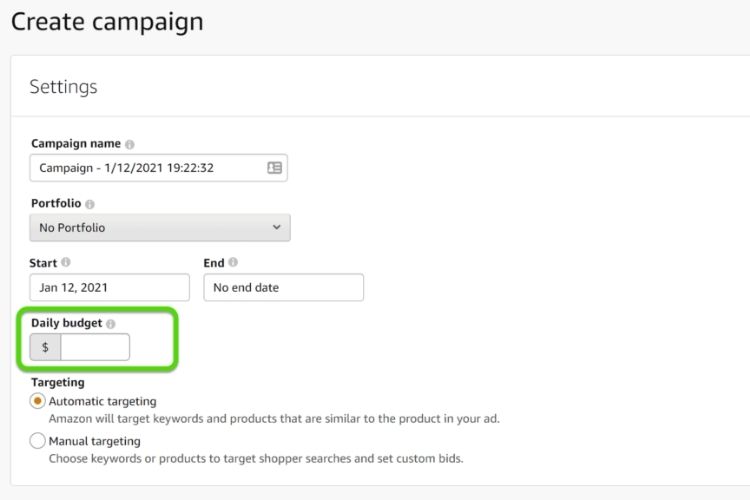
Bidding too low makes your ads lose auctions and miss high-intent searches. Bidding too high drains the budget without better returns. Similarly, low daily budgets cause ads to stop by noon, missing peak evening shoppers. Warning signs include high CTR but low sales volume, or “Out of budget” status while competitors dominate results.
These adjustments will help you optimize both bids and budgets for better performance:
- Start with Dynamic Bids – Down Only: Conservative for testing, then switch to “Up and Down” for proven winners
- Boost top placements: Increase bids 50-100% for Top of Search if conversion rate exceeds 10%
- Fund winners: Move budget from low-ROAS campaigns (under 2.5) to high performers weekly
- Check impression share: Aim for 30-40% of available impressions on core keywords
- Prevent early budget depletion: Use budget pacing rules so ads run through peak hours (6-10 PM)
Infrequent Campaign Performance Reviews
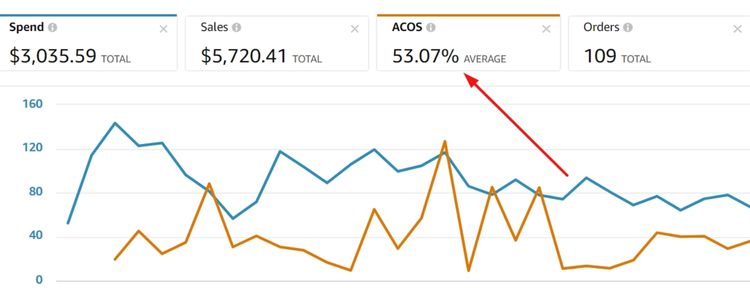
Setting up campaigns and then ignoring them for weeks guarantees wasted spend and missed opportunities. When you review monthly instead of weekly, critical issues like ACoS spikes, new winning keywords, or wasteful search terms go unnoticed for too long.
Establish a consistent review schedule to catch issues early and capitalize on opportunities:
- Weekly reviews: Check campaign ACoS, impression share changes, and budget utilization to spot drift from targets
- Bi-weekly Search Term Reports: Add negative keywords for wasteful terms and discover new winners to scale
- Monthly optimization: Analyze placement performance, test new bid strategies, and reallocate budgets to top performers
- Quarterly audits: Deep-dive into account structure, keyword portfolios, and overall strategy effectiveness
Ignoring The Complete Sales Funnel Approach
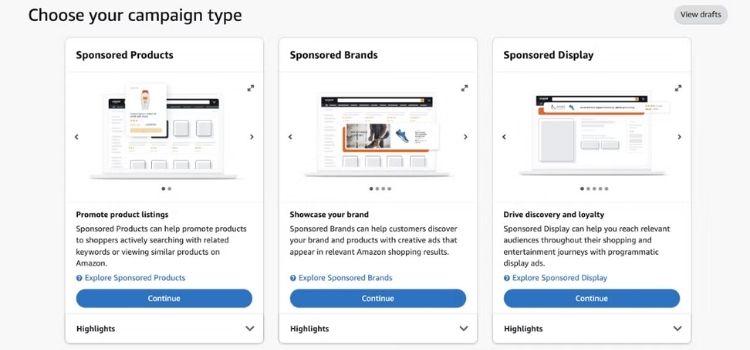
Most sellers only run Sponsored Products targeting bottom-funnel keywords, missing 70-80% of potential customers in earlier stages. When you compete only at the most expensive conversion stage, you lose opportunities to build brand awareness and retarget warm audiences who viewed but didn’t buy yet.
To maximize conversions across the entire customer journey, you need to implement a full-funnel advertising strategy with these three stages:
- Top of Funnel (Awareness): Use Sponsored Brand Videos with broad category keywords like “immune support supplements” to reach new audiences
- Middle of Funnel (Consideration): Retarget product page visitors with Sponsored Display ads to remind them of your offer
- Bottom of Funnel (Conversion): Capture ready-to-buy shoppers with Sponsored Products exact match for branded terms like “BrandName Vitamin D3 5000 IU”
Non-Competitive Buying Conditions
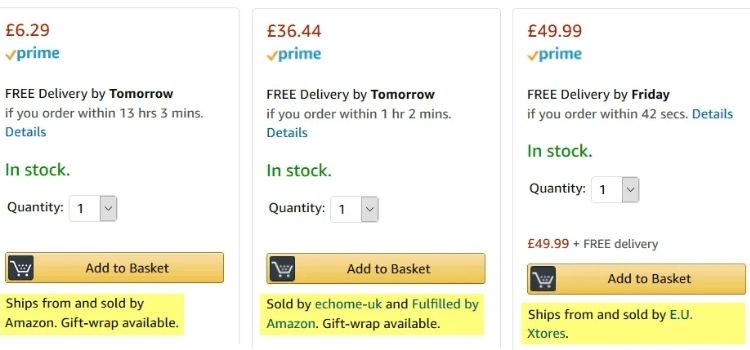
Even with perfect ads and listings, shoppers abandon their purchase when your buying conditions can’t compete. If your product costs $35 while similar items sell for $25 with free Prime shipping, customers will click your ad but buy elsewhere.
Similarly, showing “Out of Stock” or “2-3 week delivery” kills conversions instantly, especially when competitors offer next-day delivery through FBA.
To improve your buying conditions, sellers focus on these key factors:
- Competitive pricing: Research competitor prices weekly and stay within 10-15% of the market average, or clearly justify premium pricing with superior features
- Fast, affordable shipping: Switch to FBA for Prime badge and 1-2 day delivery, or use reliable 3PL providers if managing FBM
- Maintain stock levels: Set up inventory alerts to reorder before running out, as “Out of Stock” status tanks your search ranking and ad relevance
- Enable Prime shipping: Prime products convert 3-4x better than non-Prime, so consider a hybrid FBA/FBM strategy for best sellers
Inferior Products Or Saturated Niches
If your product lacks differentiation in an oversaturated niche like phone cases or water bottles, even perfect ads won’t drive conversions. When hundreds of competitors offer similar products with 500+ reviews, while you have under 50, shoppers naturally choose established sellers.
Similarly, products with genuinely low demand (under 1,000 monthly searches) struggle regardless of ad quality, as there simply aren’t enough buyers searching.
Before giving up on your product, you should evaluate whether it can be salvaged with these improvements:
- Add unique value: Introduce bonus accessories, improved packaging, or extended warranties that competitors don’t offer
- Target sub-niches: Instead of “yoga mats,” focus on “extra thick yoga mats for bad knees” with less competition
- Bundle strategy: Combine your product with complementary items to create a unique offer
- Improve social proof: Use Amazon Vine, follow-up emails, or product inserts to accelerate review collection to 50+ reviews
If validation shows under 1,000 monthly searches or 20+ competitors with 1,000+ reviews each, consider pivoting to a better product opportunity using tools like Jungle Scout or Helium 10 to find niches with high demand but moderate competition.
Incomplete Performance Data Tracking
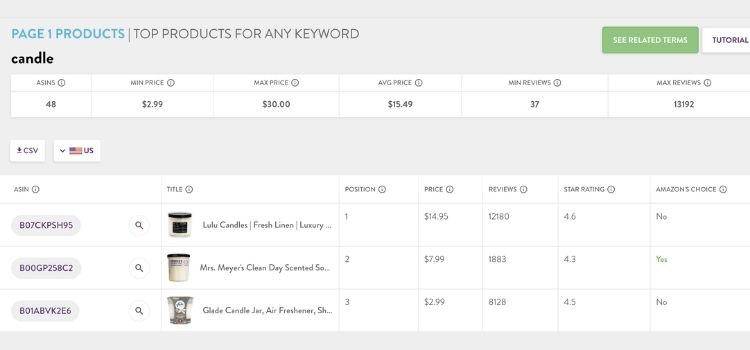
Making optimization decisions without complete performance data is like driving blindfolded. When you only track ACoS without monitoring impression share or search term performance, you miss critical insights about why campaigns underperform. For instance, low sales might stem from lost auctions (impression share issue) rather than poor keywords, but you’d never know without proper tracking.
Focus on tracking these essential metrics that reveal the full picture of your campaign’s health:
- ACoS and ROAS: Track daily to ensure profitability stays within target ranges
- Impression Share: Check weekly to identify if low bids cause missed opportunities on high-intent keywords
- Search Term Report: Review bi-weekly to find new winning keywords and eliminate wasteful spending
- CTR and Conversion Rate: Monitor both to diagnose if problems stem from ad creative (low CTR) or listing issues (low CVR)
- Cost Per Click trends: Track monthly to spot bidding inefficiencies or increasing competition
Not Utilizing Amazon’s Advertising Tools
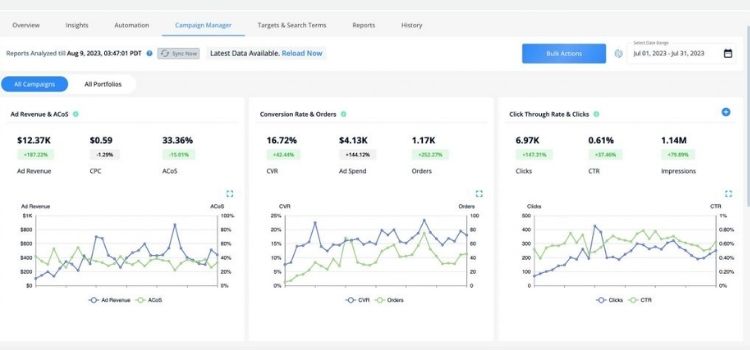
Relying solely on Sponsored Products means missing top-of-search visibility from Sponsored Brands and retargeting opportunities from Display ads that competitors use to capture your potential customers. Additionally, ignoring tools such as Campaign Manager reports, A/B testing, or Brand Analytics leaves you optimizing blindly without actionable insights.
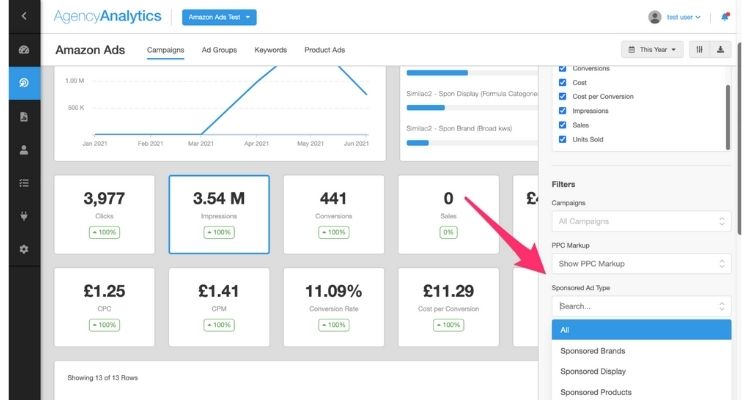
You can maximize your advertising effectiveness by using the right ad type for each specific goal:
- Sponsored Products: Best for bottom-funnel conversions with high-intent keywords and product targeting
- Sponsored Brands: Drive top-of-search awareness with custom headlines and direct traffic to your Store or multiple products
- Sponsored Display: Retarget shoppers who viewed your products or competitor listings, keeping your brand top-of-mind
- Brand Analytics: Use Search Query Performance reports to discover high-volume keywords you’re missing
- A/B Testing: Test different images, headlines, and CTAs to improve click-through rates systematically
Weak Negative Keyword Strategy
Failing to use negative keywords wastes your budget on irrelevant searches that never convert. For example, if you sell “leather wallets,” your ads might show for “free wallet,” “wallet repair,” or “wallet chain” without proper negative targeting. These clicks drain your budget while tanking your CTR and conversion rate, which signals Amazon that your ads are irrelevant and deserve lower placement.
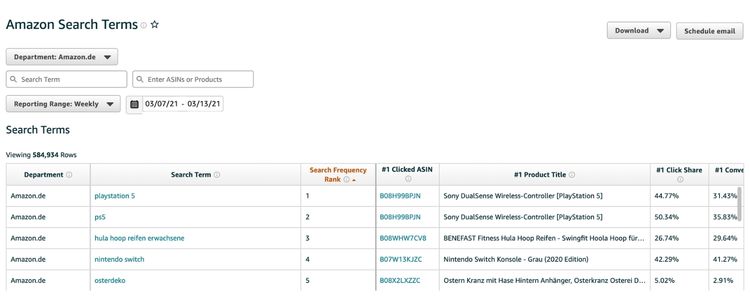
You should review your Search Term Report weekly and identify negative keywords in these categories:
- Low CTR non-converters: Keywords with under 0.3% CTR after 1,000+ impressions (e.g., “wallet ideas,” “wallet tutorial”)
- High-click non-converters: Terms with 20+ clicks but zero sales (e.g., “cheap wallet,” “wallet under $5” when you sell premium)
- High-spend low-converters: Keywords that consumed $50+ with a conversion rate under 5% (e.g., “men’s accessories” when you only sell wallets)
FAQs About Amazon PPC Not Converting
Traffic without sales indicates wrong keyword targeting, attracting unqualified shoppers, poor listing quality that fails to convince, or non-competitive pricing. Check your Search Term Report for irrelevant clicks and ensure your price is within 10-15% of competitors.
Aim for a 10-15% conversion rate for Sponsored Products campaigns. Rates below 8% signal targeting or listing problems, while rates above 15% indicates strong optimization and product-market fit.
Review campaigns weekly and adjust bids only when ACoS drifts 20% from target. Check Search Term Reports bi-weekly to add negative keywords and discover winners.
Flag keywords with under 0.3% CTR after 1,000 impressions, 20+ clicks with zero sales, or $50+ spend with conversion rates below 5%. Add these as negative keywords immediately.
Yes, products with 4+ stars and 15+ reviews convert 2-3x better than those under 3.5 stars. Build reviews to at least 4 stars before scaling ad spend.
Get Professional Help from Megaficus
When your Amazon PPC is not converting into sales, the solution lies in identifying which of these 12 common issues is draining your budget and implementing targeted fixes. By addressing wrong keywords, poor listings, inadequate budgets, or weak campaign structure, you can transform wasted clicks into profitable purchases.
Success demands continuous optimization across targeting, bids, listings, and full-funnel strategies. Mastering these elements lets you maximize ROAS and scale sustainably while competitors burn money on underperforming ads.
If you need expert guidance to optimize your PPC campaigns and improve conversion rates, the team at Megaficus is ready to help.