
How much will you actually pay to sell on Amazon? This guide breaks down every fee type, cost calculation method, and optimization strategy to protect your margins. With strategic cost management from Megaficus, sellers build profitable Amazon businesses despite fee structure changes.
Quick Summary
- Core Seller Fees: Essential costs include referral fees (8-15%), closing fees for media ($1.35-$1.80), and an account subscription, $0.99 per item or $39.99 monthly.
- Fulfillment Options: FBA charges fulfillment and storage fees; FBM eliminates Amazon fees but requires self-shipping; SFP offers Prime eligibility with 99% on-time performance requirements.
- Cost Calculation: Calculate profit by subtracting all costs (product, shipping, referral, fulfillment, storage, returns) from your selling price, not just Amazon’s fees.
- Fee Optimization: Reduce fees by optimizing package dimensions, creating multi-packs, handling FBA prep in-house, and auditing monthly reports for billing errors.
- Repricing Tools: Tools like Seller.Tools, RepricerExpress, Informed.Co, Feedvisor, and BQool automate repricing to win the Buy Box and maximize margins.
What is Amazon Seller Pricing?
Selling on Amazon means paying for access to the world’s largest online marketplace. Instead of traditional rent, you pay various fees to operate your storefront on this platform.
Amazon charges sellers through three main fee categories:
- Subscription fees: Monthly costs to maintain your selling privileges
- Transaction-based fees: Percentage-based commissions deducted from each sale
- Optional service fees: Additional charges for fulfillment, storage, or other FBA services
Among these fees, some remain fixed while others scale with your revenue, and certain charges may catch you off guard without proper research. Therefore, knowing exactly what Amazon charges and why helps you control costs effectively, which directly impacts your bottom line, whether you’re running a side business or building a brand.
Main Fees Every Amazon Seller Pays
Before you start selling, you need to grasp the core fees Amazon charges. Below are the fundamental fees every seller encounters.
Referral Fees
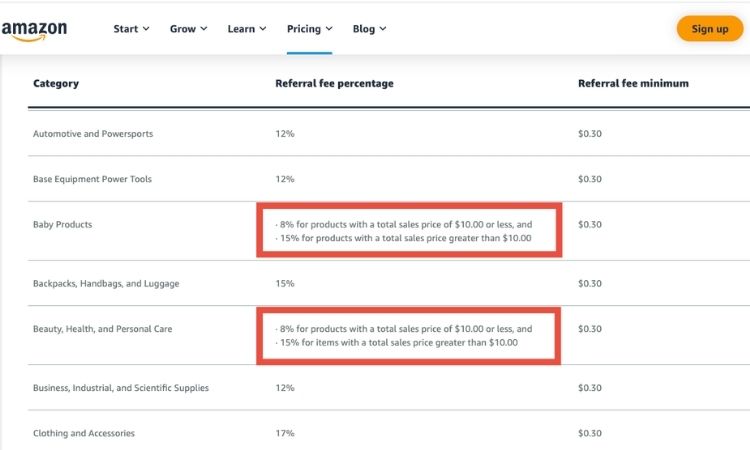
Referral fees represent Amazon’s main income stream from sellers. This fee is calculated as a percentage of your total transaction value, which includes the item price, shipping charges, and gift wrap fees. However, any taxes collected through Amazon’s tax calculation service are excluded from this calculation.
The percentage you pay depends entirely on your product category. While most categories charge between 8% and 15%, the range spans from 6% to 45% across Amazon’s entire catalog. Additionally, certain categories apply tiered pricing where sales exceeding $10.00 qualify for reduced rates on the amount above that threshold.
Regardless of your product’s price, Amazon enforces a minimum referral fee of $0.30 per item sold. This means even low-priced items incur at least this base charge per transaction.
Closing Fee
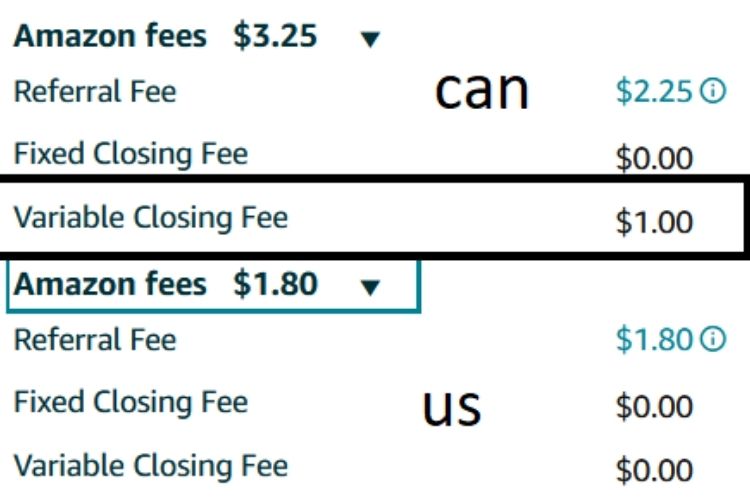
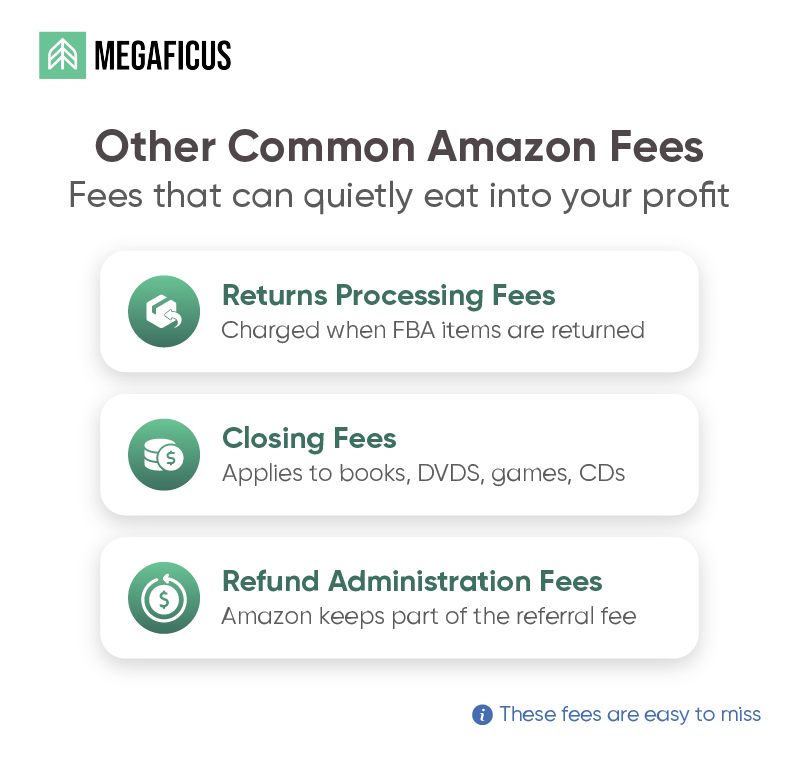
Beyond referral fees, Amazon applies an additional per-item charge for sellers in select categories. This closing fee primarily targets media products, where Amazon adds a fixed amount (typically between $1.35 and $1.80 per unit) to cover order handling and processing costs.
The following product types are subject to closing fees:
- Books: Physical copies of novels, textbooks, and other printed literature
- DVDs and Blu-rays: Movies, TV shows, and other video content on discs
- Music: CDs, vinyl records, and other physical music formats
- Software: Physical copies of computer software and video game discs
- Gaming accessories: Video game consoles and PC game discs/cartridges
Seller Account Subscription Costs
To sell on Amazon, you need to select one of two account types, each with different cost structures:
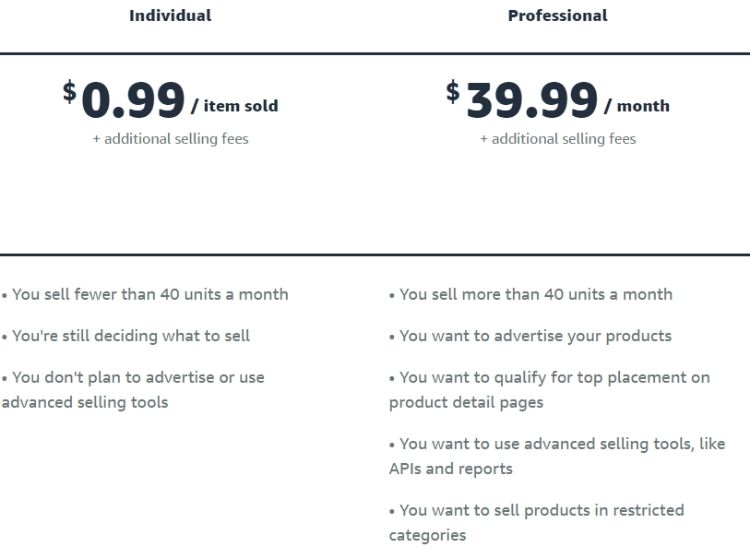
- Individual Selling Plan: Charges $0.99 per item sold with no monthly subscription. This option works best for sellers moving fewer than 40 units monthly or those testing the marketplace without a long-term commitment.
- Professional Selling Plan: Costs $39.99 monthly regardless of sales volume. This plan becomes profitable when you sell more than 40 items per month and provides access to advanced tools, bulk listing features, and promotional capabilities essential for scaling operations.
Fulfillment Costs: FBA vs. FBM vs. SFP
Choosing the right fulfillment method directly impacts your cost structure and profit margins. Below is a breakdown of the three main fulfillment options and their associated fees.
Fulfillment by Amazon (FBA) Fees
With FBA, Amazon handles storage, packing, shipping, and customer service for your products:
- FBA Fulfillment Fees: Calculated based on size tier, weight, and price. Small standard items (up to 16 oz) range from $3.06 to $4.50 per unit, while large standard items (up to 3 lb) cost $4.08 to $6.10 per unit. Bulky items incur higher fees based on weight categories.
- Monthly Storage Fees: Charged per cubic foot of warehouse space used. Standard rates apply January-September, with peak season increases during October-December. Storage utilization surcharges of $0.75 to $2.40 per cubic foot may apply for inventory stored over 30 days that exceeds sales-based thresholds.
- Low-Inventory-Level Fee: Applies when inventory falls below 28 days of historical supply. This fee is calculated at the FNSKU level and varies by size tier and how far below the threshold your stock drops:
| 2026 Size Tier | Shipping Weight | 0-14 Days Supply | 14-21 Days Supply | 21-28 Days Supply |
|---|---|---|---|---|
| Small standard | Up to 16 oz | $0.89 | $0.63 | $0.32 |
| Large standard | Up to 3 lb | $0.97 | $0.70 | $0.36 |
| Large standard | 3+ lb to 20 lb | $1.11 | $0.87 | $0.47 |
| Small Bulky | Up to 50 lb | $1.85 | $1.02 | $0.51 |
| Large Bulky | Up to 50 lb | $2.09 | $1.15 | $0.57 |
Fulfillment by Merchant (FBM) Fees
With FBM, you handle your own storage, packaging, shipping, and customer service instead of using Amazon’s fulfillment network. While there’s no specific Amazon fulfillment fee, you’re responsible for all shipping costs and still pay standard Amazon fees like referral and closing fees on each sale:
- Shipping costs: Calculate rates using carrier tools (USPS, UPS, FedEx) based on weight, dimensions, destination, and delivery speed. Alternatively, use Amazon Buy Shipping to access pre-negotiated rates averaging over 31% lower than retail ground rates.
- Carrier negotiations: High-volume sellers can secure discounted shipping rates, reducing per-unit fulfillment expenses significantly.
- Packaging optimization: Choose lightweight, durable materials to minimize costs while protecting products. Optimize package dimensions to avoid dimensional weight pricing surcharges.
- Shipping automation: Tools like ShipStation, Shippo, or Veeqo (Amazon’s free tool) help compare rates across carriers, print labels, manage multi-channel inventory, and reduce shipping errors.
- Performance metrics: Maintain a strong Order Defect Rate (ODR), Late Shipment Rate (LSR), and Valid Tracking Rate (VTR) to stay eligible for the Buy Box and potentially qualify for Seller Fulfilled Prime.
Other Amazon Fees
SFP allows sellers to offer Prime shipping from their own warehouses while meeting strict performance requirements, including 99% on-time shipment rates and a minimum of 100 Prime orders monthly:
- Shipping Expenses: You cover all shipping costs and must provide free standard shipping on Prime orders. Position inventory strategically to minimize shipping distances and control expenses.
- Standard Amazon Fees: Referral fees (8-15% of selling price), closing fees where applicable, and the $39.99 monthly Professional selling plan.
- Fulfillment & Storage Costs: You handle warehouse storage, inventory management, packaging, and labor. This eliminates FBA fees but requires a reliable fulfillment infrastructure or a qualified 3PL partner.
Calculating Your Total Amazon Selling Costs
Understanding your true profit means accounting for every fee Amazon charges, not just your product’s selling price. Once you break down each cost component, calculating profitability becomes straightforward.
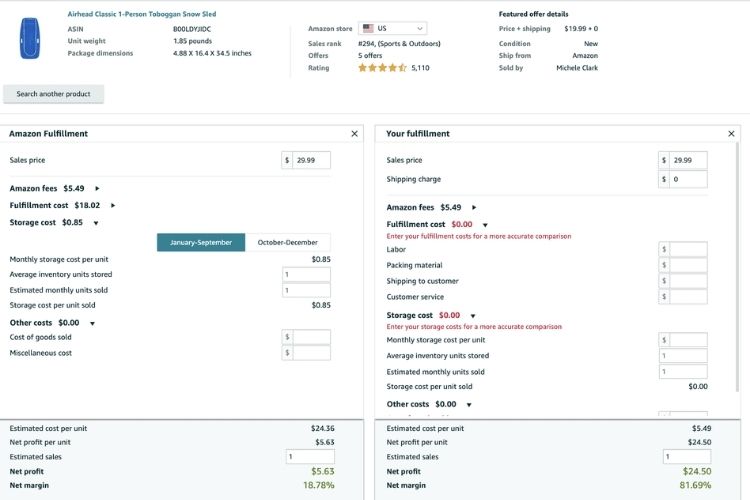
Total Cost Per Unit = Product cost + Shipping to Amazon (if FBA) + Amazon referral fee + Fulfillment fee (FBA or FBM) + Storage fee (if using FBA) + Other applicable fees (returns processing, labeling, aged inventory surcharges, etc.)
For example, if you sell a $35 yoga mat through FBA, your costs break down as follows:
- Product cost: $6.50
- Shipping to Amazon: $0.75
- Referral fee (15%): $5.25
- Fulfillment fee (FBA, 2026): $4.80
- Monthly storage fee: $0.15
- Return processing fee (if applicable): $0.60
Total cost = $18.05. Profit per unit = $35 – $18.05 = $16.95
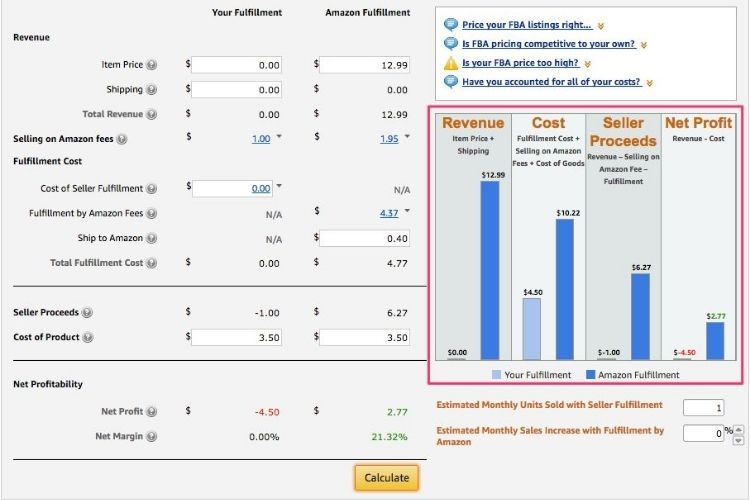
Note: Return processing fees only apply if your product’s return rate exceeds the category threshold. Use Amazon’s Revenue Calculator in Seller Central for precise fee estimates based on your specific product dimensions, weight, and category.
Strategies To Lower Your Amazon Selling Costs
Reducing Amazon fees requires proactive optimization across packaging, inventory management, and operational compliance. Here are proven strategies that help sellers protect margins and control costs effectively.
Reduce Packaging Dimensions and Weight to Lower Fee Tiers
Amazon’s fee structure creates significant cost jumps at specific size and weight thresholds. For instance, packages under 16 oz and 15″ (longest side) qualify for the small standard tier, which saves $1-2 per unit compared to large standard rates.
To achieve these savings, you should focus on the following adjustments:
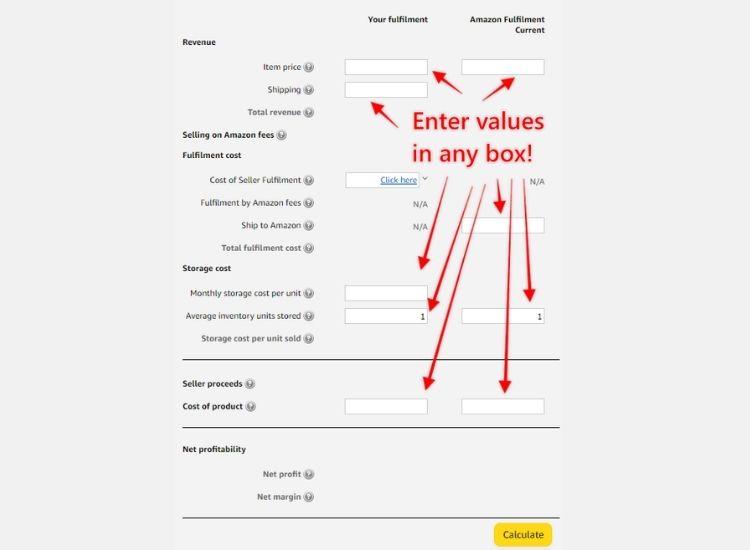
- Test in Revenue Calculator: Input different package dimensions to find fee breaking points before finalizing packaging.
- Cut excess space: Replace boxes with poly mailers for soft goods, use custom-fit packaging, and swap bubble wrap for lightweight tissue paper.
- Measure precisely: Every ounce and inch matters, dropping from 17 oz to 15 oz moves you down a tier.
- Reconsider bundles: Sometimes splitting multi-item sets into separate listings costs less than one oversized package.
Create Multi-Packs to Maximize Fulfillment Efficiency
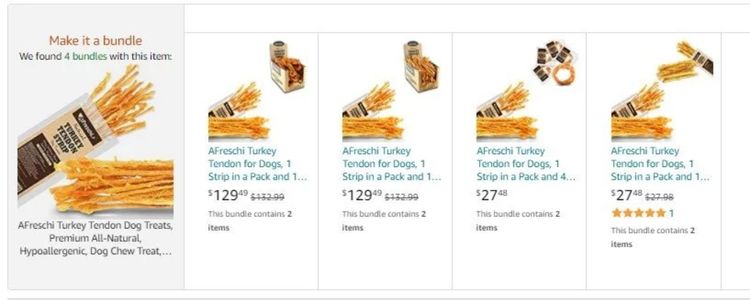
Bundling products allows you to increase order value while paying Amazon’s fulfillment and referral fees only once per transaction. For example, selling individual protein bars at $3 each incurs a $3.50 fulfillment fee per unit, resulting in losses.
However, a 12-pack priced at $36 requires only one fulfillment fee (approximately $5-6), which transforms unprofitable singles into a high-margin offering.
To implement this strategy effectively, you should consider these approaches:
- Target low-margin items: Products under $10 with high per-unit costs benefit most from 3-packs, 6-packs, or multi-item sets.
- Monitor size tier limits: Ensure bundles don’t push you into higher fee brackets, verify dimensions in the Revenue Calculator first.
- Bundle complementary products: Pair related items (shampoo + conditioner) or create convenience packs that justify premium pricing.
- Test quantity variations: Compare 2-pack, 4-pack, and 6-pack margins to identify your most profitable configuration.
Handle FBA Prep In-House to Avoid Costly Defect Fees
As of January 1, 2026, Amazon discontinued its prep and labeling services in the US, which means every shipment must arrive fully compliant or risk inbound defect fees that can cost 10-80 times more than previous rates.
Proper preparation includes affixing correct FNSKU labels, poly-bagging items per Amazon’s requirements, and following category-specific packaging rules to prevent rejections, delays, or stranded inventory.
To prepare shipments correctly, you need to implement these practices:
- Print accurate FNSKU labels: Use thermal printers for durable, scannable labels and verify each SKU matches its assigned FNSKU before application.
- Poly-bag when required: Items with loose parts, liquids, or exposed surfaces need suffocation-warning poly bags with specific mil thickness per Amazon guidelines.
- Follow prep requirements by category: Check Seller Central’s prep guidance for your product type, some categories require bubble wrap, boxing, or special labeling.
- Document your process: Create a prep checklist and train staff or 3PL partners to ensure consistency across all shipments.

Monitor and Dispute Fee Discrepancies Monthly
Amazon’s automated system occasionally generates billing errors, including incorrect return charges, overcharged removal fees, or missing reimbursements for lost inventory. These mistakes directly reduce profits, yet most sellers never catch them without regular audits.
To recover overpaid fees, you should implement the following monitoring practices:
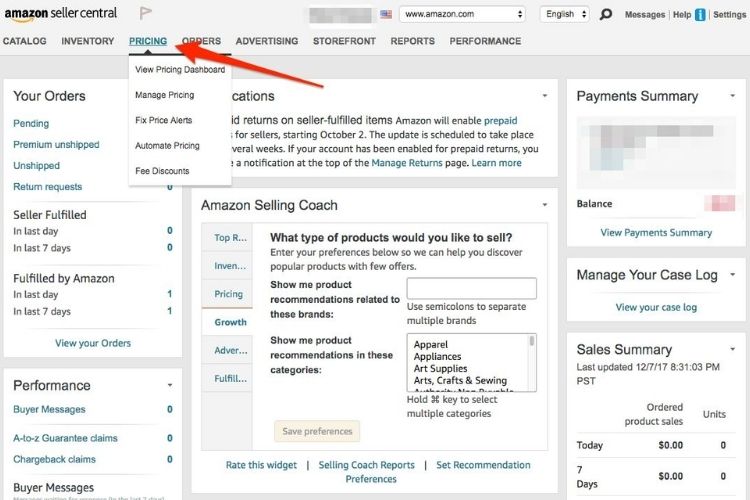
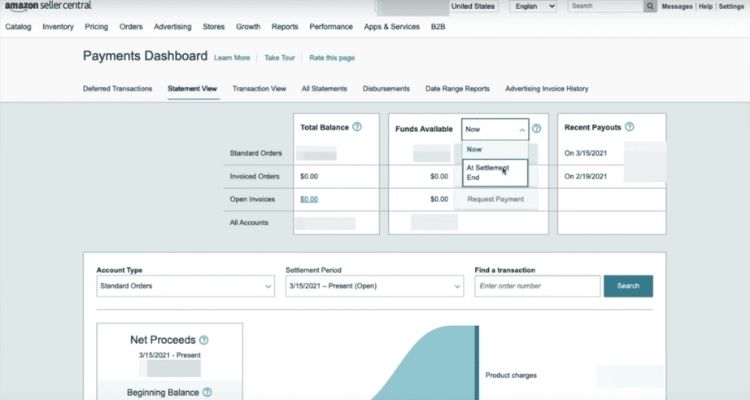
- Review monthly fee reports: Check Payments → Transaction View in Seller Central and filter by fee type to spot unusual charges.
- Track inventory adjustments: Review lost, damaged, or destroyed items that qualify for reimbursement but weren’t automatically processed.
- File claims within 60-90 days: Submit cases through Seller Central with supporting documentation like shipment IDs and photos.
- Consider auditing tools: Services like Getida or Refunds Manager automatically scan for discrepancies and file claims for a percentage of recovered funds.
Pricing Tools For Amazon Seller
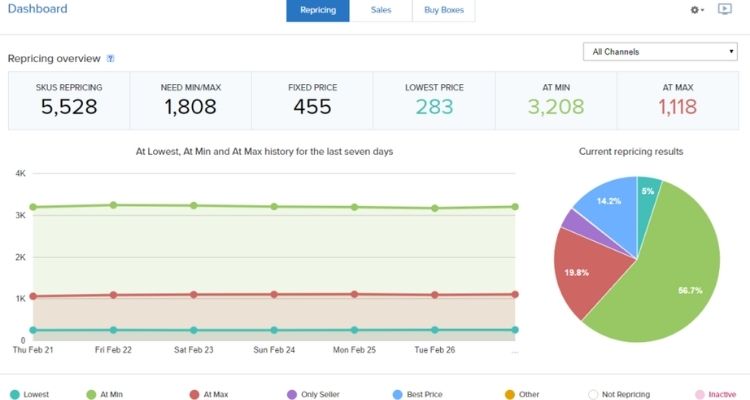
Dynamic pricing tools automate price adjustments based on competitor activity, inventory levels, and market demand. This automation helps you win the Buy Box, protect margins, and save hours of manual repricing work across your catalog.
Here are some widely-used pricing tools that sellers rely on:
- Seller.Tools: Algorithmic repricing with customizable rules for Buy Box optimization and margin protection
- RepricerExpress: Real-time repricing with competitor tracking and bulk adjustments across multiple marketplaces
- Informed.co: AI-powered repricing that learns from sales velocity and adjusts strategies automatically
- Feedvisor: Enterprise-level pricing optimization using machine learning to balance revenue and profit goals
- BQool: Repricing software with scheduled campaigns and comprehensive analytics dashboards
>>> Read more: What Are Amazon Promotions? A Complete Guide for Sellers
FAQs About Amazon Seller Pricing
Amazon charges referral fees ranging from 8% to 15% for most categories, with some categories reaching up to 45%. The most common rate is 15% of the total sales price.
Yes. You can choose between an Individual plan ($0.99 per item sold) or a Professional plan ($39.99 per month). The Professional plan becomes cost-effective once you sell more than 40 items monthly.
Sellers pay subscription fees (selling plan), referral fees (8-15% per sale), fulfillment fees (FBA or self-fulfillment costs), storage fees (if using FBA), and optional fees for services like returns processing, labeling, or aged inventory surcharges.
It depends on your product type and volume. FBM costs less for large, bulky, or slow-moving items. FBA is more cost-effective for small, lightweight, fast-selling products that benefit from Prime eligibility.
Amazon charges a referral fee (commission) of 8-15% depending on the product category, with a minimum of $0.30 per unit. This is calculated on the total sales price, including item price and shipping charges, but excludes taxes.
Get Professional Help from Megaficus
Mastering Amazon seller pricing requires understanding every fee structure, calculating true costs accurately, and implementing strategic optimizations to protect profit margins. When subscription fees, fulfillment costs, and inventory management work together efficiently, sellers can maintain profitability even as Amazon’s fee landscape evolves.
For expert support to optimize your Amazon costs and scale your business profitably, Megaficus is ready to guide you through every pricing decision and fee management strategy.