
Amazon scale often begins when you increase your ad budget after steady sales growth, expecting profits to follow, but margins start shrinking, and performance becomes harder to control. This is where many sellers realize that growth without a system quickly gets expensive. In this guide, you will learn the essential checklist and systems needed to scale profitably.
Quick Summary:
| Strategy | Outcome |
|---|---|
| Optimize Listings | Increase conversion & sales efficiency |
| Expand Product Line | Unlock new revenue streams |
| Inventory Management | Prevent stockouts & reduce costs |
| Supplier Diversification | Improve margins & reduce risk |
| Cash Flow Management | Maintain stable growth capital |
| Amazon PPC Optimization | Scale traffic profitably |
| Automation & Outsourcing | Save time & boost efficiency |
| International Expansion | Access larger markets |
| KPI Tracking | Make smarter, data-driven decisions |
What It Means To Scale An Amazon FBA Business?
Scaling an FBA business goes beyond simply boosting your monthly sales figures. It involves developing a systematic approach that delivers consistent growth while maintaining profitability. To achieve this, you should focus on several key objectives:
- Reduce manual effort: Generate higher revenue with reduced hands-on involvement in daily operations
- Protect profit margins: Grow your income without eroding margins through inefficient spending
- Systematize operations: Create standardized workflows that allow you to hand off tasks to team members or automate them with software
- Boost customer value: Strengthen customer relationships to encourage repeat purchases and increase their total spending over time
- Expand your reach: Diversify by entering additional marketplaces or launching complementary sales channels
Pre-Scaling Checklist For Amazon FBA Sellers
Before pursuing expansion strategies, you must ensure your current operations have a solid foundation that can handle increased demand. A weak base will only magnify existing problems as you grow, resulting in cash flow shortages and dissatisfied customers. Consider these critical questions to determine your readiness:
- Have you optimized your product listings with compelling images and persuasive copy that converts browsers into buyers?
- Are you generating consistent profit after accounting for all expenses, including advertising costs and storage fees?
- Do you maintain accurate inventory tracking to avoid stockouts and overstocking situations?
- Can you clearly explain your cash flow cycle and profit margins for each product?
- Are your customer reviews predominantly positive, with feedback that highlights product quality and fast delivery?
9 Key Strategies To Scale Your Amazon FBA Business
Before you can scale effectively, you need a clear strategy that balances growth with profitability. Below are the key strategies to help you scale your Amazon FBA business in a structured and sustainable way.
Optimize Your Current Listings
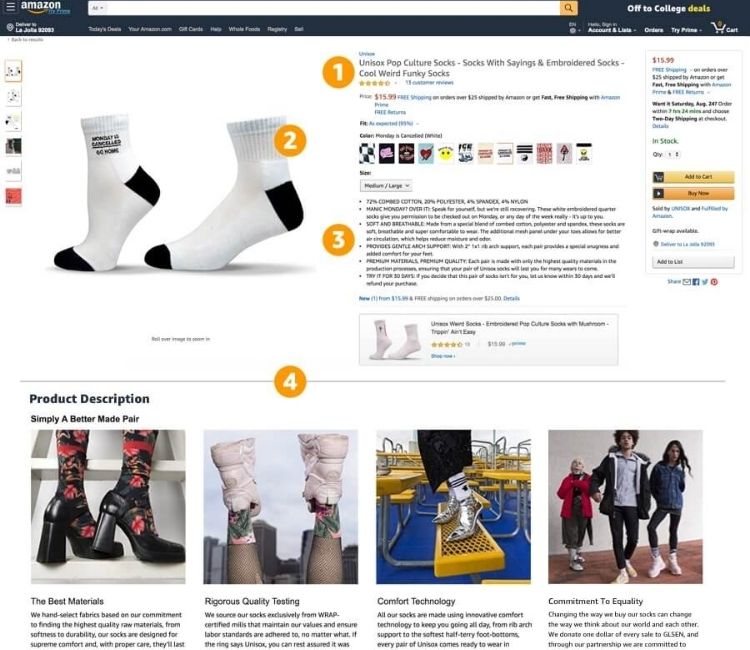
Scaling your ad budget on a low-converting listing is like pouring water into a leaky bucket, especially when your conversion rate is below 10%, and every extra dollar brings diminishing returns. Before increasing spend, you need to fix the conversion gaps already costing you sales by auditing these key listing elements:
- Title: Keep it between 150-200 characters with your top 3-5 keywords naturally integrated. Titles stuffed with 8+ keywords typically convert 12-18% lower than readable ones because customers perceive them as spammy.
- Images: Use at least 7 high-resolution images, including 3-4 lifestyle shots showing the product in use and 2-3 infographic images highlighting specific features. Listings with lifestyle images convert 30% better than those using only white-background product shots.
- Bullet Points: Limit each bullet to 2 lines maximum and focus on solving specific customer pain points rather than listing generic features. For example, “Reduces back pain during 8+ hour workdays” performs better than “Ergonomic design for comfort”.
- A+ Content: Sellers using A+ Content see an average 5-10% lift in conversion rates, with the biggest gains coming from comparison charts and detailed use-case scenarios rather than generic brand storytelling.
- Reviews & Ratings: Aim for at least 50 reviews with a 4.3+ star average before scaling aggressively. Products between 4.0-4.2 stars typically see 20-25% lower conversion rates than those above 4.5 stars.
Additionally, populate your Q&A section with 10-15 helpful answers that address common objections like sizing concerns, compatibility issues, or warranty details. Sellers who proactively answer questions in this section report 8-12% higher conversion rates because customers find the information they need without leaving the page.
Expand Your Product Line Strategically
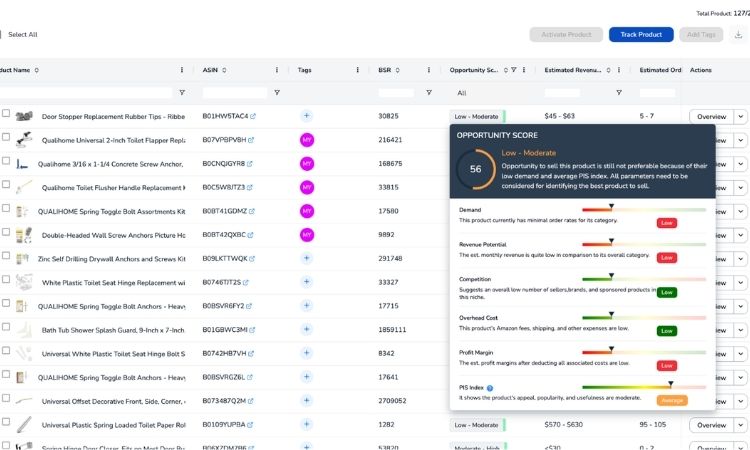
You can accelerate growth by launching new products strategically within your existing niche, as sellers who expand into related categories often achieve higher success by leveraging customer trust and cross-promotion opportunities. To maximize results, follow these key guidelines when selecting your next product:
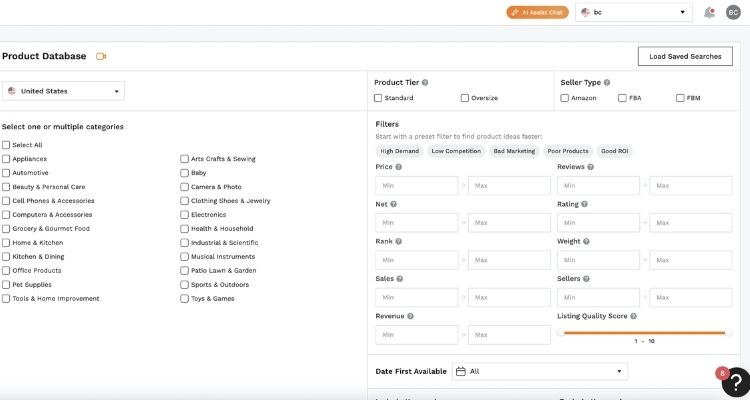
- Target proven demand metrics: Look for products with at least 300 monthly searches and competition scores below 40 on Helium 10’s Product Opportunity Score. Avoid markets where the top 10 sellers all have 1,000+ reviews unless you can differentiate with unique features or bundles.
- Stay within your customer avatar: If you sell yoga mats, expand to yoga blocks, resistance bands, or meditation cushions rather than jumping to camping gear. Sellers who maintain category coherence see 25-35% higher repeat purchase rates because customers return to browse related items.
- Validate with real numbers before ordering: Calculate that your landed cost (product + shipping + tariffs) stays below 30% of your selling price. Factor in 15-20% for Amazon fees and 10-15% for advertising, leaving you with at least 35-40% net margin. Products with margins below 30% become unprofitable when you scale ads.
- Test bundles to reduce competition: Creating a 2-3 item bundle lets you compete in a less saturated space. For example, bundling a resistance band set with a door anchor and workout guide typically increases your average order value by $8-15 while facing 60-70% fewer direct competitors than selling bands alone.
- Start with conservative MOQs: Order 200-300 units for your first test run, which typically costs $1,500-3,000 depending on the product. If you achieve 15+ units sold per day within the first month and maintain a 4.0+ star rating, double your inventory on the next order.
Build An Effective Inventory Management System
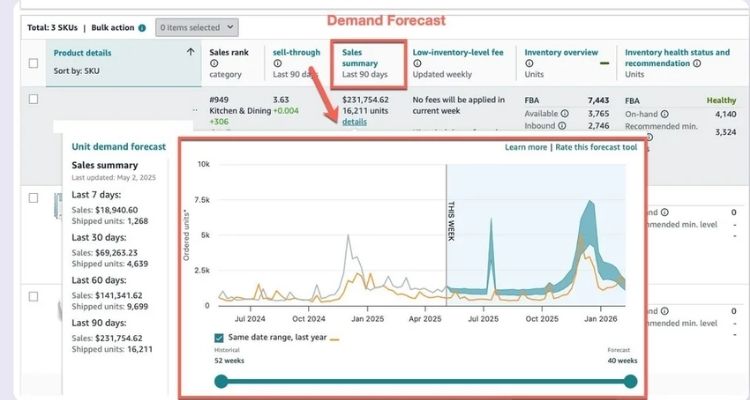
Poor inventory planning can quickly kill your scaling efforts, as stockouts hurt your rankings while excess inventory drives up storage fees and cuts into margins. To avoid these issues and maintain healthy performance, implement these data-driven practices to manage your stock levels effectively:
- Calculate precise reorder points: Use this formula: (Average daily sales × lead time in days) + safety stock. If you sell 20 units daily with a 45-day supplier lead time, your reorder point is 900 units. Add 30-50% safety stock for products with variable demand or unreliable suppliers.
- Account for seasonal patterns: Review trailing 12-month data instead of relying on 30-day averages. Products selling 10 units daily in January might jump to 40 units daily during Q4. Adjust reorder quantities 60-90 days before peak seasons to avoid stockouts.
- Maintain IPI above 500: This prevents storage restrictions and provides unlimited FBA capacity. The three biggest IPI killers are excess inventory (90+ days of supply), stranded inventory, and sell-through rates below 2% over 90 days. Address these when your score drops below 450.
- Automate tracking with inventory tools: ConnectBooks or SoStocked calculates reorder dates automatically based on sales velocity and lead times, costing $50-200 monthly but preventing stockouts worth $5,000-20,000 in lost sales and ranking damage.
- Use 3PLs strategically: When storage fees exceed 15% of revenue or you’re holding 180+ days of inventory, third-party logistics providers reduce costs by 40-60%. They charge $3-8 per cubic foot monthly versus Amazon’s $6.90-$11.25 for long-term storage.
Strengthen And Diversify Supplier Relationships
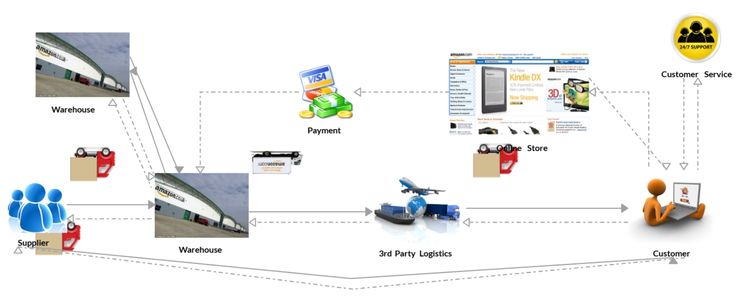
Your supplier strategy directly impacts how profitably you scale, as relying on a single source can cause major delays, while better terms at higher volume can significantly improve margins. To build a more resilient and scalable supply chain, you follow these key practices:
- Renegotiate at volume milestones: Once ordering 1,000+ units per SKU quarterly, request 5-10% price reductions or net-60 payment terms. Suppliers offer better rates for 6-12 month contracts with predictable volumes.
- Maintain 2-3 backup suppliers: Identify alternative manufacturers who match your quality and pricing standards. Request samples annually to verify capabilities, preventing complete shutdowns when your primary supplier faces delays.
- Implement third-party inspections: At 500+ units per shipment, use services like Qima or V-Trust ($200-400 per inspection). They reduce return rates from 8-12% industry average to 2-4%, preventing $10,000-30,000 losses from defective batches.
- Consider nearshoring for high-velocity items: If selling 30+ units daily with 60-90 day Asian lead times, explore Mexican or Eastern European suppliers. Their 20-40% higher costs are offset by 75% shorter lead times (15-20 days), letting you hold 40-50% less inventory.
- Track supplier performance quarterly: Monitor on-time delivery (target 90%+), defect rate (below 2%), and responsiveness. Replace suppliers missing these benchmarks before they disrupt peak-season inventory.
Improve Cash Flow And Access Funding
Even profitable Amazon sellers often find themselves short on liquidity because capital is tied up in inventory and operations. The following practices help you maintain healthy cash flow and access the right funding when needed:
- Build a cash flow forecast: Map out your Amazon payouts, supplier payment dates, FBA fees, and ad spend at least 60 days ahead to identify cash shortfalls before they occur.
- Shorten your cash conversion cycle: Negotiate net-30 instead of net-60 payment terms with suppliers, and align reorder timing with your actual sell-through rate rather than fixed schedules.
- Use revenue-based financing for inventory: Lenders like Wayflyer and Clearco offer funding tied to future sales, where repayment adjusts as a percentage of daily revenue rather than fixed installments, which suits FBA sellers with seasonal income fluctuations.
- Consider a line of credit for operational gaps: A line of credit charges interest only on what you use, making it ideal for covering delayed Amazon payouts, unexpected supplier costs, or ad spend ahead of peak seasons like Prime Day or Q4.
- Keep financial records clean before applying: Lenders evaluate consistent revenue, review scores, and return rates, so maintaining organized financial statements covering inventory, sales, and expenses improves your chances of qualifying for better terms.
Use Amazon Advertising To Support Growth
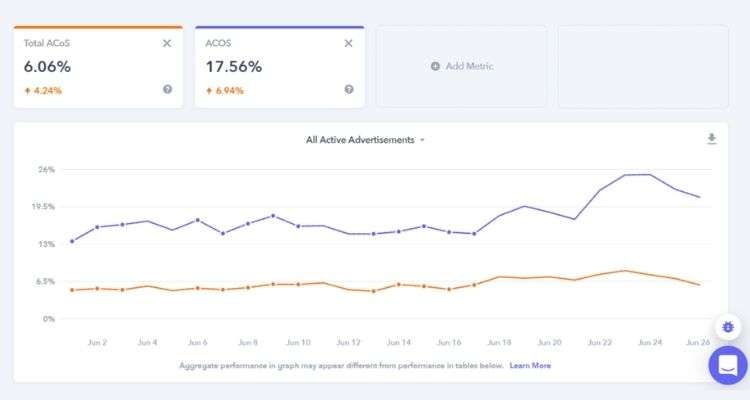
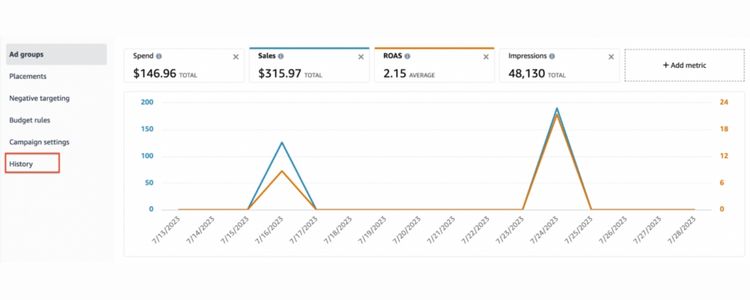
Amazon PPC consumes 10-25% of revenue for most scaling sellers, making campaign optimization critical to profitability. Without proper structure and daily monitoring, advertising costs spiral while conversion rates stagnate. These practices help you scale ad spend efficiently while maintaining healthy margins:
- Structure campaigns by keyword intent: Separate campaigns into branded terms (5-10% ACoS target), competitor terms (20-30% ACoS), and generic keywords (15-25% ACoS).
- Mine auto campaigns for profitable keywords: Run Automatic campaigns with $20-30 daily budgets for 2-3 weeks. Once a keyword generates 5+ sales at ACoS below 30%, move it to Manual Exact with 20-30% higher bids.
- Track TACoS alongside ACoS: Monitor Total Advertising Cost of Sale (ad spend ÷ total revenue, including organic). Healthy campaigns show TACoS 30-50% lower than ACoS, meaning every $1 in ads creates $2-3 in total sales through ranking improvements.
- Scale profitable campaigns incrementally: Increase daily budgets by 20-30% weekly for campaigns maintaining ACoS below target and converting above 10%. If a campaign runs at 18% ACoS with 12% conversion rate, raise the budget from $50 to $65 daily. Monitor for 7 days before increasing by another 20%.
- Use dayparting to cut waste: If ACoS jumps to 35-40% between 11 PM and 6 AM, reduce bids by 30-50% during those hours.
Automate And Outsource Where Possible
Once you’re generating $10,000+ monthly revenue, your time becomes worth more than the $5-25/hour cost of outsourcing repetitive tasks. Spending 20 hours weekly on customer service emails and listing updates prevents you from focusing on high-leverage activities like product research and supplier negotiations that could add $50,000-100,000 in annual revenue:
- Hire VAs for customer service at scale: Once you receive 30+ messages daily, outsource to virtual assistants at $5-8/hour through Upwork or OnlineJobs.ph. Train them with templated responses for common issues like shipping delays, product questions, and return requests.
- Outsource listing optimization strategically: If your listings convert below 10% despite decent traffic, hire specialists ($300-800 per listing) to rewrite copy and redesign images. Quality optimization typically lifts conversion rates by 3-5 percentage points, generating $2,000-5,000 additional monthly revenue per product.
- Delegate bookkeeping to maintain financial clarity: At $15,000+ monthly revenue, hire bookkeepers ($200-500/month) to categorize expenses, reconcile accounts, and generate profit-loss statements.
- Automate feedback requests to boost review velocity: Amazon-compliant software like FeedbackWhiz or Helium 10 Follow-Up ($20-50/month) automatically emails customers 5-7 days post-delivery, increasing review rates from 1-2% to 4-6%.
- Use dynamic repricing for competitive positioning: Algorithmic repricers ($50-100/month) adjust prices every 15 minutes based on competitor movements and your minimum margin requirements. They typically increase Buy Box win rate by 15-25% while protecting margins.
- Set inventory alerts to prevent stockouts: Configure restock notifications at your reorder point, not when inventory hits zero. Most inventory management software sends alerts when stock drops to 30 days remaining.
Expand To New Markets And Sales Channels
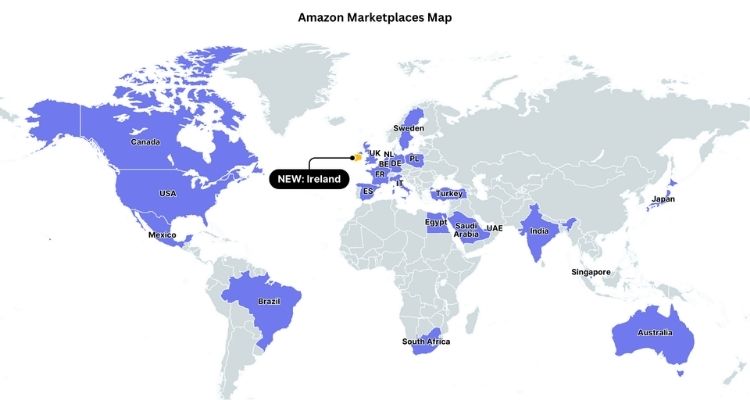
International expansion can double your revenue within 12-18 months if you enter markets strategically. However, launching in 3+ marketplaces simultaneously spikes operational costs by 40-60%, so you should start with one adjacent market first.
Amazon Canada and Mexico offer the lowest entry barriers through the North America Unified Account, which manages all three marketplaces from one dashboard. Once you validate profitability in North America, you can expand to Amazon Europe (UK, Germany, France), which represents 200+ million customers but requires VAT registration costing $500-1,500 per country.
To minimize logistics costs when starting out, you should use Amazon’s Remote Fulfillment with FBA to fulfill international orders from your U.S. inventory. Additionally, you must hire native translators for listings since machine translation reduces conversion rates by 25-40%. Beyond Amazon, platforms like eBay and Walmart Marketplace help you diversify revenue streams and reduce dependence on a single channel.
Track KPIs And Use Data To Improve Performance
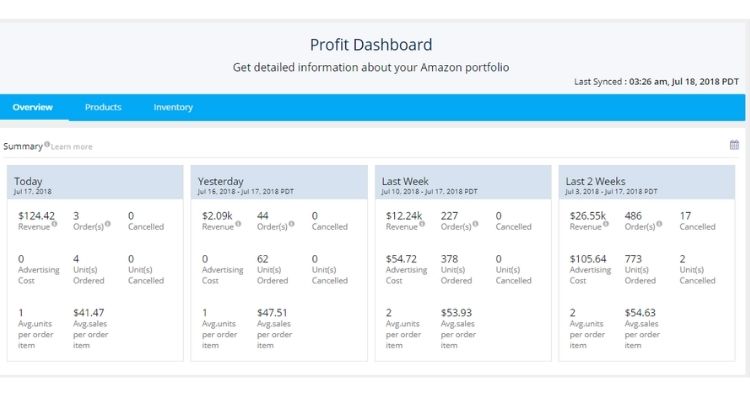
Scaling without tracking metrics means you won’t identify which products drain cash flow or which campaigns waste budget until losses accumulate. Successful sellers review key performance indicators weekly to catch problems early and reinvest in profitable areas, while those relying on intuition discover issues months too late.
- Sales velocity: Track units sold per day for each SKU. Products selling 15+ units daily can support increased ad budgets, while those dropping below 5 units daily need immediate listing optimization or price adjustments.
- Conversion rate: Healthy products convert at 10-15% or higher. If your rate drops below 8%, audit images, pricing, and reviews before scaling ads, since traffic to poorly converting listings wastes money.
- ACoS and TACoS: Monitor ad spend ÷ ad sales (ACoS) and ad spend ÷ total sales (TACoS) to ensure advertising generates profitable growth. Target ACoS 5-10 points below your break-even threshold.
- Inventory turnover: Calculate annual COGS ÷ average inventory value. Target 6-12x annual turnover (stock sells every 30-60 days), as products turning under 4x yearly tie up capital better used for new launches.
- Profit margin: Maintain 30%+ net margins after all fees, advertising, and returns. Products falling below 25% margin become unprofitable when scaling ad spend or facing competitive pricing pressure.
- Return rate: Rates above 5% indicate quality issues or misleading listings that damage profitability through replacement costs and negative reviews requiring immediate product or listing fixes.
>> Read more: Unlock Success With The Ultimate Amazon Product Launch Guide
FAQs About Amazon Scale
Scaling Amazon ads profitably means increasing ad spend to boost sales, visibility, and market share while maintaining or improving profit margins by focusing on performance and leveraging the flywheel effect to reduce overall TACoS.
Amazon ad campaigns are ready to scale when they deliver stable, profitable results for 2–4 weeks with consistent conversions, healthy ACoS, clear winning keywords, strong conversion rates, and sufficient inventory.
Scale Amazon ads without overspending by using a data-driven approach that prioritizes TACoS, increasing budgets on high-performing keywords while reducing or cutting spend on underperforming ones.
Get Professional Help from Megaficus
Mastering Amazon scale is not about increasing ad spend, but about building the right systems to drive consistent and profitable growth. When executed properly, Amazon scale helps you boost revenue, strengthen organic rankings, and maintain healthy margins over time.
If you want to accelerate your results and avoid costly mistakes, Megaficus offers expert strategies, data-driven execution, and tailored solutions to help your brand amazon scale faster and more profitably.