
Knowing how to find profitable products to sell on Amazon is the first and most critical step in building a successful FBA business, as it can mean the difference between steady sales and costly dead stock. In this guide, Megaficus breaks down the most effective methods experienced sellers use to identify winning products and make smarter sourcing decisions.
Quick Summary: 10 ways to find profitable products to sell on Amazon:
- Search Amazon’s product database for winning ideas
- Use Amazon product research tools and analytics software
- Join webinars and industry events for product insights
- Apply keyword data for product research
- Outsource product research tasks
- Analyze market trend reports
- Explore external marketplaces for product ideas
- Check Amazon best sellers for inspiration
- Use social media to discover product trends
- Generate product ideas with AI tools
10 Ways To Find Profitable Products To Sell On Amazon
Finding the right product is the foundation of a successful Amazon business. Below are ten proven methods that experienced sellers use to identify winning products with strong demand, manageable competition, and healthy margins.
Search Amazon’s Product Database For Winning Ideas
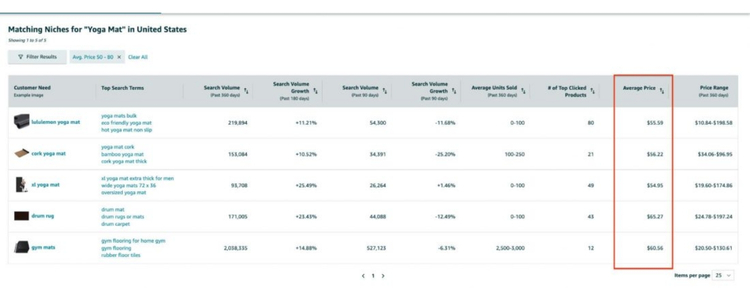
Browsing Amazon directly is the simplest way to start sourcing products for your store. To avoid wasting time sifting through millions of listings, experienced FBA sellers rely on a defined set of criteria to quickly spot profitable opportunities:
- High demand: The product should generate at least 300 sales per month (roughly 10 per day).
- Low competition: Target niches where top-ranking sellers have fewer than 400 reviews, making it easier for new listings to gain visibility.
- Lightweight and compact: Stick to items under 5 lbs and smaller than 18″x14″x8″ to keep storage and shipping costs low.
- Optimal price range: A selling price between $30 and $70 strikes the right balance, profitable enough for sellers yet accessible for buyers.
- Healthy profit margin: Your sourcing cost should not exceed 25% of the selling price, meaning the retail price is at least four times what you paid.
Use Amazon Product Research Tools And Analytics Software
Once you’ve identified a potential product, the next step is tracking down its manufacturer or supplier. You can start by searching the brand name from the Amazon listing directly on Google.
If that search doesn’t surface the supplier, try searching the product name instead and check whether it appears on other retail sites, as those listings often reveal the original brand or manufacturer.
After locating the supplier, visit their website and look for wholesale or bulk purchasing contact details, which are typically found in the header or footer. To speed up this entire process, the following tools can help:
- Google Lens: Upload a product image to reverse-search and identify the manufacturer, which is especially useful when the brand name is unclear.
- Alibaba / Global Sources: Search the product or brand name to find verified manufacturers, and compare MOQ (minimum order quantity) and pricing directly on the platform.
- ThomasNet: It is best for sourcing US-based manufacturers and suppliers, as it provides detailed company profiles and contact information.
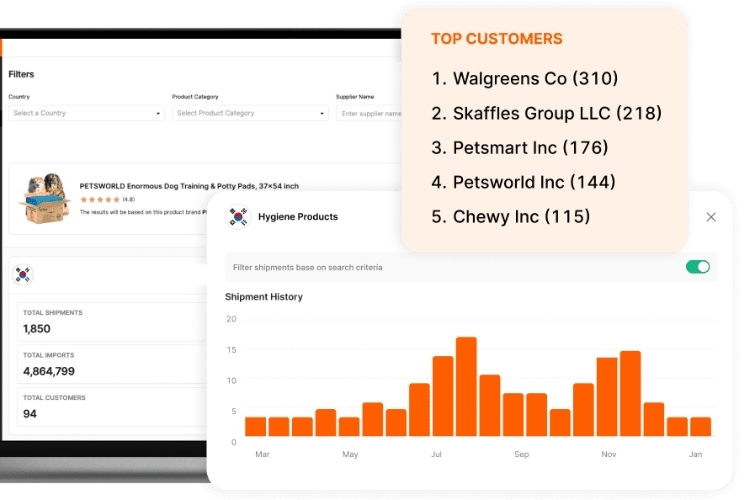
- Jungle Scout Supplier Database: It allows you to search US import records to see which suppliers other Amazon sellers are already using for a specific product.
- LinkedIn: You can search the brand or company name to find wholesale or sales contacts directly, which helps bypass generic contact forms.
- RocketReach / Hunter.io: These tools help you find verified business email addresses when a supplier’s website lacks direct contact information.
Join Webinars And Industry Events For Product Insights
Learning from experienced sellers is one of the most practical ways to discover new product ideas and sourcing strategies. By attending industry events, you can gain firsthand insights into what is actually working in the market, spot emerging niches early, and connect with suppliers or fellow sellers. Below are some specific events and platforms worth exploring:
- Amazon Accelerate: Amazon’s official annual conference that covers seller strategies, policy updates, and product opportunity trends directly from Amazon experts.
- Prosper Show: A large annual conference specifically for Amazon sellers, featuring sessions on product research, sourcing, and scaling an FBA business.
- White Label World Expo: Focuses on private label products, connecting sellers with manufacturers and giving you direct access to trending product categories.
- Jungle Scout’s Free Webinars: Regularly hosted sessions covering product research tactics, market trends, and Q&A with experienced FBA sellers. Available at jungscout.com/webinars.
- Helium 10 Webinars and Freedom Ticket: Offers structured training and live sessions taught by active Amazon sellers, covering product selection and business growth strategies.
- Amazon FBA Facebook Groups and Reddit Communities (r/FulfillmentByAmazon): While not formal events, these communities frequently host live sessions, AMAs, and discussions where sellers share real product-finding methods.
Apply Keyword Data For Product Research
Understanding which keywords shoppers search for most is a reliable way to identify what products are in demand. You can gather this data through several practical methods:
Check autosuggestions
Type a product-related keyword into the Amazon or Google search bar and observe the dropdown suggestions. These autocomplete results reflect real search behavior, so terms that appear consistently signal strong buyer interest.
For Amazon specifically, a free tool like Sonar by Sellics can pull autocomplete data at scale, which saves you significant time compared to searching manually.
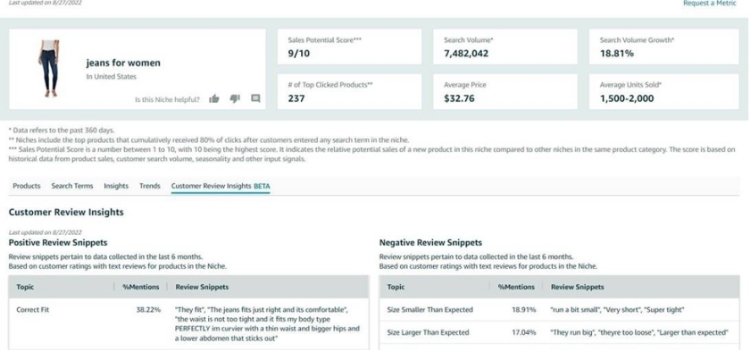
Analyze customer reviews
Read through reviews on competing listings to identify words and phrases that buyers use repeatedly. These terms often reveal unmet needs or product features that matter most to your target audience.
To speed up this process, tools like Review Insight by Helium 10 or Jungle Scout’s Review Analysis can automatically scan thousands of reviews and highlight recurring keywords for you.
Use keyword research tools
Go beyond Google Trends by using Amazon-specific tools that provide actual search volume and competition data. For example, Helium 10 Magnet and Jungle Scout Keyword Scout show how many times a keyword is searched on Amazon per month, which helps you prioritize high-demand, low-competition terms.
Additionally, Google Trends remains useful for spotting seasonal patterns and comparing keyword popularity across different regions over time.
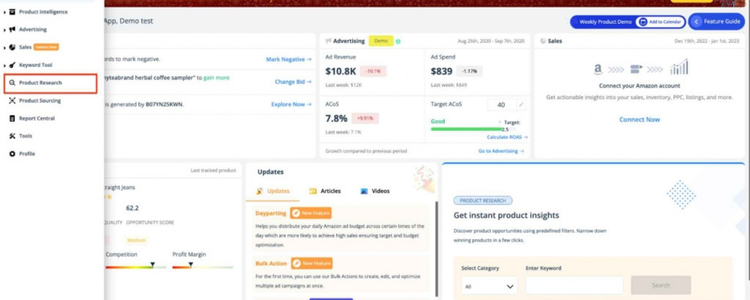
Outsource Product Research Tasks
If you lack the time or expertise to conduct product research yourself, outsourcing is a practical alternative. Platforms like Upwork and Fiverr connect you with freelance product researchers, though quality can vary significantly, so always look for freelancers who can provide sample reports or verified reviews from previous Amazon FBA projects.
For more reliable results, dedicated product research services are a better option, as they use specialized tools and experienced researchers to analyze demand, competition, and profit margins on your behalf. Before committing to any service, keep these criteria in mind:
- Customizable criteria: The service should allow you to define your own preferences, such as product category, price range, and competition level.
- Transparent methodology: A trustworthy provider clearly explains how they filter and evaluate products rather than just delivering a generic list.
- Sample reports: Reputable services offer sample reports upfront so you can assess quality before placing an order.
Analyze Market Trend Reports
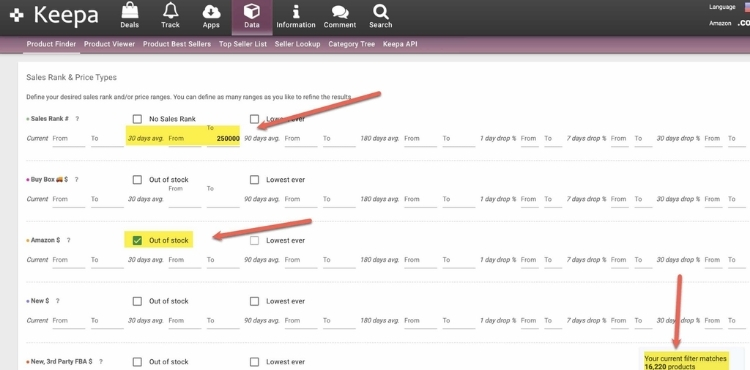
Reviewing trend reports helps you identify products with growing demand before the market becomes saturated. One of the most reliable free tools for this is Keepa, which tracks price history and Best Seller Rank (BSR) for any Amazon product over time. Here is how to use it:
- Step 1: Install the Keepa Chrome extension at keepa.com. Once installed, it automatically displays a trend chart on every Amazon product page you visit, so you do not need to search separately.
- Step 2: Read the BSR trend (green line). A consistently low and stable BSR indicates strong, steady demand. If the green line drops to zero during certain months and spikes back up, the product is likely seasonal and may not be suitable for year-round selling.
- Step 3: Check price stability (pink line). A stable pink line means the Buy Box price holds steady over time, which signals healthy competition. Frequent sharp drops suggest a price war among sellers, which compresses profit margins.
- Step 4: Look at seller count (bottom graph). A rising number of sellers over time means competition is increasing. Aim for products where the seller count remains manageable, ideally fewer than 15 FBA sellers competing for the Buy Box.
- Step 5: Set the time range to at least 6 to 12 months. A shorter window does not provide enough data to distinguish a genuine long-term trend from a temporary spike.
Explore External Marketplaces For Product Ideas
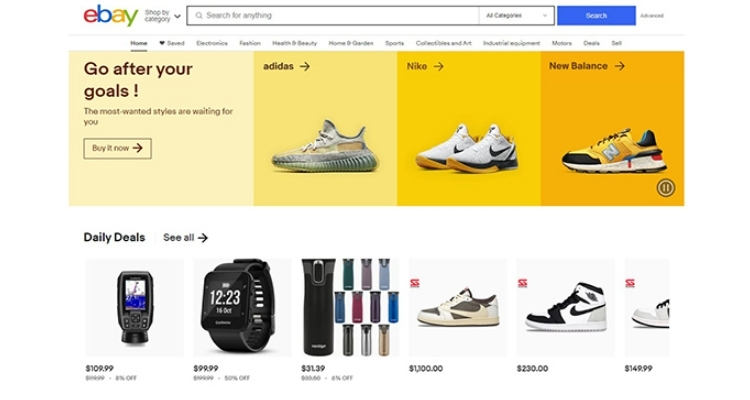
Monitoring what sells well on other e-commerce platforms is a practical way to spot product opportunities before they become saturated on Amazon. Products that gain traction on one marketplace frequently migrate to others, which means you can identify rising demand early and position yourself ahead of the competition. Here is how to do it step by step:
Step 1: Identify trending products on external marketplaces
Each platform has dedicated sections that surface what is currently selling well. Navigate directly to these pages to gather product ideas:
- eBay: Go to ebay.com and visit the “Explore Popular Categories” section or browse “Trending Deals” to see what buyers are actively purchasing.
- Etsy: Visit the “Trending Now” section on Etsy’s homepage or use the search bar autocomplete to see popular search terms among buyers. For deeper data, tools like eRank track the top trending keywords across Etsy daily and can be filtered by category.
- Walmart: Browse the “Best Sellers” and “Trending” sections on Walmart.com, which are updated frequently and reflect real purchasing behavior across millions of shoppers.
- Alibaba: Check the “What’s Trending” section on alibaba.com to identify which product categories manufacturers are actively promoting, which often signals growing wholesale demand.
Step 2: Filter ideas against your product criteria
After collecting a list of potential products, apply your FBA criteria, such as price range, size, weight, and competition level, to eliminate options that would not be profitable on Amazon before moving forward.
Step 3: Validate demand on Amazon
Search each shortlisted product on Amazon and check its Best Seller Rank (BSR), number of existing sellers, and review count. A product trending on eBay or Etsy but with low competition on Amazon represents a genuine entry opportunity.
Step 4: Cross-check with Google Trends
Enter the product keyword into Google Trends to confirm whether interest is growing, stable, or declining over time. This step helps you avoid investing in a product whose peak has already passed on other platforms before it even reaches Amazon.
Check Amazon Best Sellers For Inspiration
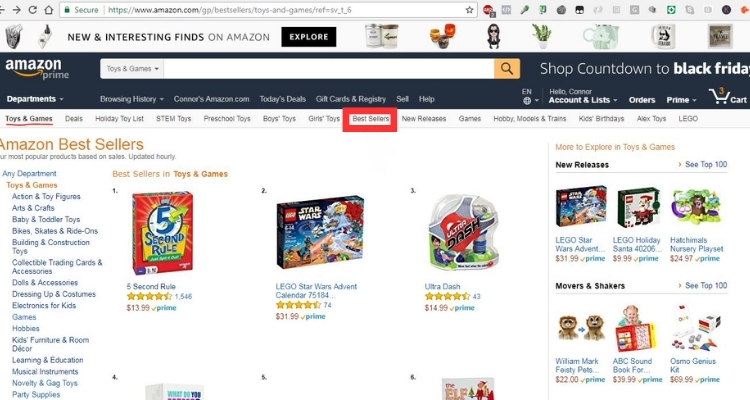
Checking the Amazon Best Sellers page is one of the quickest ways to identify what shoppers are actively buying right now. Since the list updates every hour based on real sales data, it gives you a live snapshot of market demand across hundreds of categories. Follow these steps to use it effectively:
- Step 1: Access the Amazon Best Sellers page. Go to amazon.com and navigate to “Best Sellers” in the top menu. Select a broad category that aligns with your interests or sourcing budget.
- Step 2: Drill down into subcategories. Avoid stopping at the top-level category, as competition there is typically very high. Instead, click through the subcategories to find more specific niches where demand is strong, but the number of competing sellers is more manageable.
- Step 3: Analyze each product before adding it to your list. As you browse, pay attention to the following signals on each listing:
- BSR number: A BSR under 10,000 in most categories generally indicates strong, consistent sales volume.
- Review count: Products with fewer than 400 reviews in the top positions suggest the niche is still accessible for new sellers.
- Number of sellers: Check how many other FBA sellers are offering the same product, as too many competitors will compress your margins.
- Price point: Confirm the selling price falls within your target range, typically $30 to $70 for most FBA business models.
- Step 4: Cross-validate before committing. Because the Best Sellers list can reflect short-term spikes rather than lasting demand, use Keepa or Google Trends to verify that sales have been consistent over at least six months before making a sourcing decision.
Use Social Media To Discover Product Trends
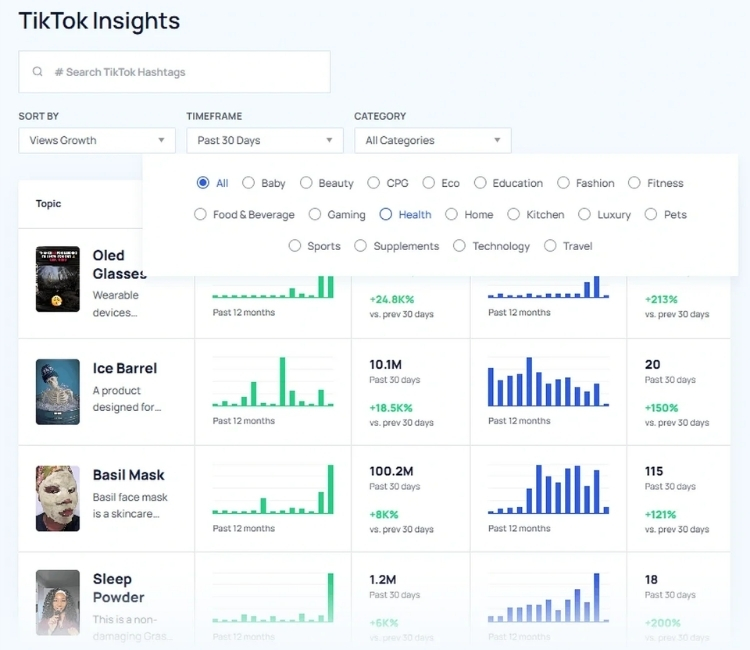
Social media is one of the few free sources where you can observe real consumer behavior in real time. Unlike keyword tools or sales databases, social platforms show you what people are genuinely excited about before that demand fully surfaces on Amazon. The key is knowing where to look and what signals to pay attention to on each platform.
TikTok
Browse the “For You” feed and search product-related hashtags such as #TikTokMadeMeBuyIt or #ProductReview. Pay close attention to videos with high engagement relative to the account’s follower count, as this signals organic demand rather than paid promotion. When a product appears repeatedly across unrelated creators, that repetition is a strong indicator of rising consumer interest worth investigating further.
Use Pinterest’s search bar to look up product categories and filter results by “Popular.” Because Pinterest functions more as a visual search engine than a traditional social platform, products that rank highly in search results there often reflect genuine purchase intent rather than passive browsing. The “Trending” section on Pinterest’s homepage also surfaces seasonal demand shifts weeks before they peak on Amazon.
Search relevant hashtags and look at what products influencers in your niche are tagging. Pay attention to comment sections, as buyer questions and reactions in the comments reveal whether followers are actually interested in purchasing, not just engaging with the content.
Search subreddits related to your product category, such as r/BuyItForLife, r/GiftIdeas, or niche-specific communities. Reddit discussions are unfiltered and often surface real pain points, unmet needs, and products that users genuinely recommend to each other, making it one of the most honest sources of consumer sentiment available.
Generate Product Ideas With AI Tools
AI tools like ChatGPT can speed up the early stage of product research by generating and filtering ideas based on your specific criteria, saving you hours of manual browsing. Here is how to use it effectively:
Step 1: Use a structured prompt. Vague prompts produce vague results. Instead of asking “what should I sell on Amazon,” try something like:
“Suggest 10 product ideas for Amazon FBA with a selling price between $30 and $70, lightweight under 2 lbs, fewer than 400 reviews in the top listings, and consistent year-round demand. Avoid electronics and fragile items”.
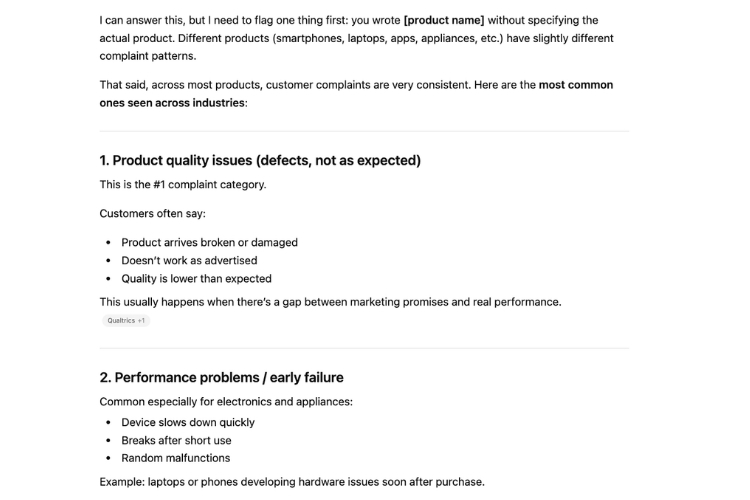
Step 2: Narrow down with follow-up questions. Once ChatGPT returns a list, ask follow-up prompts such as “What are the most common customer complaints about [product name]?” to identify gaps you could address with a better product.
Step 3: Validate with real data. Since ChatGPT does not have access to live Amazon sales data, treat its output as a starting point rather than a final answer. Cross-check each idea using Keepa for demand history and Google Trends for search interest before making any sourcing decision.
High-Profit Product Ideas For Amazon Sellers
Choosing the right product is often the hardest part of starting your Amazon business. The five ideas below are backed by consistent demand signals across multiple sources in 2026, covering evergreen categories with manageable competition and strong margin potential.
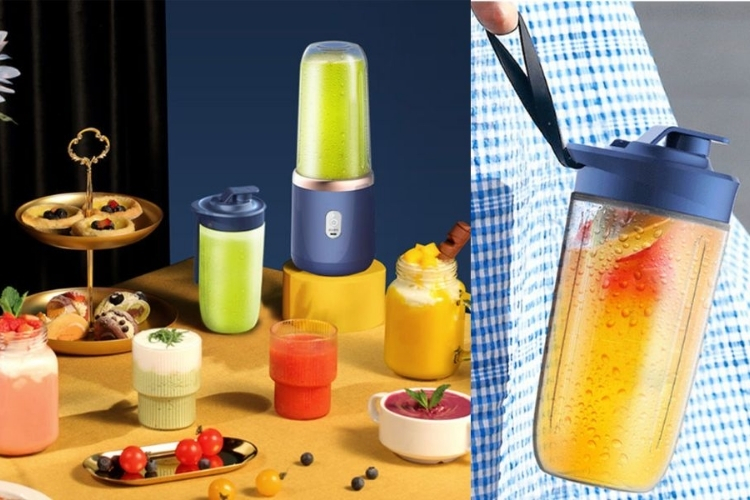
Portable USB Personal Blender
Compact blenders appeal to fitness enthusiasts, busy professionals, and travelers who prioritize convenience. They sit comfortably within the $15 to $50 price range that delivers the best FBA margins, are lightweight enough to keep storage and shipping fees low, and perform well when bundled with extra bottles or recipe cards to increase average order value.
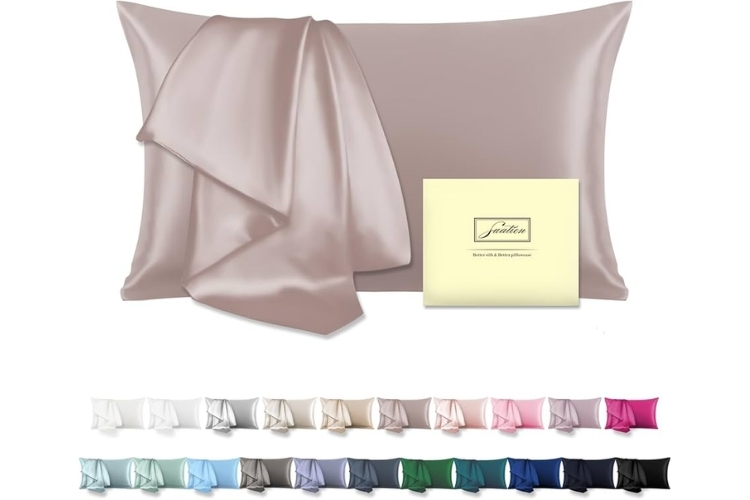
Silk Pillowcase
Silk pillowcases have high profit margins, qualify for low-cost FBA shipping due to their lightweight nature, and do not require batteries, complex packaging, or frequent returns. Demand is driven by both beauty and wellness trends, and the product has strong repeat purchase potential as buyers often return for additional colors or sizes.
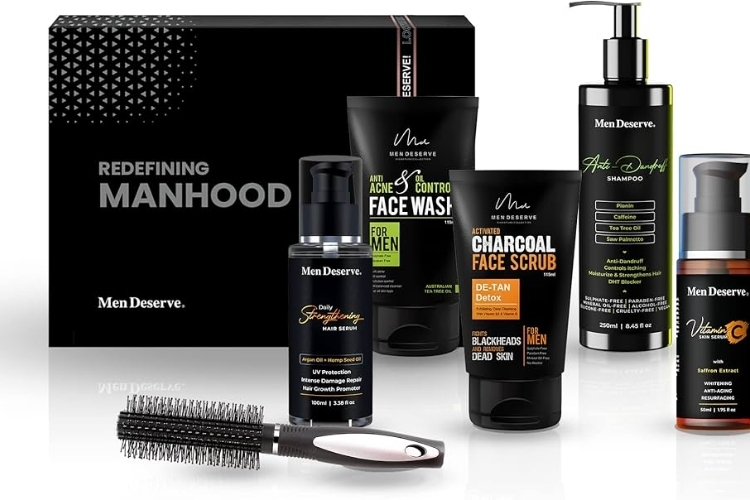
Men’s Grooming Products
Men’s grooming is significantly less competitive than women’s in most subcategories, yet demand is growing steadily. Products such as beard oils, facial cleansers, and grooming kits are lightweight, easy to source, and benefit from strong repeat purchasing behavior as consumables.
Pet Grooming Glove
Pet care is a top performer with constant demand. Grooming gloves appeal to both cat and dog owners, which significantly broadens the addressable customer base. The product is affordable to source, easy to bundle, and well-suited to differentiation through coat-type positioning or breed-specific marketing.

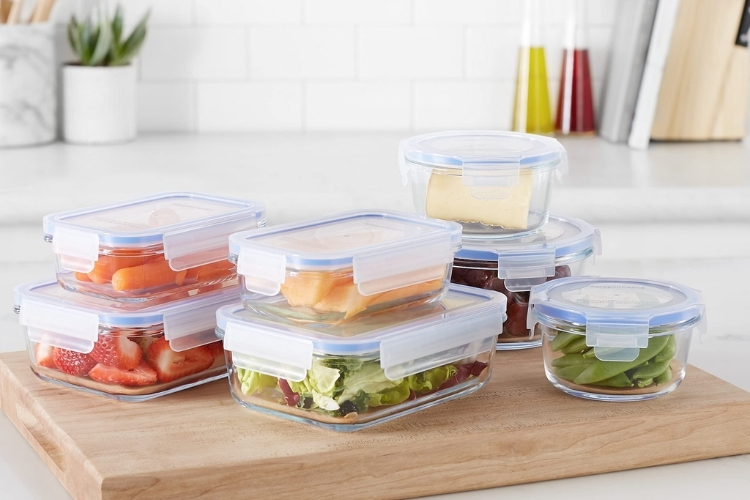
Glass Food Storage Containers
Glass food storage containers check all the right boxes: high demand, premium pricing potential, and alignment with sustainability trends. Buyers are actively moving away from plastic alternatives, and the product performs well in multipacks or bundles that increase order value while keeping per-unit sourcing costs low.
>> Read more: How to Compare Products on Amazon Like a Pro (Full Guide)
FAQs About How To Find Profitable Products To Sell On Amazon
You can browse Amazon’s Best Sellers and Movers & Shakers pages, monitor trending content on TikTok and Pinterest, and use keyword tools like Helium 10 or Google Trends to spot rising demand early.
In 2026, high-demand categories include Beauty & Personal Care, Home & Kitchen, Health & Household, and Pet Supplies, with strong performance from products like portable blenders, men’s grooming kits, and eco-friendly kitchen items.
Products that are lightweight, priced between $30 and $70, solve a clear problem, and have consistent year-round demand tend to perform best, particularly in categories like Home & Kitchen, Beauty & Personal Care, and Sports & Outdoors.
Get Professional Help from Megaficus
Finding the right product to sell on Amazon takes research, patience, and the right approach. By mastering how to find profitable products to sell on Amazon, from analyzing keyword data and monitoring social media trends to reviewing competitor listings and validating demand with real data, you can consistently identify winning products before the market becomes saturated.
The methods outlined in this guide give you a repeatable framework for making smarter sourcing decisions and building a profitable Amazon business from the ground up. If you need expert guidance on product research, listing optimization, or scaling your Amazon FBA business, the team at Megaficus is ready to help.