
Every May, millions of shoppers turn to Amazon looking for the perfect gift for mom, and most of them make a decision within seconds. For sellers, the Amazon Mother’s Day sale ranks second only to the winter holidays in average spend per person, making it one of the most valuable two-week windows of the year. Megaficus breaks down exactly what to prepare, optimize, and execute to turn that traffic into consistent sales.
Quick Summary
- Listing optimization: Complete keyword updates, add gift-intent phrases to titles and bullets, and finalize all image slots by late April
- Pricing & Bundle strategy: Build gift-ready bundles to sidestep direct price comparison and activate coupons from late April
- Amazon PPC strategy: Increase budget 3 to 4 weeks before the holiday and build separate campaigns for gift-intent keywords
- Leveraging Prime & Last-minute buyers: Ship FBA inventory by late March, enable gift wrapping, and reserve Lightning Deals for May 8 and 9
- External traffic strategy: Activate Amazon Attribution and enroll in the Brand Referral Bonus program before running any off-platform campaign
- Post-holiday strategy: Keep promotions and PPC running 5 to 7 days after May 10 and shift listing copy to “belated gift for mom.”
- Tracking performance: Pull Search Term Report and return data within the first week after the holiday to prepare for Father’s Day
When Is Mother’s Day And Why It Matters For Amazon Sellers?
Mother’s Day falls on the second Sunday of May each year. In 2026, the date lands on May 10. Shoppers typically start browsing in early May, so sellers need listings and promotions live well before the holiday arrives.

Here is why this holiday deserves a spot on every seller’s planning calendar:
- Massive spending scale: Mother’s Day consumer spending reached $34.1 billion in 2025, ranking second only to the winter holidays in average spend per person.
- Demand spikes across high-margin categories: Jewelry, skincare, flowers, and kitchen gadgets see sharp demand increases in the two weeks leading up to the holiday.
- Buyers shop early: Shoppers typically start browsing in early May, meaning sellers who activate listings and promotions by late April capture more of the buying window.
- High purchase intent from a large audience: 84% of U.S. adults plan to celebrate Mother’s Day, with the average celebrant spending $259, a pool of motivated buyers actively looking for gift ideas.
- Revenue impact rivals major retail events: Mother’s Day ranks just behind Christmas and Black Friday in terms of revenue growth for sellers, making it one of the most important dates on the annual selling calendar.
Top-Selling Categories For Amazon Mother’s Day Sale
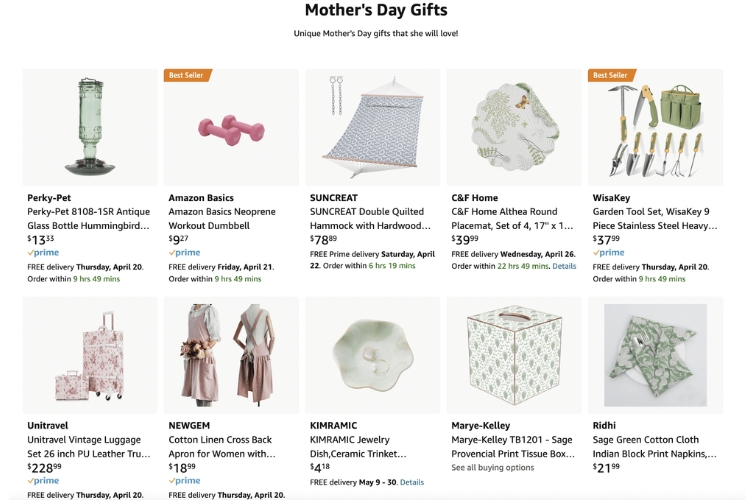
Mother’s Day consistently drives strong sales across a handful of core categories. Knowing which products perform best helps sellers prioritize inventory, optimize listings, and allocate ad spend where buyer intent is highest.
Wellness and Personal Care
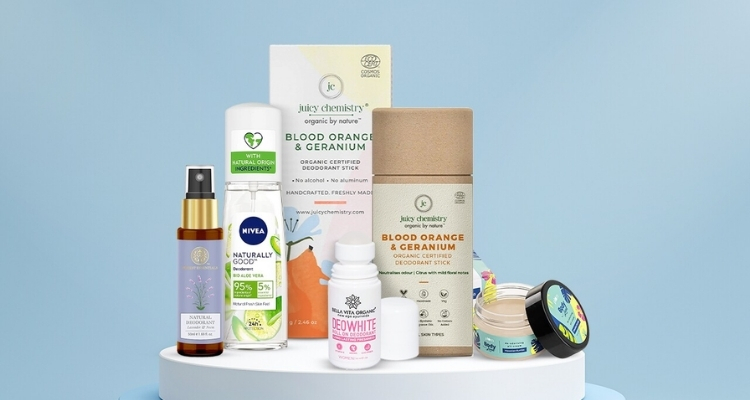
Beauty and Personal Care is one of Amazon’s strongest Mother’s Day categories, with buyer intent peaking in the two to three weeks before the holiday. Gift-ready packaging and bundle presentation are the two biggest conversion drivers in this space.
Product examples:
- Makeup: Lip gloss sets (e.l.f. Cosmetics, NYX), blush duos, travel-size eyeshadow palettes (Urban Decay, Too Faced)
- Skincare: Vitamin C serums, barrier-repair moisturizers, SPF bundles (CeraVe, La Roche-Posay, The Ordinary)
- Anti-aging: Retinol creams (RoC, Neutrogena), collagen peptide serums, at-home LED face masks (Solawave, CurrentBody)
- Perfumes: Gift sets and discovery minis (GUESS, Coach, Ariana Grande), curated fragrance sampler sets
- Haircare: Scalp scrubs, bond-repair treatments, heat protectant sprays (OGX, Briogeo, Olaplex)
Home and Kitchen
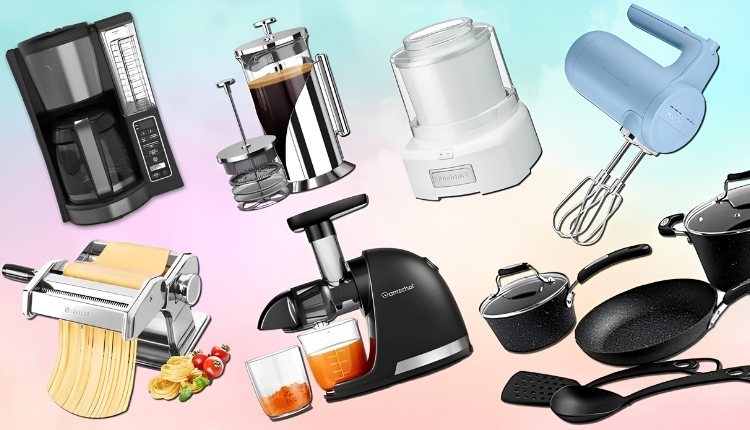
Home and Kitchen is one of the steadiest gifting categories during Mother’s Day, driven by buyers who want something practical but still feels thoughtful.
Product examples:
- Smart appliances: Air fryers (Ninja, Instant Pot), smart coffee makers (Keurig, Breville), portable blenders (NutriBullet, Hamilton Beach)
- Kitchen accessories: Artisan cookware (Le Creuset, Caraway), styled cutting boards (Totally Bamboo), matching utensil sets (OXO, KitchenAid)
- Home fragrance: Candle sets (Voluspa, Yankee Candle), reed diffusers (Nest New York), linen sprays (Mrs. Meyer’s)
- Organization and storage: Pantry organizers (iDesign, mDesign), stackable containers (OXO, Rubbermaid)
- Home decor: Decorative trays (Threshold, Artifact Uprising), framed prints (Desenio), tabletop accents (Anthropologie, Crate & Barrel)
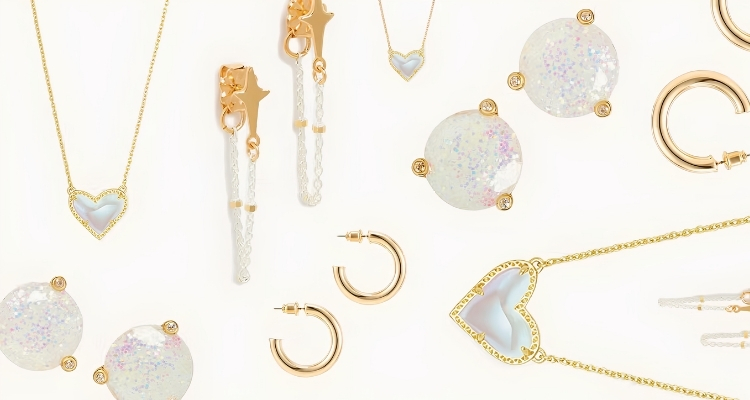
Jewelry and Accessories
The personalized gift market is projected to grow at a 5.4% CAGR from 2025 to 2035, and jewelry sits at the center of that trend during Mother’s Day. 2025 NRF data puts total jewelry spending at $6.8 billion for the holiday alone, making it one of the highest-value gifting categories on the platform.
Product examples:
- Personalized necklaces: Name necklaces, birthstone pendants, coordinate necklaces (Caitlyn Minimalist, Gorjana, Mejuri)
- Initial jewelry: Initial bracelets, monogram rings, letter earrings (Kendra Scott, BaubleBar)
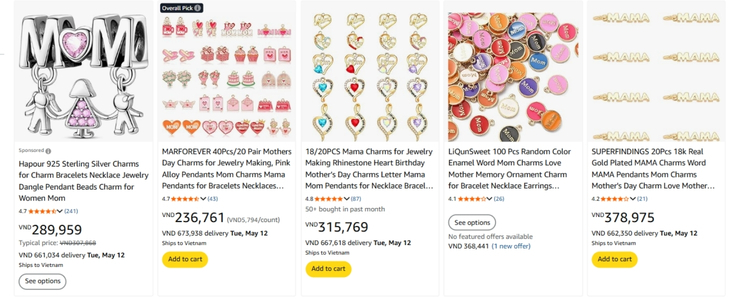
- Motherhood-themed pieces: “Mom” charm bracelets, family tree pendants, infinity knot necklaces (Pandora, Alex and Ani)
- Watch and accessories bundles: Demi-fine watches paired with jewelry sets (Fossil, Skagen, Daniel Wellington)
- Custom engraved pieces: Engraved lockets, date bracelets, handwriting jewelry (Things Remembered, Stamp & Shout)
Technology
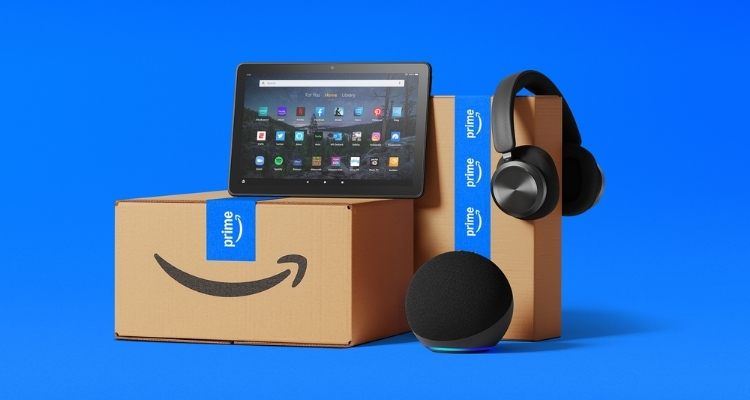
Tech gifts perform consistently during Mother’s Day, particularly among buyers shopping for active or health-conscious moms. Listings that lead with lifestyle benefits over technical specs tend to convert better in this gifting context.
Product examples:
- Fitness trackers: Step counters, heart rate monitors, sleep trackers (Fitbit Charge 6, Garmin Vivosmart 5, Xiaomi Smart Band)
- Smartwatches: Apple Watch SE, Samsung Galaxy Watch 7, Garmin Venu 3
- Smart speakers: Amazon Echo Dot, Google Nest Mini, Apple HomePod Mini
- Tablets: Amazon Fire HD 10, Apple iPad (9th gen), Samsung Galaxy Tab A9
- Wireless earbuds: Noise-canceling and everyday-use options (Apple AirPods Pro, Samsung Galaxy Buds 3, Jabra Evolve2)
How To Maximize Amazon Mother’s Day Sales With Proven Strategies
Preparation and timing determine how much of the Mother’s Day traffic a seller actually converts. The following strategies cover every stage of the process, from listing optimization to post-event analysis.
Listing Optimization For Mother’s Day
During Mother’s Day, buyers are not just comparing products. They are actively searching for gift-ready solutions that feel thoughtful and easy to choose. Every element of your listing should reinforce gifting intent and reduce purchase hesitation before a competitor does.
| Element | What to Do |
|---|---|
| Title | Stay within 200 characters. Lead with your primary keyword, then add one gift-intent phrase such as “Mother’s Day Gift” or “Gift for Mom” toward the end |
| Bullet Points | Use all 5 bullet slots. Each bullet should stay under 200 characters and lead with a benefit, not a feature. At least 1 bullet should reference the gifting occasion directly |
| Main Image | Pure white background (RGB 255, 255, 255), product fills at least 85% of frame. No props, no text overlays per Amazon policy |
| Secondary Images | Use all 6 remaining image slots. Include at least 1 lifestyle shot in a gifting context, 1 infographic highlighting key benefits, and 1 image with a Mother’s Day seasonal banner |
| A+ Content | Use Basic A+ (free for all sellers) or Premium A+ (for brand-registered sellers with eligible accounts). Add a seasonal banner, a short storytelling module, and a variant comparison chart |
| Backend Keywords | 250 bytes maximum. Do not repeat words already in your title. Fill the full limit with long-tail gift-intent terms and seasonal variations |
Pricing & Bundle Strategy
Mother’s Day compresses a high volume of gift purchases into a narrow two-week window. Sellers who set pricing and bundle structures in advance capture more margin and convert more gift buyers before the peak hits.
- Charm pricing for mid-range gifts: $29.99, $49.99, $79.99 consistently outperforms rounded equivalents in conversion rate. For premium categories like jewelry or wellness sets, even pricing such as $128.00 or $198.00 signals quality and suits gift buyers better.
- Watch FBA fee thresholds: Products under $10 receive a $0.86 per unit fee discount. Products above $50 face an additional $0.51 per unit charge. One dollar above either threshold can erase the margin gained from the higher price.
- Build bundles to sidestep price competition: A bundle creates a unique ASIN with no direct price comparison, removing you from the repricing war entirely. Anchor on your bestseller, add a complementary product that raises perceived value, and name the bundle around the occasion rather than the contents. “Mom’s Relaxation Set” converts better than “3-Piece Skincare Bundle”.
- Use bundles to move slow inventory: Pair low-performing SKUs with bestsellers before FBA storage fees apply.
- Run promotions with a defined goal: Every discount needs a job: launch velocity, rank recovery, or clearing dead stock. Activate coupons from late April to capture early browsers, and reserve Lightning Deals for the final 3 to 5 days when last-minute buyer intent peaks.
Amazon PPC Strategy
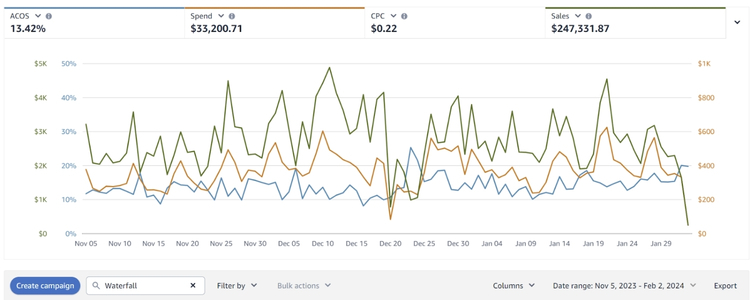
Running generic campaigns during Mother’s Day wastes budget on traffic that was never going to convert. The window is short, competition is high, and every dollar needs a defined role before the peak hits.
- Start increasing budget 3 to 4 weeks before Mother’s Day: Ad costs spike during peak seasonal windows and professional managers plan for this by adjusting budgets 20 to 30% in advance. Waiting until the week of the event means paying higher CPCs with less data to optimize against.
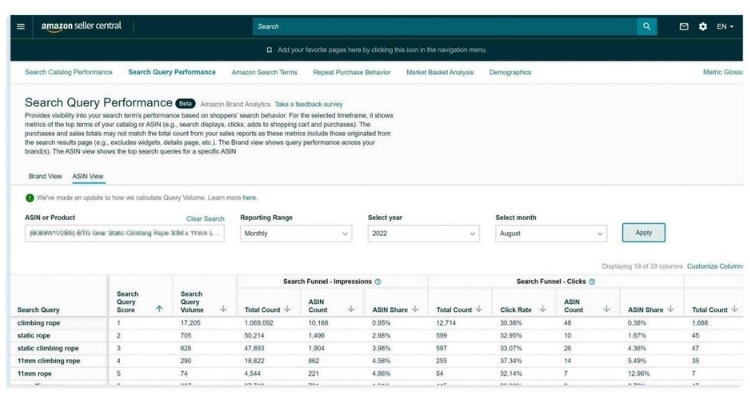
- Build separate campaigns for gift-intent keywords: Do not mix evergreen keywords with seasonal ones in the same campaign. Create dedicated campaigns targeting terms like “Mother’s Day gift”, “gift for mom”, and “personalized gift for mom” so you can control budget and measure seasonal performance independently.
- Prioritize top-of-search placement for high-converting ASINs: Top-of-search placements convert 2 to 3 times better than rest-of-search or product page placements. Use placement modifiers to bid more aggressively on positions that actually drive sales, and pull back on placements with weak conversion data.
- Use Sponsored Products as the primary driver, Sponsored Brands for visibility: For brand-registered sellers, a practical starting split is 70% Sponsored Products, 20% Sponsored Brands, and 10% Sponsored Display once baseline conversion data is available.
- Calculate your max bid before scaling spend: Target Bid = Target ACoS divided by Current ACoS, multiplied by Current CPC. Apply this formula at the keyword level, not the campaign level, and avoid adjusting bids by more than 20 to 25% in a single pass.
- Do not evaluate performance too early: Sponsored Products uses a 7-day click attribution window, while Sponsored Brands and Display use 14-day windows. Making bid changes before these windows close leads to decisions based on incomplete data.
- Add negative keywords from day one: Pull your Search Term Report weekly and block irrelevant or non-converting terms immediately. Poor performers who spend but have no conversions should be added as negative keywords to stop budget leakage right away.
Leveraging Prime & Last-Minute Buyers
Last-minute buyers make up a significant share of Mother’s Day traffic, and Prime eligibility is what determines whether your product gets the sale or gets skipped:
- Ship FBA inventory by late March: Mother’s Day inventory should arrive at Amazon fulfillment centers by late March to ensure stock is processed and available before the browsing window opens in early May.
- Prime badge directly drives conversion: Fast and free shipping is the top reason 79.8% of Amazon customers choose to buy on the platform. During a gift event with a hard deadline, buyers will choose a Prime-eligible product over a cheaper non-Prime alternative because delivery is guaranteed.
- Enable gift wrapping and gift messaging in Seller Central: Last-minute buyers need a complete gifting solution, not just a product. Sellers who remove that extra step convert more of this traffic.
- Surface delivery speed in listing copy during the final week: Phrases like “Order by May 8 for guaranteed Mother’s Day delivery” reduce hesitation and push undecided buyers to act.
- Reserve Lightning Deals for May 8 and 9: Amazon shifts entirely into gifting mode in the final days before Mother’s Day, featuring expedited shipping callouts and strong promotional messaging that increases deal visibility for participating sellers.
- Keep ad budgets running through Sunday morning: Last-minute shoppers are still converting on the day itself. Sellers who pause campaigns early hand that traffic directly to competitors.
External Traffic Strategy
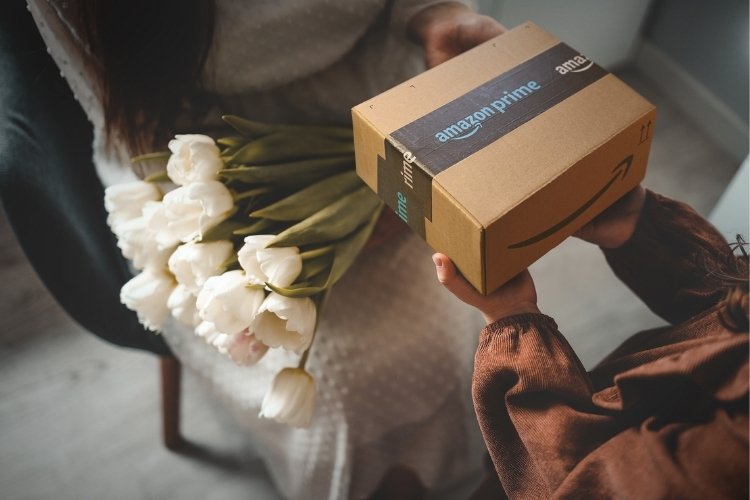
Before running any external campaign, activate Amazon Attribution (free for Brand Registry members) and enroll in the Brand Referral Bonus program to recover an average of 10% of referral fees on sales driven from outside Amazon. For social ads on Meta and TikTok, lead with the gifting occasion rather than product specs to match buyers in discovery mode.
On the email side, plan two sends: a Mother’s Day gift guide two weeks out and a last-chance reminder 3 to 4 days before the holiday, each with a unique coupon code trackable via Amazon Attribution. For influencer outreach, brief creators in the family or wellness space at least three weeks out and assign a separate Attribution link per creator so performance is measurable at the individual level.
Post-Holiday Strategy
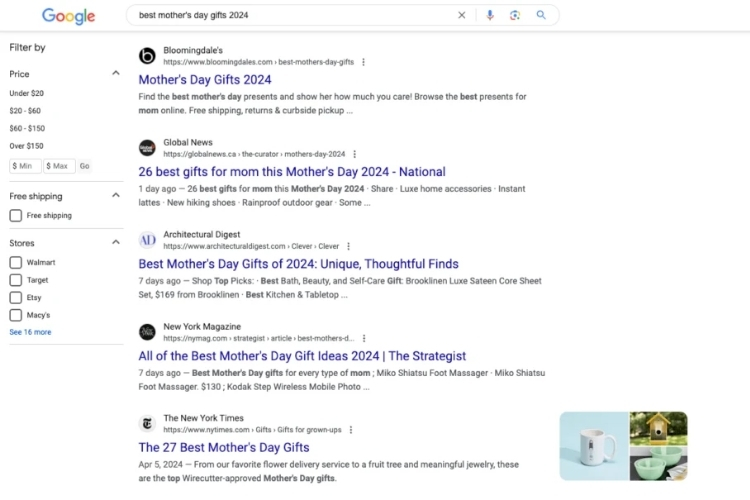
Sellers should keep promotions active for 5 to 7 days after May 10 and shift listing copy from “Mother’s Day gift” to “belated gift for mom” to match evolving search behavior. PPC campaigns should run at a reduced budget rather than pausing entirely, as traffic still converts at above-average rates in the days immediately after the holiday.
Once demand normalizes, sellers should pull post-event data to prepare for the next peak:
- Pull your Search Term Report immediately: Migrate top-converting gift-intent keywords into exact-match campaigns before Father’s Day traffic begins building.
- Review return data: Identify recurring return reasons to fix listing gaps or expectation mismatches before the next seasonal window.
- Clear remaining inventory: Use the “Lowest Price in 30 Days” badge to move slow stock before FBA storage fees apply.
Tracking Performance
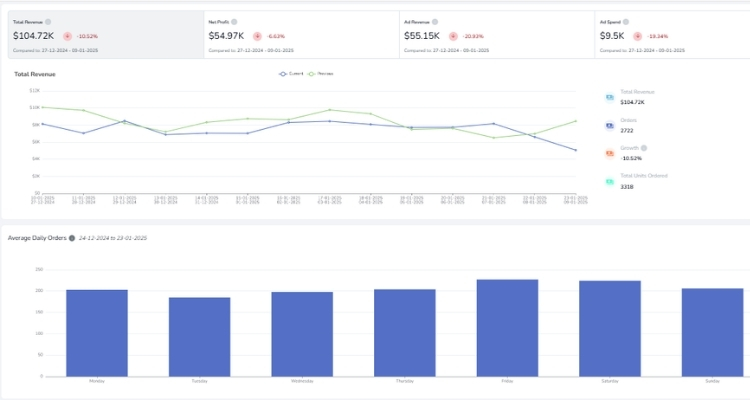
Sellers should monitor ACoS and TACoS daily throughout the Mother’s Day window. Rising TACoS with stable ACoS signals that ads are carrying too much of the revenue load. If the conversion rate drops during peak traffic, sellers should fix the listing before adjusting bids.
After the holiday, sellers should pull return data to identify listing gaps and review the inventory sell-through rate to adjust reorder timing for the next peak. Completing this review within the first week after Mother’s Day leaves enough lead time to act before Father’s Day traffic builds in late May.
>> Read morre: Amazon Cyber Monday Sale 2026: Best Post-Black Friday Deals
FAQs About Amazon Mother’s Day Sale
Sellers should begin by late March. Inventory needs to reach FBA by this point, while listing optimization and ad setup should be completed by late April at the latest.
Jewelry, skincare and wellness sets, home and kitchen products, fitness trackers, and personalized gifts consistently perform well. Gift cards and experience-based bundles are also growing steadily in popularity.
Sellers can build bundles to remove direct price comparison, upgrade listing images to reflect gifting scenarios, enable gift wrapping, and target gift-intent keywords to improve conversion without requiring a markdown.
PPC is not mandatory, but organic visibility alone is rarely sufficient during a high-competition gifting window. Most sellers will need Sponsored Products campaigns targeting gift-intent keywords to capture buyers actively searching for gift ideas before May 10.
Get Professional Help from Megaficus
The Amazon Mother’s Day sale rewards sellers who prepare early, optimize with intention, and stay active through the final hours of the window. Every element covered in this guide, from listing optimization and bundle strategy to PPC execution and external traffic, works together to build visibility and convert high-intent gift buyers at the right moment.
As competition on Amazon continues to grow, sellers who treat Mother’s Day as a strategic priority rather than a last-minute push will consistently outperform those who react late. The preparation done today directly determines the results seen in May.
If you need expert guidance to sharpen your Amazon strategy, improve listing performance, or scale during seasonal events, the team at Megaficus is ready to help.