
Before launching on Amazon, many sellers rely on surface data like sales or search volume and end up entering markets that look good but are not stable. Amazon product research insight helps filter out these traps by showing whether demand is consistent or just driven by short-term spikes and seasonal trends.
Quick Summary
- Amazon product research insight focuses on reading real market signals before investing, not relying on surface-level data like sales or search volume alone.
- Why sellers fail early: Most failures come from misreading data, trusting tools too much, and confusing demand signals with real profitability.
- Core success signals: Winning products are defined by demand stability, competition structure, and true profitability after all fees.
- Validation before investment: Proper evaluation requires checking long-term demand, competitor concentration, and realistic margin after costs.
- Common misreads: Sellers mistake spikes for demand, low reviews for low competition, and high sales for high profit.
- True validation approach: Real decisions combine demand, competition, and margin checks to avoid risky inventory and build scalable products.
What Is Amazon Product Research Insight?
Amazon product research insight is the ability to read market data correctly and draw the right conclusions before committing to a product. While any seller can pull up sales numbers, search volume, or review counts, insight is what determines whether those numbers actually signal a viable opportunity or a hidden risk. Without it, sellers act on incomplete interpretations and launch products that look promising on the surface but fail in practice.
Why Most Product Research Fails Before Launch?
Most Amazon product launches fail because sellers commit capital based on surface-level signals without running any structural validation first:
- Wrong signals, not wrong products: Sellers run standard tool filters, check reviews and ratings, find products that look promising on a spreadsheet, and launch with confidence, only to lose money. The inputs are flawed before any decision is made.
- Demand is mistaken for profitability: Tools show market activity, but they do not show whether a product actually works as a business. Strong search volume means nothing if margins collapse after fees and ad spend.
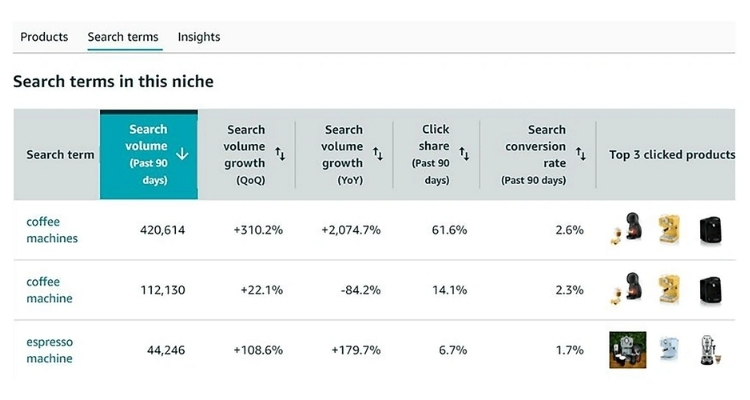
- Tools define the strategy instead of the other way around: Tools like Helium 10 and Jungle Scout can only surface around 10 data points, including review count, current search volume, and a BSR snapshot, and most sellers build their entire research framework around those limitations.
- Wrong question from the start: The right question is not “is this a good product?” but “is this a growing market where I can profitably capture market share?” Sellers who skip that question commit capital before they have real answers.
The Data Signals That Define A Winning Product
Before filtering by competition or calculating margins, the data signals below determine whether a product is structurally worth pursuing in the first place.
Demand Signals
Demand signals tell you whether enough buyers consistently want a product before you commit capital:
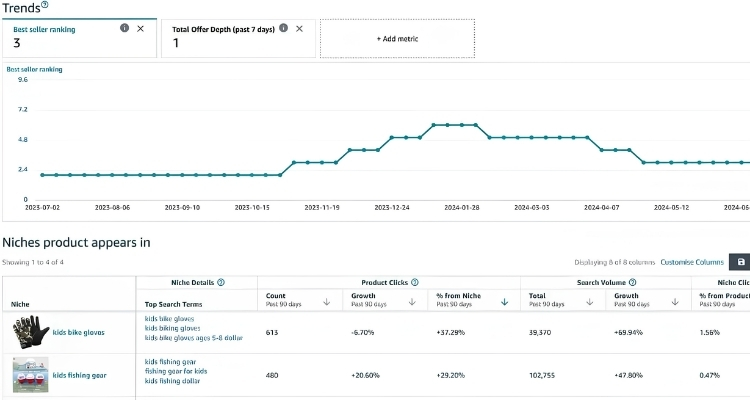
- Keyword Search Volume: Keyword search volume measures how many shoppers are actively searching for a product each month, so targeting above 10,000 for the primary keyword and 50,000 combined across related terms is the minimum viable threshold. Anything below 5,000 signals a market too narrow to build a sustainable business around.
- Estimated Monthly Sales: This metric indicates whether a niche is large enough to enter profitably. Markets worth entering typically show 10,000 to 30,000 monthly units across the top 10 listings, while anything under 5,000 is too small unless the product is premium or highly specialized.
- BSR Stability: BSR stability indicates whether demand is consistent or merely the result of a short-term promotion, given that BSR can swing by 50% within a single day during promotions or stockouts. Checking BSR history over 30 to 90 days before drawing any conclusion is therefore non-negotiable.
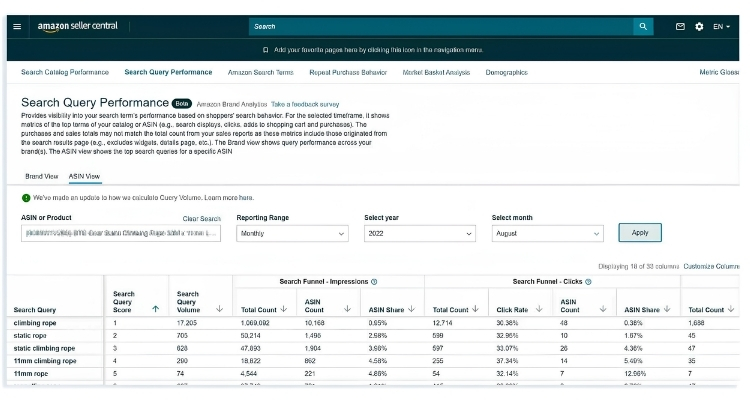
If you are comparing two products in the same category, a stainless steel garlic press holding BSR between 700 and 900 for three straight months is a stronger demand signal than a silicone spatula set that spiked from 15,000 to 800 two weeks ago and is now climbing back up. The spike indicates a temporary promotion, not organic pull.
The real trap is mistaking high current sales for permanent demand. A product might show 500 sales last month, but if search volume for its main keywords has dropped 40 percent in the last quarter, those sales are already vanishing. For that reason, always cross-check BSR history with keyword trend direction before making any sourcing decision.
Competition Signals
Competition signals determine how difficult it will be to enter a niche and gain market share, beyond just surface metrics like reviews or ratings.
Review Count
Review count shows how entrenched existing sellers are in a niche. Specifically, top competitors averaging under 200 reviews indicate a niche that is still accessible for new entrants, while averages above 1,000 make organic ranking extremely difficult without significant ad spend. For new sellers, the sweet spot sits between 50 and 150 reviews on average across the top 10 listings.
Review Velocity
Review velocity reflects competitor momentum and is more important than total review count. Around 150+ new reviews per month usually signals strong ad spend and consistent sales. If top sellers gain 100+ reviews monthly, the niche is highly competitive with active sellers defending their positions.
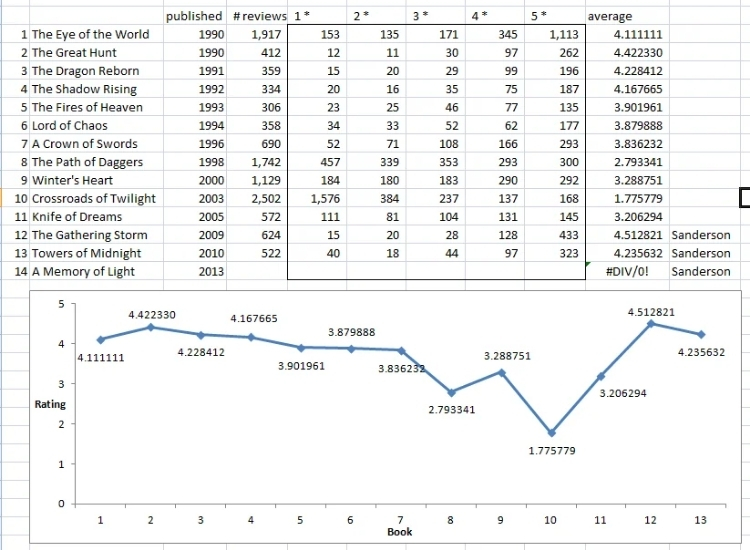
If you find a yoga mat niche where the top seller holds 3,000 reviews but gains only 20 new ones per month, that niche is more beatable than a phone stand niche where the leader has 800 reviews but gains 200 new ones monthly. Momentum matters more than total count.
Market Concentration
Market concentration shows whether sales are spread across multiple sellers or locked by a few dominant players. When major brands control 70 percent or more of page one, private label entry becomes extremely difficult. By contrast, a healthy niche distributes sales across at least 8 to 10 different sellers, giving new entrants a realistic chance to capture a share.
Profitability Signals
Profitability signals determine whether a product can actually make money once all real costs are factored in, not just look profitable based on selling price and revenue alone.
Landed Cost Ratio
Landed cost measures the true cost per unit from the factory to the Amazon warehouse, including freight, duties, packaging, and prep fees. As a general benchmark, keeping landed cost within 25 to 35 percent of the selling price is considered healthy. Once the landed cost exceeds 40 percent of the selling price, the margin ceiling is already too low before any other costs are added.
If you source a kitchen organizer at $8 factory price but pay $3 in freight and $1 in duties, the true landed cost becomes $12, not $8. On a $29.99 selling price, that is already 40 percent before FBA fees or ad spend.
Net Margin After All Fees
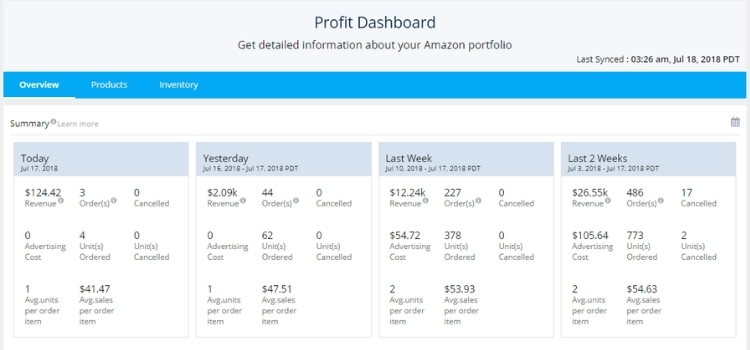
Net margin is the percentage left after deducting COGS, Amazon referral fees, FBA fulfillment fees, advertising, storage, and returns. Specifically, a margin below 25 percent with honest inputs is a signal to find a different product, and below 15 percent, the product should not be launched at all. Launching with thin margins means operating without a safety net when fee changes or competitive price drops occur.
Price Stability
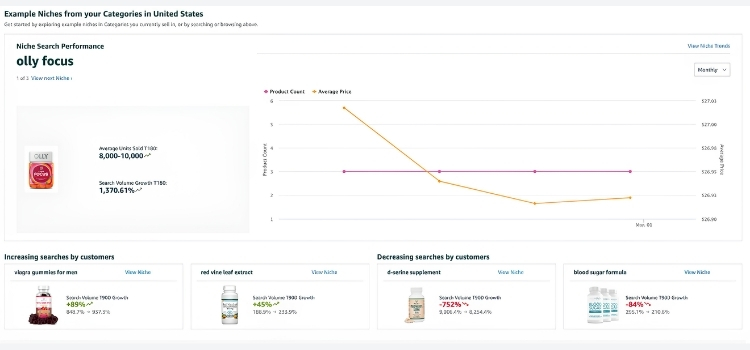
Price stability signals whether a niche is still rational or already in a race to the bottom. Concretely, pulling up the 90-day and 180-day price history reveals whether average prices are on a steady downward slide, which signals a brutal price war that will compress profits further after launch. Stable pricing over six months, on the other hand, indicates a mature market where margins are still defensible.
How To Validate A Winning Product Before You Commit?
Validating a product before committing capital means stress testing demand, competition, and profitability together to confirm the opportunity is sustainable, not just attractive on paper.
Demand Threshold
The real question isn’t “will this product sell?” but “is this market buying consistently, or just spiking?” Getting that answer requires two concrete checks before anything else:
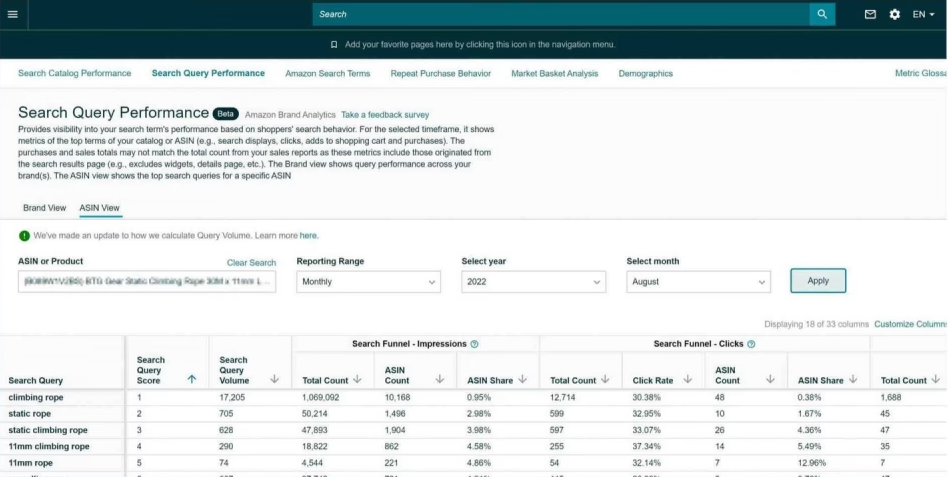
- BSR history across 24 months, not snapshots: Use Helium 10 or Jungle Scout to track long-term trend. A strong product keeps BSR stable around #1,500–#3,000 over time, not just a temporary low rank like #800 today with a weak long-term average.
- Minimum requirements: BSR under 5,000, at least 10 estimated daily sales, and top 2–3 keywords with 10,000+ combined monthly searches. Go/no-go target is 100+ units/month and over $3,000 revenue.
- Illustrative scenario: Silicone food storage bags may hit ~800 units/month at peak but drop to #15,000+ outside Nov–Jan, showing seasonal demand rather than evergreen.
Competition Threshold
Low review counts look like an opportunity, but they rarely tell the full story. The metric that actually matters is market concentration, not barrier height.
Review count vs. market concentration
A category where top 10 products each have fewer than 300 reviews sounds safe, but if three of those products belong to the same seller and represent 65% of category revenue, that market is effectively oligopolistic. Because of this, you should always map seller distribution first before drawing any conclusions from review counts.
Entry signal framework
Under 100 reviews across the top 10 means easy entry, 100-300 is moderate, 300-1,000 is difficult, and 1,000+ is extremely hard to crack. If all top listings hold 4.5+ stars, you need clear differentiation to compete.
Beyond reviews, a healthy FBA seller count sits between 3 and 15. Above 15 typically compresses margins, and if Amazon holds the Buy Box over 30% of the time, the product is worth avoiding entirely.
Illustrative scenario
A portable blender niche shows top sellers averaging 180 reviews, which appears moderate at first glance. However, one brand owns 4 of the top 8 listings and controls 58% of page-one revenue, so the real competitive barrier is far higher than the review count alone suggests.
Margin Threshold
Demand and competition can look perfect, but if the math does not work, the product does not work. Most sellers lose money not because they picked a bad niche, but because they calculated margins incorrectly by missing half the real costs:
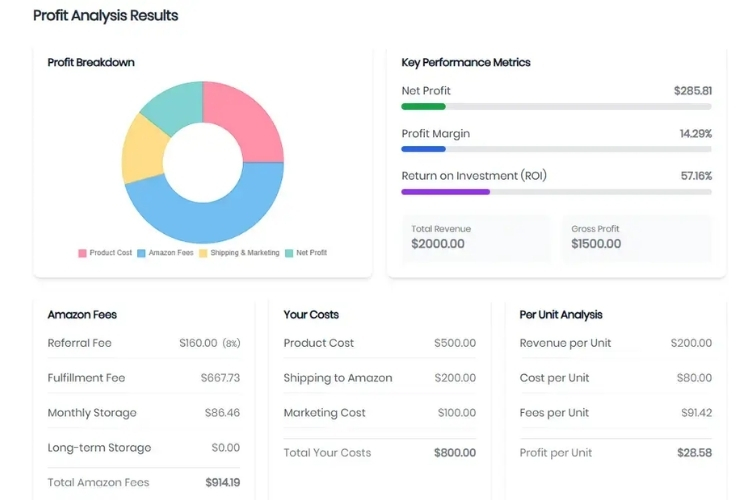
- Minimum margin targets: Experienced sellers look for at least 30% profit margin and 100% ROI as the baseline threshold. Below 25% net margin, one fee increase or return rate spike puts you underwater, and below 15% is a hard kill signal.
- Hidden cost layers most calculators miss: Return rate impact destroys 3-8% of revenue depending on category, customer acquisition cost across all traffic channels adds another ignored layer, and margins at launch look nothing like margins at month six.
For example, if seller projects 32% margin on a $34.99 kitchen gadget, that number can easily drop to 13% after factoring in a 9% return rate, PPC cost per unit, and Q4 storage fees. At that level, one fee change or one competitor price drop puts the business underwater immediately.
Common Data Signals Sellers Misread Before Launch
Most sellers do not fail from lack of data, because the real problem is misreading the signals that were already in front of them:
- Spike demand mistaken for stable demand: When a TikTok video drives explosive search volume, sales estimates look extraordinary, and sellers rush in, but by the time goods arrive at FBA warehouses, the moment has passed.
- Low review count misread as low competition: Review count is a historical artifact reflecting past sales volume, not a reliable indicator of current market concentration. A sparse-review category with concentrated ownership is a significantly worse outcome than a mature category with distributed competition.
- High sales volume misread as high profitability: Between FBA fees, ads, and shipping, low-margin products can be more trouble than they are worth. Running every candidate through a full margin simulation before ordering samples is non-negotiable.
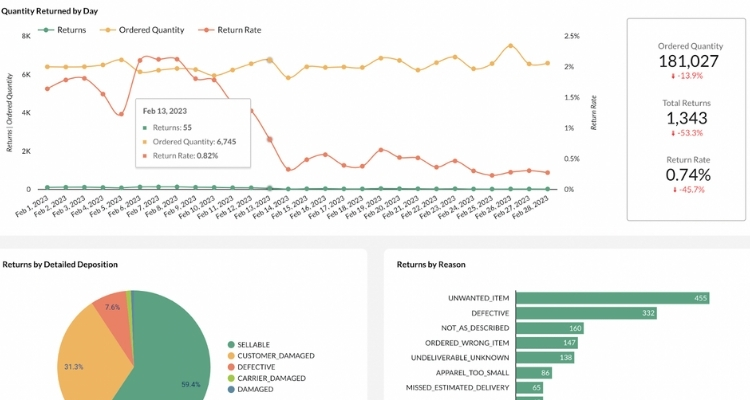
- High return rate ignored until post-launch: High return rate in a category is a structural problem that no listing optimization or better packaging can fix. If the category itself generates high returns, that is the market sending a clear signal to walk away.
- Over-reliance on a single data tool: No single platform consistently nails every reading, so cross-referencing data from multiple sources is essential to reduce blind spots.
FAQs About Amazon Product Research Insight
BSR stability over 24 months, keyword search volume above 10,000/month, FBA seller count between 3 and 15, category return rate, and net margin after all fees, including PPC and returns.
Demand is validated when BSR stays below 5,000, monthly sales exceed 100 units, and projected revenue clears $3,000/month. If these numbers only hold seasonally, the product does not pass the demand threshold.
Research identifies candidates through BSR, keyword data, and category trends. Validation then stress-tests each candidate against demand stability, competitor concentration, and real-cost margins before any capital is committed.
Get Professional Help from Megaficus
Mastering Amazon product research insight helps sellers avoid costly mistakes by focusing on real market signals instead of surface-level data. When demand stability, competition intensity, and profitability are properly evaluated before launch, product decisions become more strategic and significantly reduce the risk of failed inventory.
Building this level of insight allows sellers to identify opportunities earlier, avoid saturated or seasonal traps, and prioritize products with long-term scalability rather than short-term spikes.
If you need expert guidance to refine your Amazon product strategy, validate winning opportunities, and improve overall marketplace performance, the team at Megaficus is ready to help.