

Has a sudden account suspension put your brand’s revenue at risk? Then Megaficus presents this strategic guide to the Amazon Plan of Action (POA) to protect your account and maintain professional growth. Current trends show that Amazon prioritizes operational transparency and data-driven appeals over generic templates. This manual ensures you provide the “closed-loop” logic required to get back to selling quickly.
Quick Summary
- The Reinstatement Blueprint: A Plan of Action (POA) is a formal business case required to resolve account suspensions and listing deactivations.
- Closed-Loop Logic: Reviewers at Seller Performance demand that preventive measures directly address identified root causes to ensure long-term compliance.
- Operational Hardening: Beyond recovery, a professional POA identifies strategic supply chain issues and technical gaps to improve business reputation.
- Evidence-Based Appeals: Success depends on providing high-quality documentation, including invoices and training logs, while avoiding generic or AI-generated templates.
What is an Amazon Plan of Action (POA)?
The Amazon Plan of Action (POA) is the formal appeal document required by Amazon’s Performance Team to resolve account suspensions or listing deactivations. It serves as a professional business case to prove a seller has identified and fixed a policy breach.
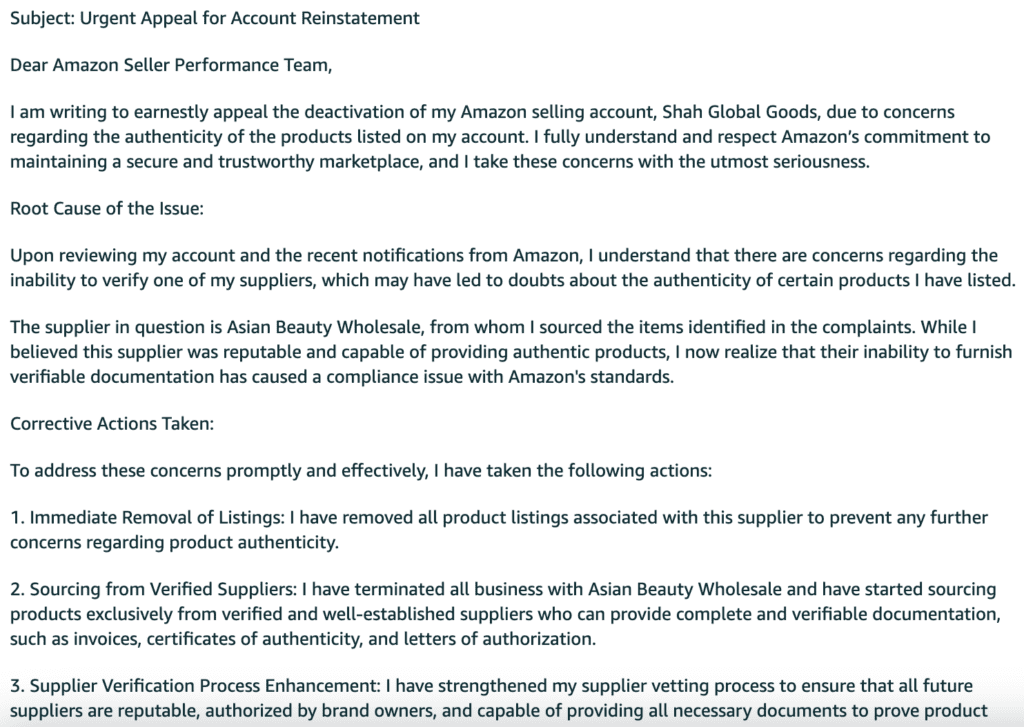
This document is your primary opportunity to demonstrate that you understand the rules of the platform and are committed to customer satisfaction. It acts as a bridge between a failed operational process and a new, hardened system that prevents future errors.
Mention that a concise, well-structured definition here increases the chance of winning an Amazon-related featured snippet. For example, if you’re flagged for a late shipment rate, the POA must define exactly how the logistics failure occurred and how it was rectified.
How Does the Amazon POA Review Process Work?
Understanding the journey your appeal takes once you hit “submit” can significantly reduce the stress of a suspension. Specific departments like the “Seller Performance” and “Account Health” teams evaluate your submission for strict policy compliance. These dedicated teams use a mix of automated filters and human oversight to determine if your business remains a safe partner.
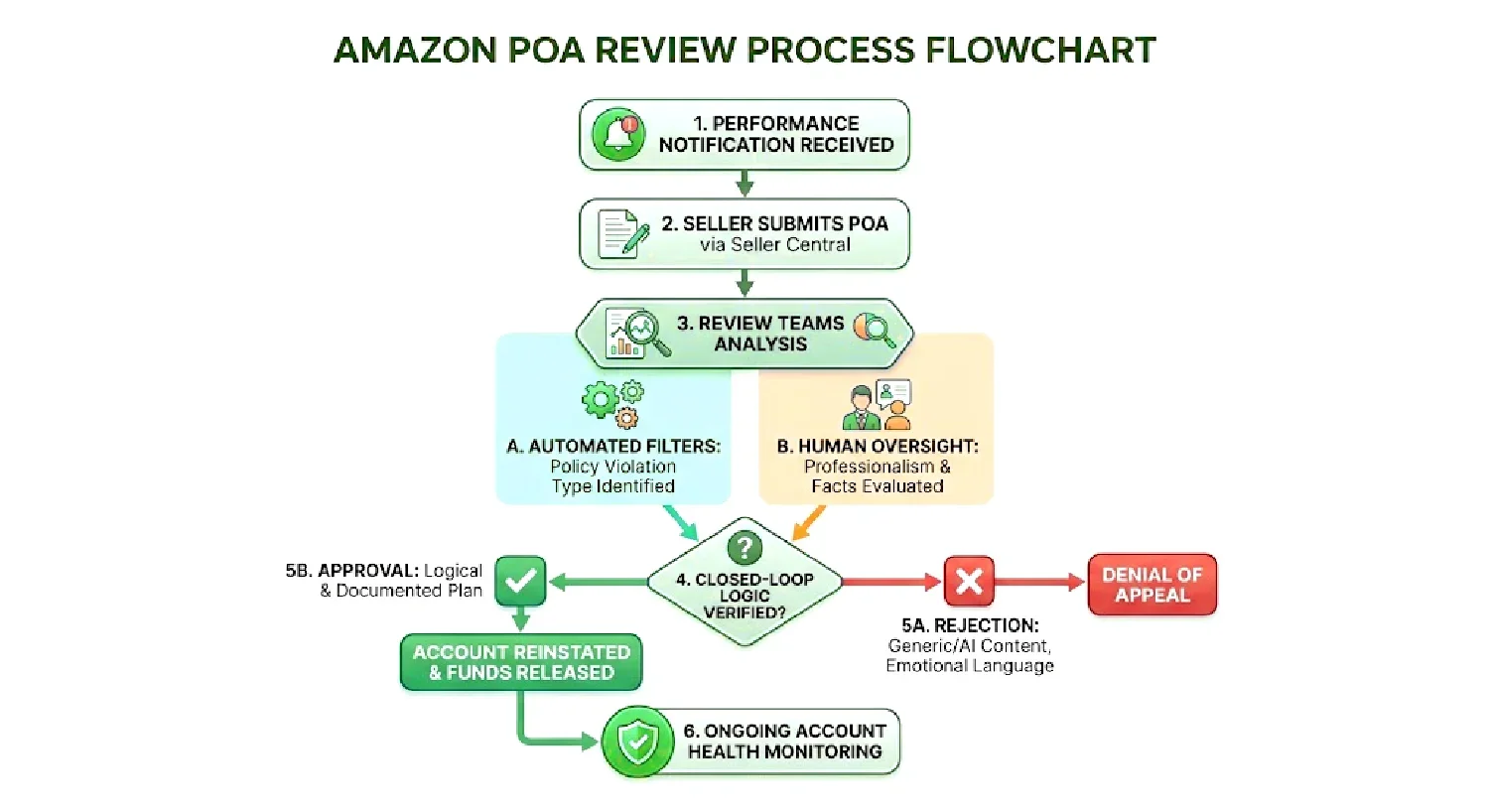
To guide the reviewer toward a positive decision, you must maintain a logical flow between each section. Each part must connect seamlessly to the next to create a cohesive narrative that proves your business is no longer a risk. Between identifying the initial problem and proposing a solution, there are specific mechanics that ensure your appeal meets Amazon’s high standards.
The core of your appeal relies on three sections: Root Cause, Corrective Actions, and Preventive Measures. Amazon looks for “closed-loop” logic, showing that the fix directly addresses the original error identified by the system. If the root cause was a lack of physical inspection, the preventive measure must involve a new, documented quality control process.
| Section of POA | Purpose and Objective | Key Elements to Include |
|---|---|---|
| Root Cause | Identify why the violation occurred | Technical errors, staff gaps, or supplier issues |
| Corrective Actions | Immediate steps taken to fix it | Refunding customers or deleting bad inventory |
| Preventive Measures | Future-proofing the business | New SOPs and automated tracking tools |
For instance, if your suspension was triggered by “Inauthentic Item” complaints, the preventive measures must involve much stricter supplier vetting protocols. You must provide concrete evidence of new operational systems to demonstrate that you have truly learned from the incident instead of simply saying “I will work harder.”
What are the Benefits of a Professional Amazon POA?
A professional Amazon Plan of Action (POA) offers benefits far beyond simple account recovery and short-term fixes. It acts as a diagnostic tool that forces a brand to examine its operational weaknesses for better scalability. By improving overall efficiency, you transform a stressful suspension into a strategic opportunity for long-term business growth.
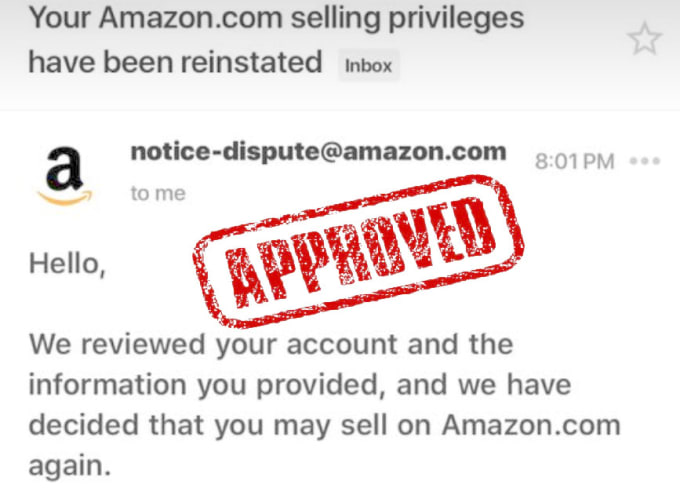
Account reinstatement is the primary path to restoring your selling privileges and releasing all withheld account funds. Without a valid POA, Amazon may hold your balance indefinitely to cover potential customer claims or unexpected refunds. This restoration is essential for maintaining the cash flow needed to support your ongoing inventory and advertising.
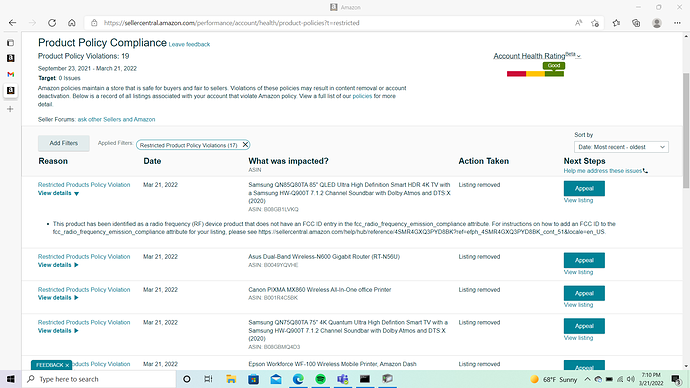
Operational hardening identifies “Strategic Issues” in your supply chain or “Technical Issues” in your shipping software. By fixing these gaps, you demonstrate to Amazon that you are a responsible partner committed to their customer-centric policies. This process ensures your infrastructure is robust enough to handle the demands of a high-volume marketplace.
An enhanced seller reputation proves to Amazon that you are a dedicated partner committed to maintaining their strict brand integrity. When you have a history of professional appeals, you’re often viewed more favorably during future performance audits or health checks. This credibility acts as a protective layer for your account, making it easier to resolve future issues.
Investing time into a high-quality appeal also prevents the “snowball effect” of multiple rejections leading to a permanent ban. A clean, professional recovery allows your brand to return to its growth trends without missing significant sales cycles. By securing your account now, you protect your long-term revenue potential and ensure your brand’s longevity.
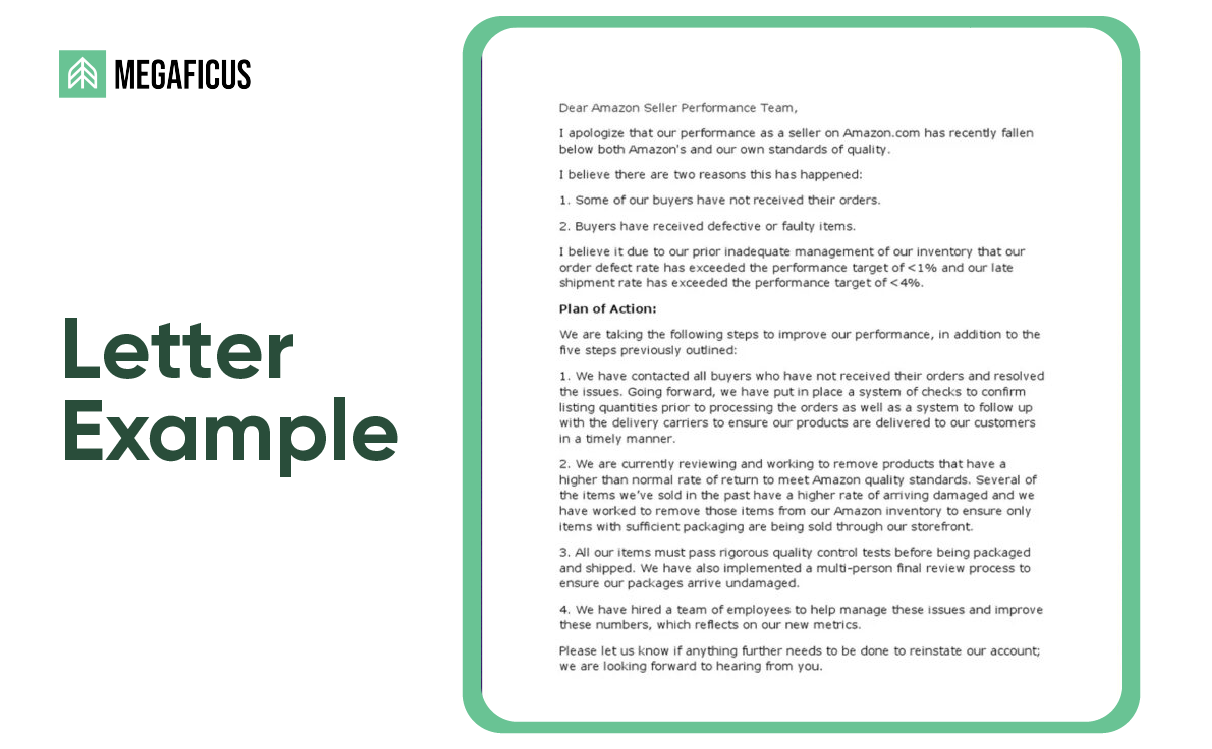
How to Write a Successful Amazon POA Step-by-Step?
Writing a successful appeal requires a methodical approach that leaves no room for ambiguity. Following the step-by-step guide below from Megaficus ensures that every requirement of the Performance Team is met in your POA while minimizing the risk of a lengthy back-and-forth exchange.
Step 1: Analyze the Performance Notification
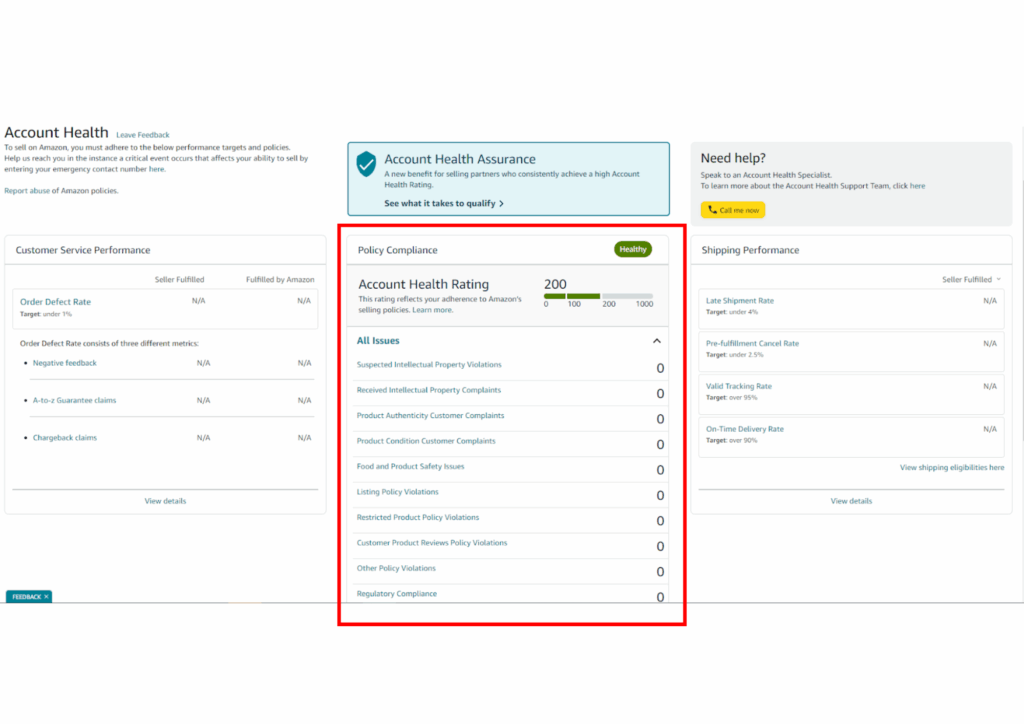
Start by identifying the exact policy violated, such as Section 3, IP Infringement, or Order Defect Rate. Use tools like the Account Health Dashboard to see specific metrics that triggered the automated flag. Understanding the specific cause of the notification is essential before you begin drafting your response.
Step 2: Identify the Root Cause
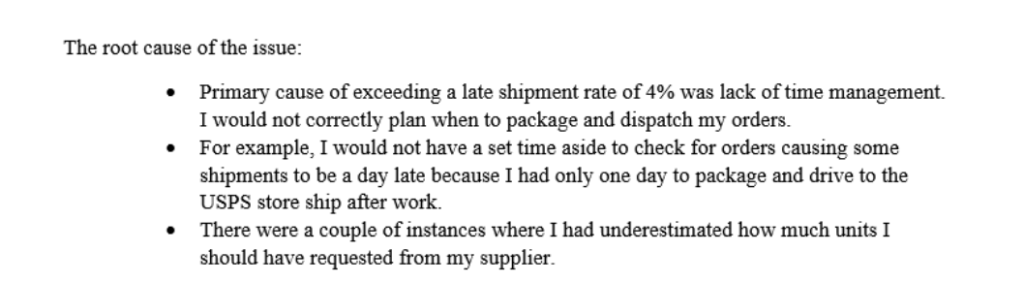
Explain exactly “why” the issue happened – was it a staff error, a faulty supplier, or inspection gaps?. An example would be admitting that a sudden spike in orders overwhelmed your current warehouse staff. This honest assessment proves to Amazon that you have accurately diagnosed the breakdown in your operations.
Step 3: Implement Reactive Steps
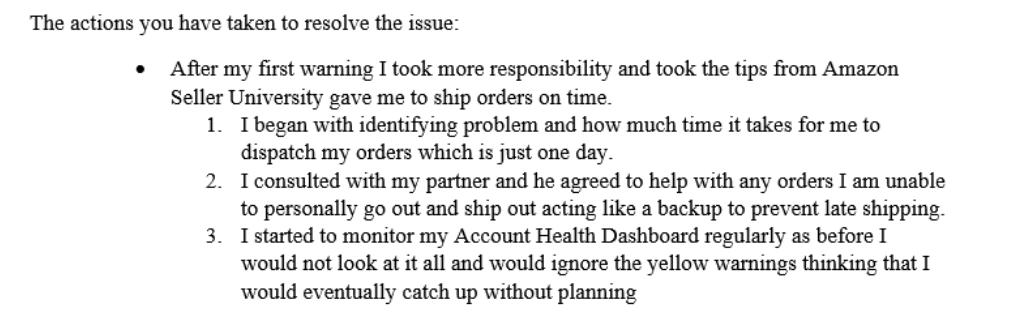
List the immediate actions you have taken, such as authorizing returns or deleting non-compliant listings. You might also consider hiring a third-party inspector to verify the quality of your current inventory. These steps show Amazon that the bleeding has stopped and you have taken full responsibility.
Step 4: Establish Proactive Systems
Detail long-term solutions like new SOPs, automated inventory tools, or much stricter supplier vetting protocols. For example, implementing a “Two-Person Verification” system for outgoing shipments can prevent future shipping errors. These proactive measures demonstrate your commitment to maintaining a high-quality, customer-centric store in the future.
Step 5: Attach Supporting Documentation
Provide high-quality photos of invoices, authorization letters, or staff training logs as objective evidence. Ensure these documents are clear, unaltered, and match the information provided in your Seller Central account. Providing verified proof prevents your appeal from being flagged for forgery or insufficient documentation.
What are the Best Practices for Amazon Reinstatement?
Adhering to industry best practices increases the probability of a first-time approval for your structured appeal. These strategies are derived from successful reinstatements and current growth trends within the e-commerce consulting sector. By following a professional standard, you transform a temporary setback into a long-term operational advantage.
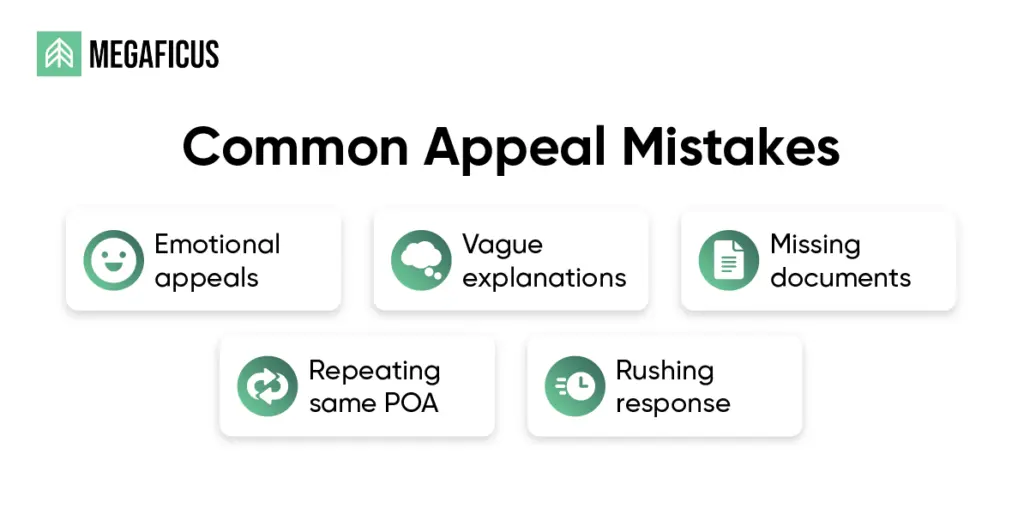
First of all, you must avoid generic templates because Amazon’s bots and human reviewers often reject manual-looking or AI-generated appeals. Each violation is unique, and your response must reflect the specific context of your business operations. Using a customized approach ensures that your root cause and preventive measures are perfectly aligned.
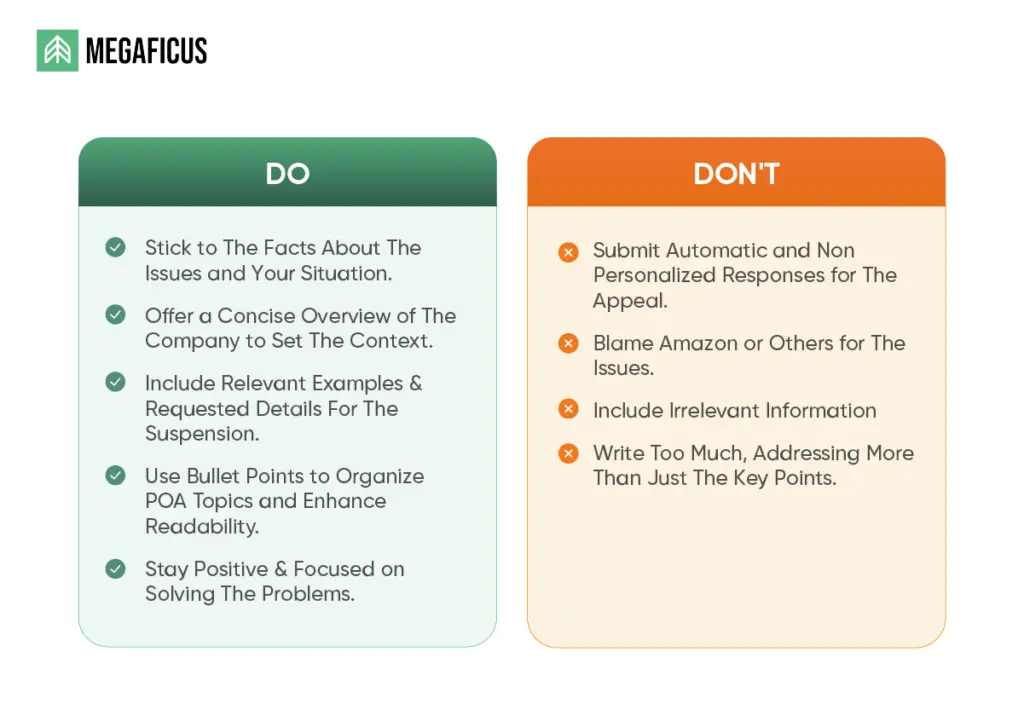
Use clear, bulleted formatting to help the reviewer find key facts quickly and enhance readability. This organized structure allows the investigator to verify your corrective actions without navigating through dense walls of text. A well-formatted document signals that your brand is professional and serious about platform compliance.
Stick to the facts by removing emotional language, apologies, or complaints about the complexity of Amazon’s systems. Professionalism is key, and the reviewer is only looking for evidence that the problem is solved. An objective tone demonstrates that you are a reliable partner committed to their customer-centric policies.
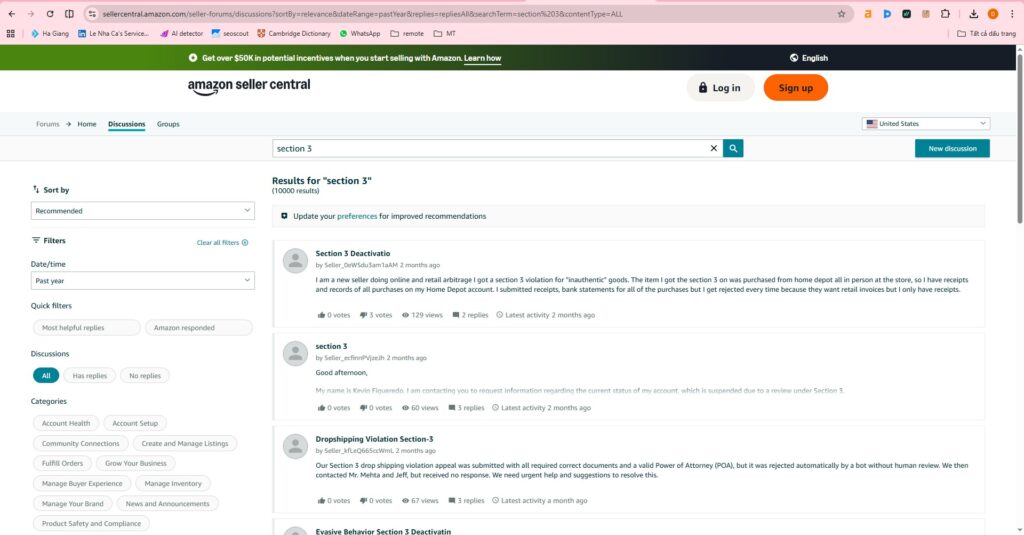
Refer to community data by checking Reddit and Amazon Seller Forums to see how others solved similar triggers. This peer-to-peer insight can reveal if there is a widespread technical glitch or a new enforcement trend. Learning from the collective experience of other sellers helps you refine your strategy for success.
>> Read more: Ways to Handle an Amazon Policy Violation and Save Sales
FAQ: Frequently Asked Questions About the Plan of Action (POA) on Amazon
Most reviews take 48 to 72 hours, though complex cases regarding intellectual property or fraud may take several weeks for a final decision.
You must explain why invoices are missing and provide alternative proof like packing slips or digital payment records from the supplier.
No, but repeated rejections for the same issue make future appeals much harder as the history of failure builds.
Admitting fault and showing a fix is always faster than arguing against a policy, as Amazon values accountability over excuses.
Use a PDF or plain text format with clear headers for easy reading, ensuring all attached evidence is clearly labeled.
Get Professional Help from Megaficus
The Amazon Plan of Action (POA) is a vital tool for maintaining a healthy and profitable Amazon business. By treating it as a strategic document rather than a hurdle, you can improve your operational standards and prevent future disruptions.
Protect your brand’s future by partnering with the experts at Megaficus to refine your compliance strategy today. Our team helps you navigate complex suspensions with precision, ensuring your Amazon account remains a high-performing engine for growth.